Read in another language:
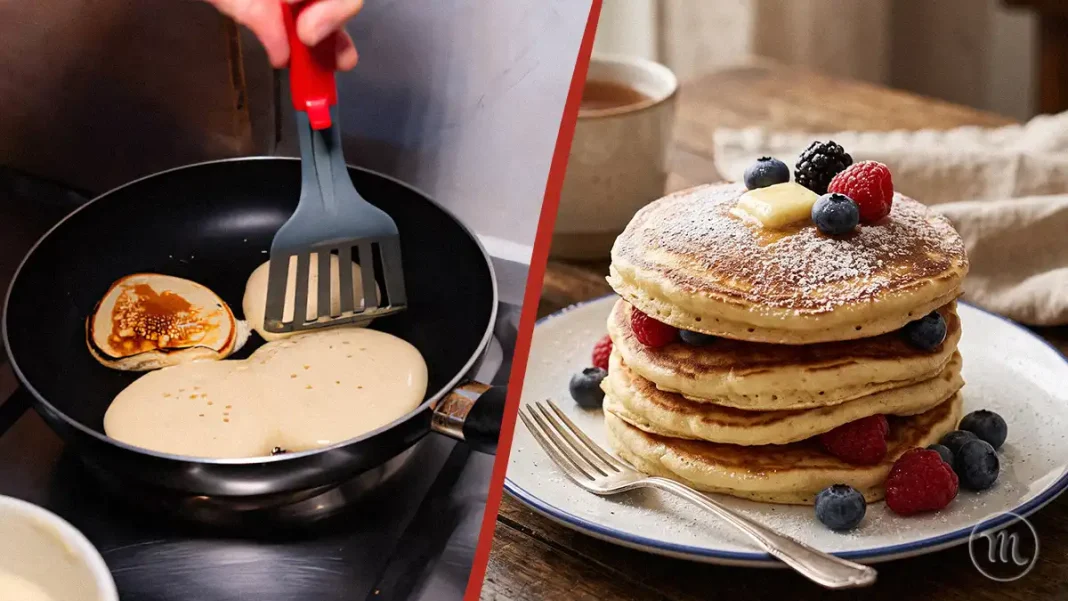
July and August are busy months for anyone who loves treating their family to big, delicious breakfasts. We’ve already broken down the secret ingredient for boiling the juiciest corn, but today, let’s have a totally honest chat about those golden beauties. You’ve probably dealt with this nightmare too, right? They rise beautifully in the pan, looking wonderfully thick and making your heart sing. But the second you transfer them to a plate—bam! You’re left with dry, flat disks that look more like shoe soles. If you’ve ever wondered why fluffy pancakes fail so often, you’re definitely not alone.
I honestly spent ages trying to figure out where I was going wrong. It turns out, it’s not your frying pan, and it’s definitely not “bad kitchen karma.” It all comes down to a couple of tiny details that we constantly overlook when making our pancake batter recipe.
Why your pancakes deflate right after frying
Pancakes lose their volume due to incomplete chemical reactions, watery batter consistency, or drastic temperature drops from using ice-cold kefir.
When I first kept stepping on this culinary rake, I thought the flour was to blame. I bought the most expensive brands, sifted it three times over, but the result was always the same—pancakes as flat as crepes. The real culprit? Runny batter. If your mixture pours off the spoon in a thin stream, it’s not going to end well. That kind of batter will only give you thin crepes, not those airy “pillows” we all crave. If you notice the mix is too liquid, don’t rush to fry. Add a little more flour, let it rest, and that’s your first fluffy pancakes secret.
Підписуйтесь, щоб не пропустити нічого цікавого! | Follow us so you don't miss anything interesting! | Subskrybuj, aby nie przegapić niczego ciekawego!
The second thing that absolutely drives me crazy is using kefir straight out of the fridge. This is a classic rookie mistake and the main reason why pancakes deflate. If you pour freezing dairy into your bowl, the baking soda basically “falls asleep” and won’t produce those necessary bubbles. Your kefir must be at room temperature. I usually just leave it out the night before or warm it slightly in a bowl of hot water if I’m in a rush.
Why add baking soda to pancake batter
Baking soda creates tiny carbon dioxide bubbles in the batter, building a sturdy internal structure that stops pancakes from collapsing.
Now, let’s talk about why add baking soda to pancakes. People often tell me, “Maria, why even bother? You can totally make them without it!” Well, maybe some folks can pull it off, but without baking soda or baking powder, they turn out dense, heavy, and rubbery inside. It acts as a tiny leavening lifesaver, holding the shape of the pastry even as it cools down.
Then comes the eternal debate: to activate the soda with vinegar or not? I prefer a fuss-free approach for my kefir pancakes with baking soda. If you’re using acidic, full-fat kefir or sour milk, the natural acidity is more than enough! It’ll activate the soda perfectly on its own. But if your kefir is super fresh and lacks that tang, you can add a drop of vinegar or just swap the soda for regular baking powder.
One more thing—fat content. Forget about 0% fat-free kefir. The fattier and tangier the dairy, the more delicious and massive your results will be. That’s how to make fluffy pancakes that actually impress.

Step-by-step pancake recipe
Step 1
Take the kefir out in advance. It has to be warm! Pour it into a deep bowl, add the egg, sugar, and salt. Whisk everything thoroughly with a regular hand whisk until completely smooth.
Step 2
Start gradually folding in the sifted flour. Beat the batter with a spoon or whisk. It should come out as thick as good-quality heavy cream.
Step 3
Only at the very end do we add the baking soda! This is a crucial step for this pancake recipe. Give the batter a quick stir for just a few seconds and… don’t touch it anymore! I like to let it sit on the counter for about 10–15 minutes so the reaction can happen. Don’t stir it again, or you’ll knock all the precious air bubbles out.
Step 4
Heat a skillet generously with oil. Turn the heat to medium. Scoop the batter gently from the edge of the bowl and drop it onto the hot surface.
Step 5
Fry on both sides until you get a gorgeous golden crust. Flip them carefully once bubbles appear on top. Serve these beauties piping hot straight to the table!
The history behind the dish
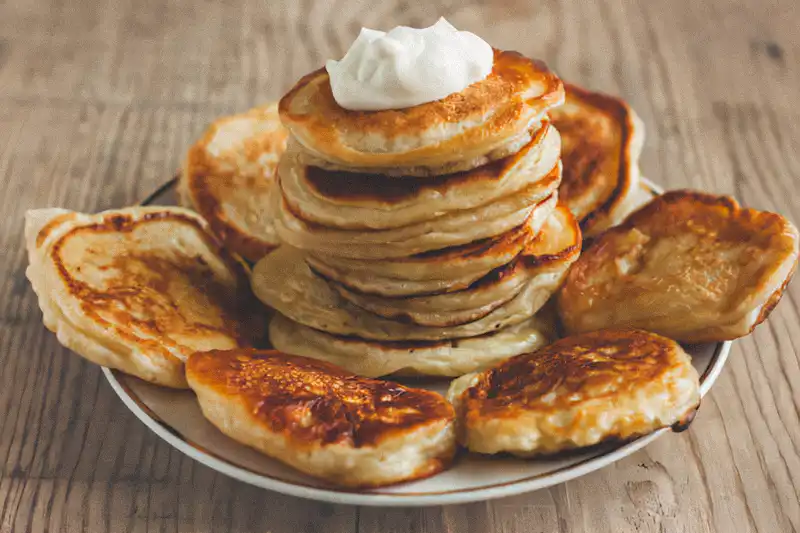
Pancakes are an ancient Eastern Slavic dish originally cooked in cast-iron skillets over wood fires, evolving over centuries into today’s fluffy treats.
They date back to the 16th century in old cookbooks. The original name “oladky” actually comes from the ancient Greek word “eladion,” meaning a dish cooked in oil. At first, it referred to any small, thick crepe. But with the introduction of baking soda and accessible kefir in the 19th century, it transformed into the towering, pillowy treats we adore today—a true staple of homemade baking. Trust me, incorporating these traditional cooking secrets changes everything.
Grab a plate, pour on some sour cream or honey, and call everyone to the table before they get cold. Enjoy! Oh, and if you’re planning on doing some winter prep soon, check out this brilliant trick that keeps your canned tomatoes from cracking.
My opinion:
When I tested this recipe in my own kitchen, I realized once again: the temperature of the kefir dictates absolutely everything. My experience proved that if you let the batter rest with the soda for at least 10 minutes and completely avoid stirring it before frying, they puff up tall and soft like little clouds.
Advice from MODISTA
- Always opt for kefir that’s a few days old — the acidic environment activates the soda much better.
- Only drop your batter onto a thoroughly heated skillet, otherwise, it’ll just soak up the oil and turn greasy.
- Don’t go overboard with the sugar, as it causes the outside to burn quickly while leaving the inside raw.
Do you nail your batch on the first try, or do you have those epic batter fails too? Hop over to our MODISTA Telegram channel, share your favorite tips with us, and make sure to save this recipe for your next lazy weekend morning!
ℹ️ REFERENCE
Baking soda (sodium bicarbonate) is a chemical compound used in baking that releases carbon dioxide when mixed with an acid.
It is an acid salt of carbonic acid and sodium, widely utilized in cooking as a leavening agent. When it reacts with acidity (like kefir or vinegar), it breaks down and releases carbon dioxide gas, which gives baked goods their airy, porous texture. You can read more about the properties of this compound on its Wikipedia page 🌐.
Secrets to making fluffy kefir pancakes:
Наші стандарти: | Our standards: | Nasze standardy: Редакційна політика сайту MODISTA | Editorial policy of the MODISTA website | Polityka redakcyjna serwisu MODISTA
За матеріалами Modistaua.com | Based on materials from Modistaua.com | Na podstawie materiałów Modistaua.com
Підписуйтесь на новини | Subscribe to news | Subskrybuj wiadomości MODISTA в Telegram