



In this article, you’ll learn:
- Which foliage plants create impressive volume without flowers.
- The secret to lush blooming in full shade using time-tested annuals.
- How to properly combine leaf textures for professional-grade garden compositions.
- Care specifics for potted perennials that can withstand frost.
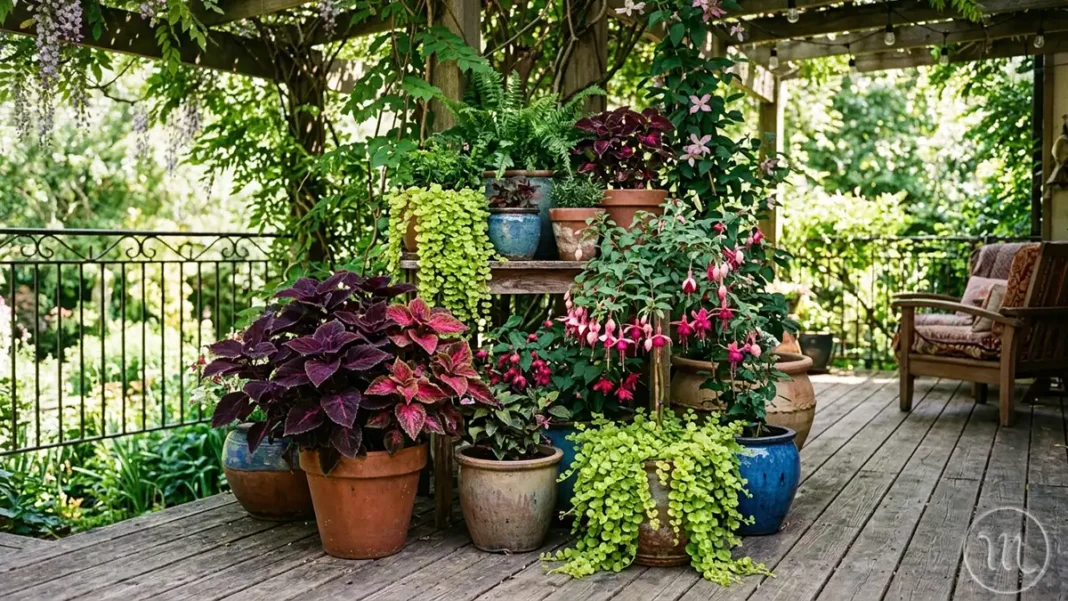
Landscaping areas where the sun rarely peeks in might feel like a real challenge for a gardener. However, the right selection of potted crops allows you to turn a gloomy terrace or a north-facing balcony into a true oasis, reports MODISTA.
Shady zones are often seen as limitations, but they’re actually an opportunity to create a calm, cool nook with luxurious greenery. Most plants successfully adapt to life in containers if you provide them with proper drainage and moisture. It’s just important to remember that even in deep shade, different zones have varying light levels throughout the day.
Before you run to the garden center, I recommend doing a bit of observation: measure exactly how many hours of indirect light your chosen location gets. Only a few, like Impatiens, can thrive in full shade; most need at least some dappled rays. In this review, I’ll tell you about 11 favorites that are perfect for container growing in low-light spots of your yard.
The Best Plants for Shade in Containers
Showy Coleus and Its Colors
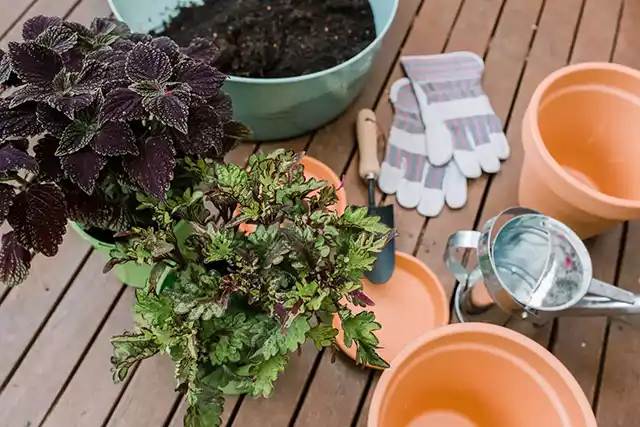
Coleus (formerly known as Coleus blumei, now classified as Plectranthus scutellarioides) is rightfully considered the king of shady gardens. It’s valued not for its flowers, but for the incredible variety of its leaf colors. You can find varieties with patterns ranging from bright lime to deep burgundy.
Підписуйтесь, щоб не пропустити нічого цікавого! | Follow us so you don't miss anything interesting! | Subskrybuj, aby nie przegapić niczego ciekawego!
Modern breeding has given us many forms that feel great in both deep shade and dappled sun. Coleus colors are so rich and complex that it can act as a standalone accent plant or serve as the perfect backdrop for flowering neighbors.
Characteristics:
- Hardiness Zones: 10–11 (grown as an annual).
- Color variations: multicolored foliage.
- Lighting: from full shade to full sun (depending on the variety).
- Soil: rich, well-drained.
Graceful Fuchsia
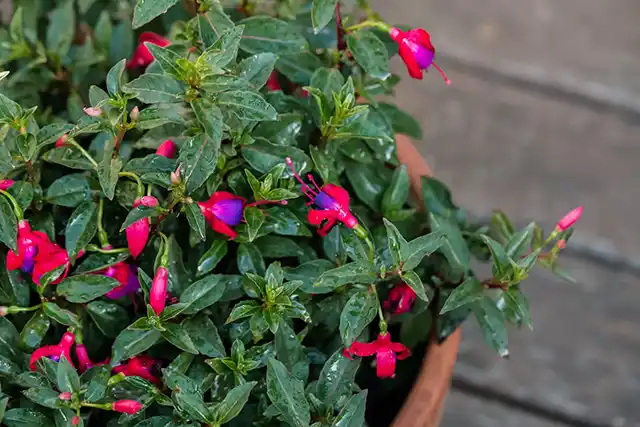
Fuchsia is a true classic, easily recognized by its characteristic drooping lantern-like flowers. They look perfect in hanging baskets where their trailing stems create a waterfall of color.
There are about 100 species in the Fuchsia genus, and almost all can delight with blooms all summer even without direct sun. While some find them finicky, the secret to success is simple: regular watering and feeding. If you live in a cold climate, definitely bring the pot indoors for the winter.
Characteristics:
- Hardiness Zones: usually from 9 (as an annual).
- Color variations: red, pink, purple.
- Lighting: from partial shade to full shade.
- Soil: rich, with good drainage.
Cheerful Torenia
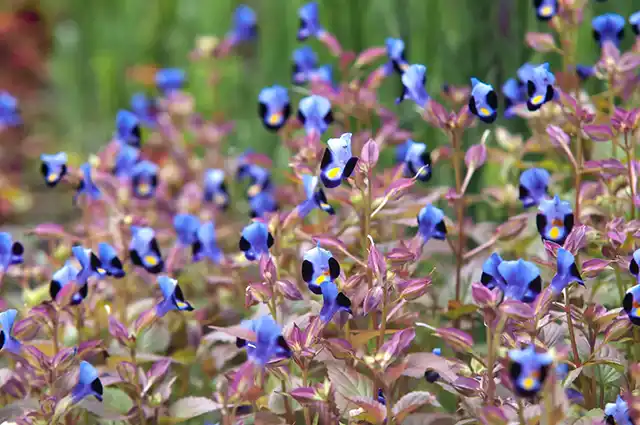
Torenia, often called the “wishbone flower,” is an elegant annual that blooms non-stop. It’s extremely heat-resistant and doesn’t require deadheading, making it ideal for busy gardeners.
This plant combines beautifully with other crops in window boxes. Thanks to its height of 15–45 cm, it drapes nicely over the edges of the container. In very hot regions, Torenia still needs protection from the afternoon sun.
Characteristics:
- Hardiness Zones: 2–11 (annual or houseplant).
- Color variations: from light to dark purple.
- Lighting: from partial shade to full shade.
- Soil: rich and moist.
Indestructible Coral Bells
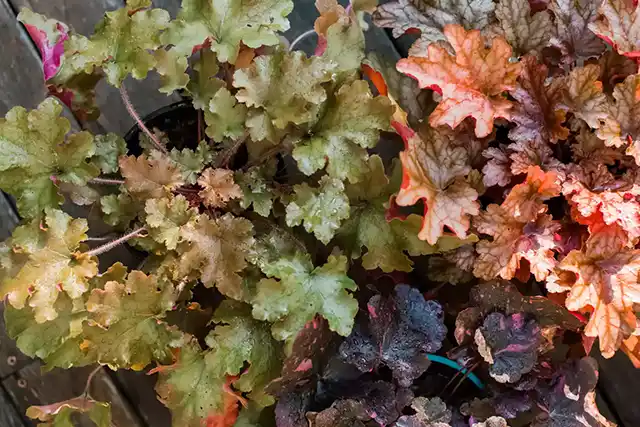
Heuchera, or coral bells, is a real find for a shady container garden. It’s a perennial that’s almost impossible to kill. Its flowers are small and inconspicuous, but the foliage impresses with a palette from nearly black to peach and bright lemon.
Heucheras attract hummingbirds and butterflies, and some varieties can withstand frosts down to -31°C. They look stunning right up until the snow falls. I especially recommend checking out the Dolce series hybrids, like ‘Dolce Licorice’ or ‘Dolce Key Lime Pie’.
Characteristics:
- Hardiness Zones: 4–9.
- Color variations: foliage from dark purple to lime green.
- Lighting: from full sun to partial shade.
- Soil: fertile, well-drained.
The Variety of Begonias
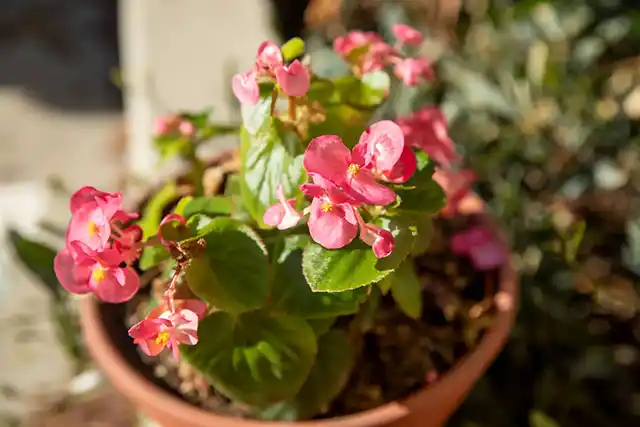
The Begonia genus has over 1,800 species. For containers, tuberous or rhizomatous species with neon flowers are most often chosen. Rex Begonia, with its psychedelic leaf patterns, deserves special mention.
Most begonias can’t stand “wet feet,” so quality drainage is a critical condition. They need regular feeding with diluted fertilizer to maintain the energy for blooming throughout the season.
Characteristics:
- Hardiness Zones: 6–11 (depending on species).
- Color variations: white, orange, pink, red.
- Lighting: partial shade or filtered light.
- Soil: light, with excellent drainage.
Exotic Persian Shield
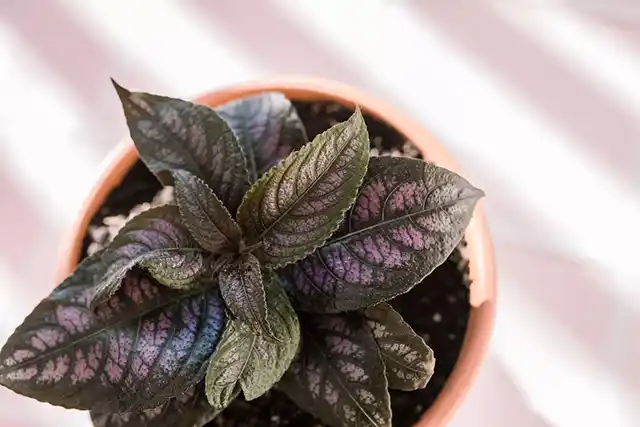
Strobilanthes dyeranus is a plant that instantly adds tropical charm. Its purple-silver leaves look so unreal they seem hand-painted. This perennial is usually grown as an annual “thriller” (central accent) in large pots, as it can reach a meter in height.
I’ve noticed that Persian Shield sells out quickly at garden centers, so grab it as soon as you see it. The plant loves partial shade, and regular pinching of the tips will make the bush bushier.
Characteristics:
- Hardiness Zones: 10–11 (as an annual).
- Color variations: purple with silver foliage.
- Lighting: bright indirect light.
- Soil: moderately moist.
Delicate Oxalis
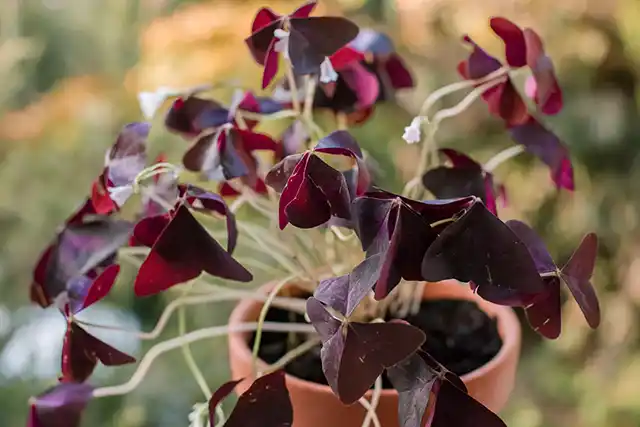
Oxalis, or wood sorrel, draws attention with its clover-shaped leaves and tubular flowers that close at night. It’s the perfect plant for creating textural contrasts. It feels great paired with fuchsia.
In cold climates, you can easily turn Oxalis into a houseplant just by taking the pot indoors. The O. triangularis variety with deep purple leaves is my favorite for creating dramatic compositions.
Characteristics:
- Hardiness Zones: 6–10.
- Color variations: white, pink, yellow flowers.
- Lighting: from sun to partial shade.
- Soil: regular garden soil.
Bright Impatiens
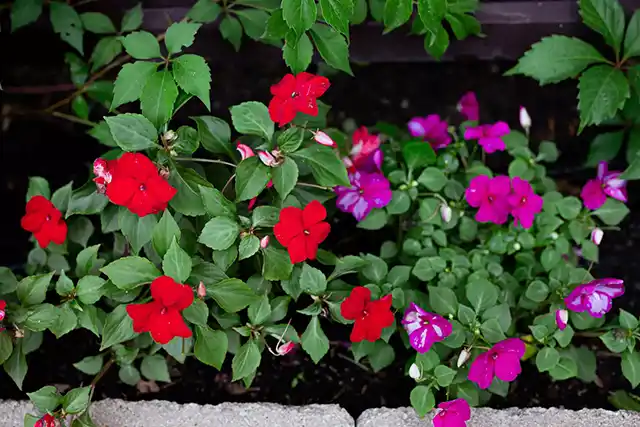
Impatiens walleriana (busy Lizzie) is a shade legend. It’s one of the few plants that produces mass blooms in places where the sun almost never appears. Available in a huge range from white to purple, they create true floral cushions.
Their relatives, New Guinea Impatiens (Impatiens hawkeri), have larger flowers and sturdier stems, though they prefer a bit more light than regular species.
Characteristics:
- Hardiness Zones: 10–11.
- Color variations: wide spectrum of warm and cool tones.
- Lighting: partial shade or full shade.
- Soil: rich, consistently moist.
Cascading Trailing Lobelia
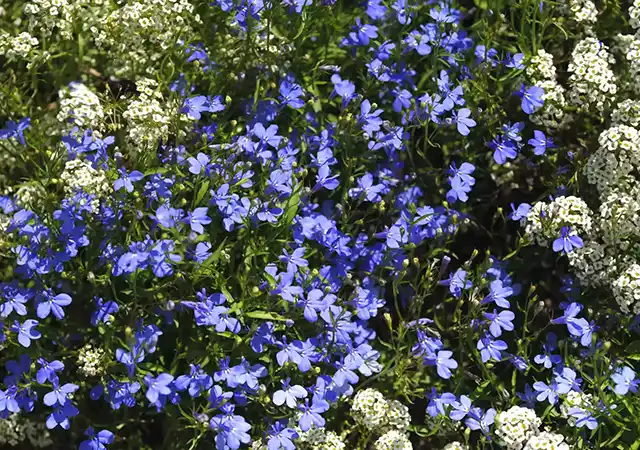
Most lobelias love the sun, but the trailing version (Lobelia erinus var. pendula) is an ideal choice for shady baskets. It creates long shoots covered in tiny flowers of sky-blue, purple, or pink colors.
This plant adds lightness to any composition. It looks especially refined when hanging from the edges of a tall pot, softening its lines.
Characteristics:
- Hardiness Zones: 7–11.
- Color variations: light blue, deep blue, pink.
- Lighting: from sun to partial shade.
- Soil: moist, rich in organic matter.
Silvery Dichondra
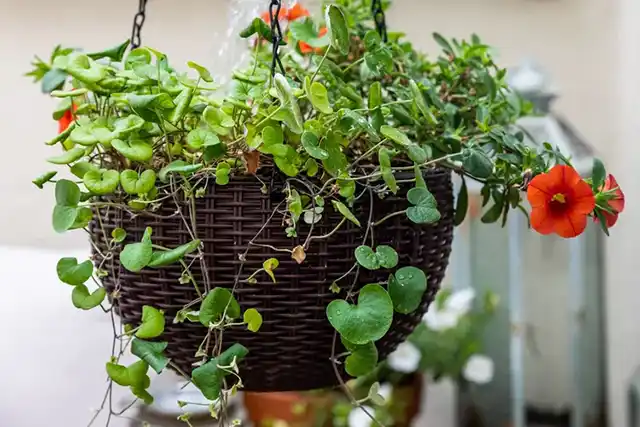
Dichondra is a creeping perennial used in containers as a “spiller” (a plant that hangs down). Although considered sun-loving, Dichondra argentea tolerates partial shade very well if it gets at least an hour or two of light.
The popular ‘Silver Falls’ variety has shimmering silvery leaves that can grow up to 1.2 meters long. It’s a true waterfall of silver that lights up the dark corners of the garden.
Characteristics:
- Hardiness Zones: 10–12.
- Color variations: silvery or green foliage.
- Lighting: from full sun to partial shade.
- Soil: well-drained.
Bright Creeping Jenny
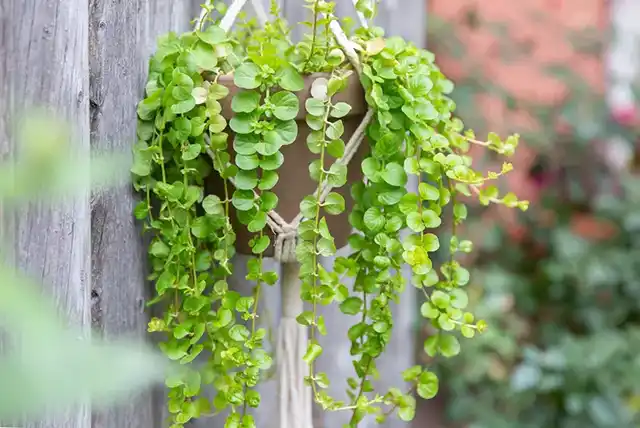
Lysimachia nummularia (creeping Jenny) is a groundcover plant with round lime leaves. In tall containers, it works as an ideal edge filler. Its light foliage literally “glows” at twilight.
I recommend growing it specifically in pots because in open ground it can become quite aggressive and displace other plants. It’s very hardy and will easily winter in a pot in most regions.
Characteristics:
- Hardiness Zones: 3–9.
- Color variations: lemon-yellow or green foliage.
- Lighting: from sun to partial shade.
- Soil: rich, moist.
MY OPINION:
I often notice people trying to “force” sun-loving petunias to bloom in the shade, and it always ends in disappointment. My sincere advice: don’t be afraid to experiment with foliage plants like Coleus or Heuchera — they provide stable color 24/7, regardless of whether the buds have opened or not. It’s true magic that works without your constant intervention.
Advice from MODISTA
How to make your shady container garden perfect:
- Use light-colored pots (white, beige, silver) to visually “light up” the dark zone.
- Group containers of different heights — this creates dynamics and allows you to hide the bare stems of tall plants behind the lush foliage of smaller neighbors.
- Choose plants with different leaf textures: combine the broad matte leaves of begonias with the small glossy leaves of creeping Jenny.
Have you already tried creating shade compositions, or do you still think nothing grows without the sun? Share this article with a friend who dreams of a blooming balcony on the north side!
Join our community where comments are open just for you!
ℹ️ REFERENCE
USDA Growing Zones are geographic areas divided based on average annual minimum temperature. This system helps gardeners determine which plants can survive the winter in their region and which are better grown as annuals 🌐.