
- • Stalled growth triggers: why finicky cucumber vines suddenly turn yellow in your garden beds.
- • The dirt-cheap secret recipe: how to mix a powerful, all-natural biological activator right at home.
- • Dilution details: the exact temperature settings that guarantee maximum potency for your solution.
- • Application masterclass: a safe watering technique that supercharges the root system within days.
Read in another language:
Every summer, gardeners everywhere face the same frustrating scene: your once-vibrant cucumber plants suddenly stop growing, and those lush green leaves start taking on a sickly, yellowish tint. It feels like your future harvest is completely doomed, and it’s easy to lose hope. But before you run to the garden center for expensive, harsh chemicals, take a breath. There’s a time-tested, completely eco-friendly, and incredibly budget-friendly trick that will bring your plants back to life almost overnight, reports MODISTA.
I regularly use this simple natural fertilizer in my own garden, and the results blow me away every single time. Just a few days after soaking the beds with this homemade blend, the transformation is incredible: leaves regain their rich, juicy green color, the yellowing vanishes, and the vines kick into overdrive with explosive new growth. The secret is all about unlocking the hidden resources already resting in your soil and creating the ultimate feeding ground for your plants.
Why cucumber vines suddenly yellow and stall
More often than not, the main culprit behind stunted and sickly cucumber growth is wild temperature swings—especially chilly nights—alongside dry soil and sluggish microbial activity around the roots. Let’s not forget that cucumbers are total sun-worshippers and incredibly sensitive to their environment.
When nighttime temperatures drop below 50–54°F (10–12°C), those delicate roots basically go into shock. Once that happens, they struggle or completely stop absorbing nutrients from the ground, even if your soil is packed with goodness. The result? Leaves quickly turn pale and yellow, and the plant’s growth grinds to a halt. That’s exactly when this reliable homemade bio-stimulator saves the day.
Підписуйтесь, щоб не пропустити нічого цікавого! | Follow us so you don't miss anything interesting! | Subskrybuj, aby nie przegapić niczego ciekawego!
The golden recipe for homemade yeast plant food
To whip up this miracle booster, you only need a handful of basic ingredients that are probably sitting in your pantry right now. Trust me on this, you’ll want to follow the proportions exactly—getting the right concentration is the key to unlocking its magic.
What you need:
- Clean, warm water (around 85–95°F / 30–35°C) — 1 liter
- Active dry yeast — 10 grams (or high-quality fresh cake yeast — 100 grams)
- Granulated sugar — 1–2 teaspoons
Step-by-step guide to brewing and activating your booster
Mixing this bio-stimulator is incredibly simple, but you do need to keep an eye on the temperature since we’re working with live cultures.
- Grab exactly 1 liter of clean water. Make sure it’s sitting comfortably between 85–95°F (30–35°C)—this warm environment is absolute perfection for waking up and activating the yeast.
- Gently stir 10 grams of dry yeast into the warm water (if you’re using fresh cake yeast, crumble 100 grams right in).
- Add 1–2 teaspoons of regular sugar to the mix. It serves as a prime source of quick energy to kick off a robust fermentation process.
- Give everything a good stir for about a minute, making sure all the ingredients are completely dissolved.
- Set the container in a cozy, warm spot for about 1.5 to 2 hours. You’ll see the yeast come alive as it starts to foam, brewing up unique enzymes and natural growth hormones that will soon work wonders on your soil’s ecosystem.

How to dilute your homemade concentrate
Once the fermentation process wraps up, you’ll have a highly concentrated biological brew. Never pour this straight onto your garden beds—it needs a proper dilution first.
In my experience, taking 1 liter of this active concentrate and mixing it into 5 to 10 liters of warm water (ideally around 77–86°F / 25–30°C) works beautifully. Here’s a pro tip: if your cucumber plants are still quite young or severely weakened by cold snaps, opt for a milder touch. In those cases, I use just 100 ml of the yeast concentrate per 1 liter of clean water.
Whatever you do, avoid icy hose water or cold well water at all costs! Beneficial microbes can only thrive and multiply in a warm climate. Once you’ve blended the concentrate with your water, give it one final mix so the active microflora is evenly distributed throughout the batch.
Application rules for the best results
To ensure this feeding routine delivers maximum benefits without stressing your plants’ delicate root systems, it helps to follow a strategic routine.
Before applying the mixture, I always gently loosen the crusty topsoil around each plant and give the bed a generous soaking with plain, warm water. Bone-dry soil won’t absorb nutrients properly, making this pre-watering step absolutely essential for success.
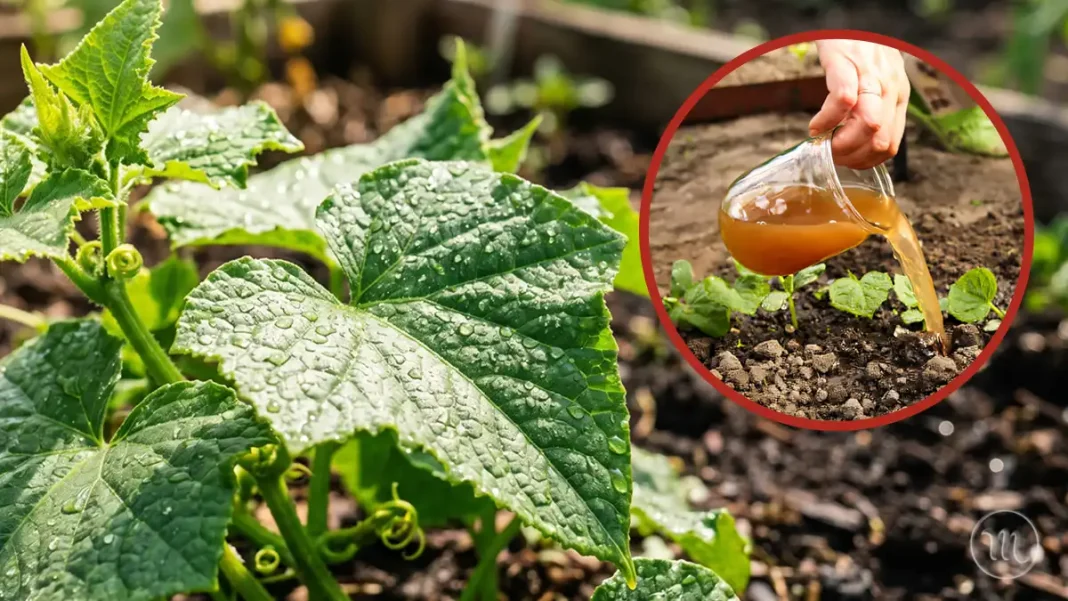
Now, you’re ready to apply the fresh yeast solution. Instead of pouring it right against the main stem, aim about 4 to 8 inches (10–20 cm) away from the base. This is where the busy, active feeder roots live, and they will drink up the nutrients instantly. Pouring 0.5 to 1 liter of the diluted mix per mature vine is plenty. This clever method wakes up your soil’s microflora, encourages a massive root network, and dramatically improves how efficiently your cucumbers draw nutrients from the earth moving forward.
By the way, this fantastic natural booster isn’t just for your cucumber patch. It delivers stunning results when used on tomatoes, bell peppers, and eggplants, especially during their early growth spurts. Thanks to this safe, incredibly cheap DIY trick, your entire vegetable garden will grow stronger, handle weather changes like a pro, and reward you with a spectacular harvest.
Advice from MODISTA
- Only feed your plants with yeast blends on warm days; chilly soil causes the beneficial fungi to go dormant, rendering the treatment ineffective.
- Don’t overdo it—applying this solution 2 to 3 times over the entire spring and summer season is more than enough for great results.
- Because yeast consumes potassium and calcium from the soil during fermentation, be sure to dust your beds with regular wood ash a few days after watering.
Have you ever tried reviving your garden beds with simple baking yeast? Share this handy guide on your feed or text it to your fellow garden lovers so their plants stay strong and green all summer long!
MODISTA Daily MODISTA Daily MODISTA Daily
ℹ️ REFERENCE
The common cucumber (Cucumis sativus) is a widely cultivated, annual herbaceous vine in the gourd family Cucurbitaceae, grown for its crisp, refreshing green fruits. To thrive during its growing season, this crop demands consistent warmth, generous moisture, and loose, organic-rich soil. Introducing yeast fungi to garden management accelerates the breakdown of organic matter in the earth, transforming nutrients into an easily absorbable format for root networks. 🌐
Наші стандарти: | Our standards: | Nasze standardy: Редакційна політика сайту MODISTA | Editorial policy of the MODISTA website | Polityka redakcyjna serwisu MODISTA
За матеріалами Modistaua.com | Based on materials from Modistaua.com | Na podstawie materiałów Modistaua.com
Підписуйтесь на новини | Subscribe to news | Subskrybuj wiadomości MODISTA в Telegram