
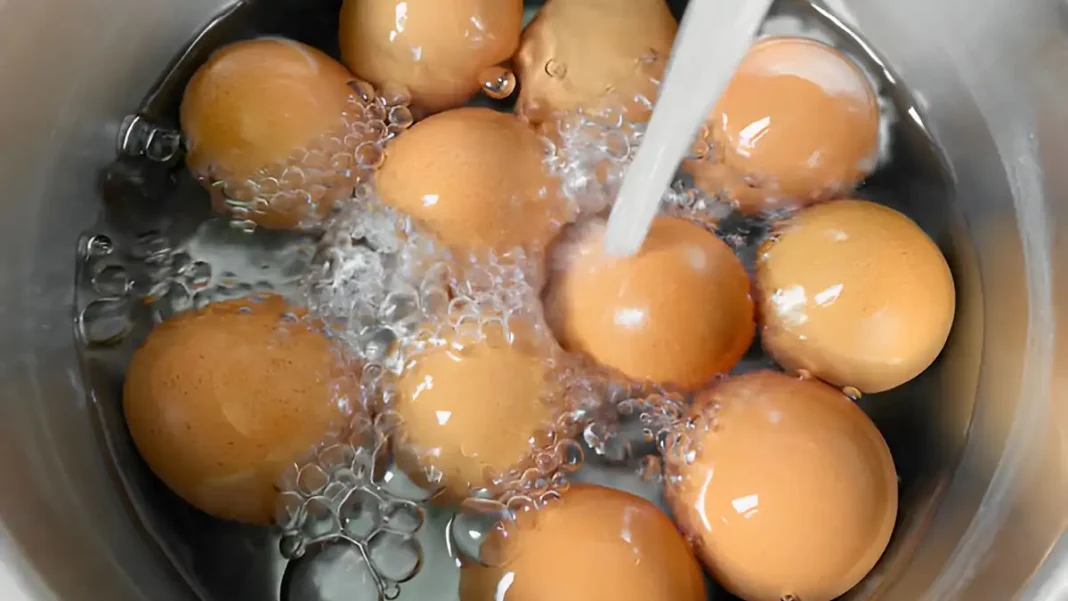
What many hostesses consider a proven life hack for easy peeling actually destroys the egg’s delicate texture, degrades its appearance, and creates a health risk due to the sharp temperature drop.
Every one of us has probably seen this process at least once: freshly boiled, still hot eggs are plunged with a characteristic hiss into a bowl of ice-cold water. This is a tradition passed down by our mothers and grandmothers, convincing us that this “shock” method is the only way to quickly stop the cooking process and easily remove the shell.
However, as a professional copywriter constantly looking for the hidden truth behind everyday myths, I found out that this seemingly innocent habit is actually the enemy of a quality product. Cold water after boiling is not an ally, but a path to a spoiled taste, an unattractive appearance, and even, in some cases, an increased health risk. Let’s figure out why this practice should be forgotten once and for all and how to cool boiled eggs correctly.
Why You Should Forget the “Shock Therapy” for Hot Eggs
Suddenly submerging a hot product into an icy environment creates an extreme temperature difference. Our grandmothers believed that this was beneficial, but modern culinary science and nutritionists warn that such stress on the egg has a number of unpleasant consequences.
1. Texture Change: The Egg White Becomes “Rubbery”
When you place a hot egg in very cold water, its protein structure is destroyed. The egg white contracts unevenly and too abruptly. Barely noticeable microcracks form inside, and instead of a tender, elastic texture, you get a rubbery egg white that often separates from the yolk. The egg loses its natural softness and simply becomes less palatable.
Підписуйтесь, щоб не пропустити нічого цікавого! | Follow us so you don't miss anything interesting! | Subskrybuj, aby nie przegapić niczego ciekawego!
2. An Unpleasant Gray-Green Ring Around the Yolk
You have probably noticed more than once: in some boiled eggs, the yolk is surrounded by an unaesthetic gray-green ring. This is a direct sign of improper cooling or excessively long boiling. The abrupt contact of the hot egg white with the cold accelerates the chemical reaction between sulfur (which is in the egg white) and iron (which is in the yolk). This iron sulfide is what gives the yolk that same unappetizing grayish tint. Although such an egg is usually not directly dangerous, its appearance and, in part, its taste are definitely spoiled.
3. Risk of Cracks and Bacterial Penetration
Cold water causes the shell to contract sharply, and it can simply crack. Even if the cracks are small and almost invisible, they create an ideal bridge for the penetration of bacteria and microorganisms from the water into the product. If you plan to store these eggs for several days, especially in the refrigerator, they will start to spoil significantly faster than those that were cooled correctly.
4. Loss of Valuable Vitamins
We should not forget about the benefits either. Some important vitamins, especially those belonging to the B group, are very sensitive to sharp temperature changes. When we instantly cool the eggs, we risk partially destroying these beneficial elements.
How to Cool Eggs Correctly to Preserve Quality and Taste
If you want your eggs to be perfect — with a tender white, a bright yolk, and without health risks — remember to be gradual.
1. Temperature Equalization
After turning off the heat, leave the eggs in the hot water for another 3–5 minutes. This will help the internal and external temperature to equalize slightly and make the transition softer.
2. Gradual Water Change
After 3–5 minutes, gently drain the hot water and replace it with moderately warm water. Then, by changing the water several times, gradually lower the temperature. This process should take a short time, but it will protect the product from shock.
3. Final Cool Rinse
Only when the eggs have already cooled down to room temperature can you rinse them with cool water (but not ice-cold!).
4. The Secret to Easy Peeling
If your goal is easy shell removal, there is a much safer life hack than cold shock. Try adding a pinch of salt or a spoon of vinegar to the boiling water. These simple ingredients will help the shell separate from the egg white almost effortlessly, while preserving the egg’s perfect texture.
Наші стандарти: | Our standards: | Nasze standardy: Редакційна політика сайту MODISTA | Editorial policy of the MODISTA website | Polityka redakcyjna serwisu MODISTA
За матеріалами Modistaua.com | Based on materials from Modistaua.com | Na podstawie materiałów Modistaua.com
Підписуйтесь на новини | Subscribe to news | Subskrybuj wiadomości MODISTA в Telegram