




- • Why skipping the salon is actually stalling your visual hair growth.
- • Customized maintenance schedules for pixies, bobs, and long flowing locks.
- • How the state of your ends dictates the illusion of thickness and volume.
- • Secrets for managing chemically treated hair prone to self-destruction.
Read in another language:
It seems counterintuitive, but scissors are the last thing on your mind when you’re dreaming of waist-length hair. However, a regular date with your stylist is actually the secret weapon for achieving that luxurious length. While scissors don’t have the magical power to speed up hair follicles, they’re critical for protecting what’s already grown. Split ends have a sneaky way of “traveling” up the hair shaft, causing breakage. The result? It feels like your hair has hit a plateau, but it’s actually just crumbling at the ends, reports MODISTA.
Dreams of long, glowing, and thick strands often crash against the reality of dry, frayed ends that make your mane look unkempt. Many women, desperate for length, avoid the salon for six months or more—a fatal mistake. Once a hair strand has split, no expensive mask or oil can fuse it back together forever.
The only cure is a pair of sharp shears. To maintain healthy growth and avoid the heartbreak of having to chop off four inches of “straw” later, you need to find your perfect rhythm. It varies wildly depending on whether you’re rocking a short bob, fine strands, or bouncy curls.
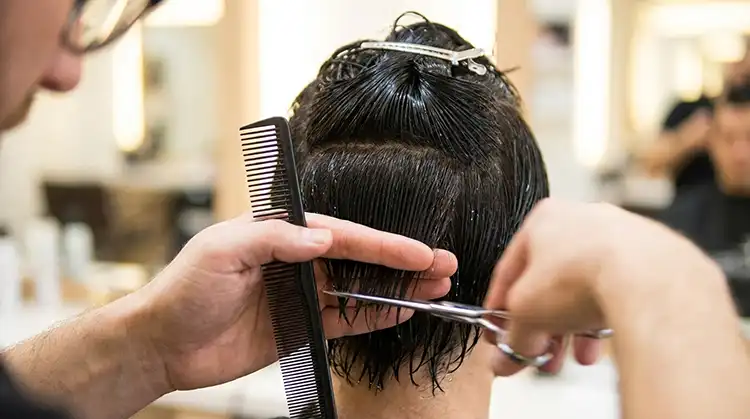
If you’re sporting a daring pixie or the ultra-trendy French bob with a sharp edge, your main enemy isn’t split ends—it’s losing the shape. Short hair grows at the same speed as long hair, but every half-inch of growth is immediately obvious on a shorter cut.
Підписуйтесь, щоб не пропустити нічого цікавого! | Follow us so you don't miss anything interesting! | Subskrybuj, aby nie przegapić niczego ciekawego!
The style quickly loses its geometry, getting heavy in all the wrong places and becoming a nightmare to style. To keep that “just-stepped-out-of-the-salon” look, you’ll need a trim every three to five weeks. For a classic blunt bob, you can push it to six weeks before that crisp line starts to look fuzzy.
Fine and Thin Hair Needs the Illusion of Density
Those with fine hair know all too well how quickly their ends can become transparent and lifeless. Fine strands are naturally more fragile and prone to damage, especially from the friction of clothing or purse straps. When these strands get damaged, the whole hairstyle looks even thinner and “tired.”
To keep the illusion of volume and thickness, it’s vital that your ends stay blunt and dense. That’s why I’d recommend refreshing fine hair every four to six weeks. This allows you to nip damage in the bud and keep your hair looking visually full.
Long, Healthy Hair Offers the Most Freedom
If nature blessed you with strong, straight, and—most importantly—virgin hair, you can afford to relax a bit. Healthy long locks don’t need radical measures; a simple “dusting” or a minimal trim before the splitting starts is usually enough.
In this case, a salon visit every eight to twelve weeks is plenty. The key is staying consistent with high-quality hydration and heat protection at home. With the right care, you can safely extend the time between cuts without risking the health of your length.
Curly Hair Hides Flaws But Needs Structure
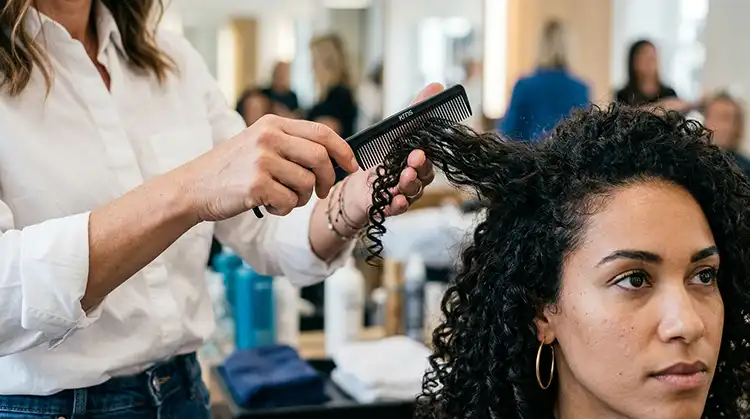
Natural curls are breathtakingly beautiful, but by nature, they’re much drier than straight hair. It’s simple: natural scalp oils have a harder time traveling down a spiral. On the plus side, those twists and turns do a great job of masking split ends and minor imperfections.
For curly girls, a haircut is less about removing damage and more about the architecture of the style and preventing tangles. The moment you notice your curls losing their spring, knotting excessively at the ends, or taking on a “triangle” shape, it’s time for the shears. Usually, this happens every ten to twelve weeks.

Chemically Treated Hair Is Unforgiving
If you’re a regular with bleach, highlights, perms, or you use a flat iron daily, your hair is automatically in the “damaged” category. Chemicals and high heat strip the hair’s protective layer, making ends porous and prone to snapping off instantly.
To prevent a total catastrophe where your hair literally breaks off in your hands, consistency is key. A trim every six to eight weeks is an absolute must-have if you want to keep your length and stop that breakage from traveling all the way up to the roots.
Scissors Are Your Best Ally, Not Your Enemy
Don’t let the fear of losing a few millimeters of hard-won length stop you from visiting the salon. Remember: long hair has no aesthetic value if the ends look like cobwebs—transparent, dry, and lifeless.
A haircut isn’t a punishment for slow growth; it’s the best investment in the future of your look. By letting go of what’s dead, we make room for the true beauty and strength of our hair.
My Opinion:
I often see women clinging to “dead” inches so tightly that they don’t realize how much it drags down their whole look. My advice is simple: it’s better to have chic, healthy mid-length hair with a thick edge than long, see-through strands that are literally crying for help.
Advice from MODISTA
- Ask your stylist for the “dusting” technique if you want to keep maximum length while getting rid of every single split end.
- Apply professional-grade hair serums to your ends daily—this creates a protective barrier that helps you survive until your next appointment.
- Never trim your hair at home with kitchen scissors; they aren’t sharp enough and will actually crush the hair shaft, inviting new splits almost immediately.
How often do you brave a visit to the stylist, and do you swear by the “lunar calendar” for your cuts? Share this with a friend who’s struggling to reach her goal length—this might be the missing piece of her hair care puzzle!
ℹ️ REFERENCE
Citymagazine is a modern media resource specializing in the latest trends in beauty, fashion, and lifestyle, providing expert advice for creating a harmonious look. We curate the best self-care practices based on recommendations from leading stylists and trichologists. 🌐