



- • How extreme temperatures destroy vegetable immunity and cause flower drop.
- • A step-by-step resuscitation blueprint for seedlings already damaged by sunburn.
- • Secrets to shading your structures correctly without trapping heat inside.
- • Best practices for watering, mulching, and preventing secondary infections during heat shock.
Read in another language:
The first weeks of summer often bring a brutal test of scorching sunshine. It is especially heartbreaking when young, fragile seedlings have just been transplanted into greenhouses or open beds. Instead of smoothly adapting, establishing a robust root system, and pushing out new growth, these green investments are forced to spend all their vital energy fighting a exhausting war against aggressive UV rays. When temperatures inside glass or polycarbonate structures rapidly spike past 104°F to 122°F, it triggers a genuine biological catastrophe for living organisms, reports MODISTA.
Science proves that tomato pollen loses its viability and becomes completely sterile once ambient temperatures hit 86°F. This means new fruit simply won’t set. Peppers and eggplants shed their buds and existing fruit clusters en masse due to thermal stress, while cucumber vines instantly turn bitter, yellow, and drop their leaves. Heat damage on leaf epidermis and young fruits is a direct consequence of ignoring temperature extremes. However, any critical situation can be quickly fixed—and more importantly, reliably prevented in the future. Below is a detailed expert guide to helping your plants right now and neutralizing the effects of climate anomalies.
Emergency Resuscitation: A Step-by-Step Guide for Thermal Damage
If preventive measures weren’t taken in time and your leaves or delicate fruit skins are already showing characteristic white or brown dry scorch patches, don’t panic. The speed of your response directly dictates how much of your future harvest you’ll save. Restoring plants to a normal physiological state requires a comprehensive strategy.
1. Deploying Specialized Biostimulants and Anti-Stress Agents
Your primary goal is to snap the plant out of deep shock. Adaptogen formulas are perfect for this. They aren’t traditional fertilizers; instead, they mobilize the plant’s internal defense systems. Apply these treatments exclusively via a fine foliar mist in the evening or late twilight so the solution can be completely absorbed by the cells before the morning heat hits:
Підписуйтесь, щоб не пропустити нічого цікавого! | Follow us so you don't miss anything interesting! | Subskrybuj, aby nie przegapić niczego ciekawego!
- Epin-Extra: A highly effective anti-stress regulator. To prepare the working solution, thoroughly mix 1 ampoule of the product into 5 liters of clean, settled water. It quickly minimizes the shock of sharp temperature fluctuations and heals micro-damage.
- Zircon: A potent immune booster for root systems and cellular barriers. The dosage is 4 drops of concentrate per 1 liter of water. This formula significantly increases resistance to pathogens that typically attack weakened cell structures.
- Succinic Acid: A natural energy booster. Use strictly according to the manufacturer’s instructions. It shows excellent results when reviving nightshade crops (tomatoes, peppers) by stimulating the active formation of new side shoots.
2. Strategic Removal of Necrotic Tissue
Leaf blades that are completely dried out, dead, and clearly beyond recovery must be carefully removed. Use sharp, sanitized pruners or garden shears for this. Leaving dead mass on the stems is a mistake, as the plant will waste valuable sap trying to support damaged areas. However, if the damage is widespread, never chop off all the leaves at once—such a radical move will trigger another wave of severe stress. The best approach is to perform sanitary pruning in stages over 2–3 sessions, keeping a 2–3 day interval between cleanups.
3. Recalibrating Your Feeding Schedule
Under extreme temperatures, root systems slow down significantly, and the capillary uptake of nutrients from the soil solution virtually grinds to a halt. Because of this, standard root-zone fertilizing during a heatwave is completely ineffective and can even burn delicate root hairs. Instead, experts highly recommend switching to foliar feeding.
Your best choice is spraying with a calcium nitrate solution (2 tablespoons per 10 liters of water). Calcium is an indispensable building block that strengthens cell walls and membranes, helping vegetative mass regenerate much faster. At the same time, any fertilizers high in nitrogen (urea, manure, concentrated fermented weed teas) must be completely cut from the menu. Nitrogen makes plant tissue too soft, water-bloated, and incredibly vulnerable to harsh solar radiation.
4. Creating a Shield Against Pathogens
Sun-damaged areas become open doorways for infections like late blight, gray mold, and various leaf spot diseases. At the first sign of darkening around scorched spots, you need to run a protective treatment with biological fungicides. Fitosporin is a reliable, eco-friendly option when used according to the package directions. For organic growers, a tried-and-true home remedy works great: dissolve 1 liter of fresh milk whey and 10 drops of pharmaceutical iodine in 10 liters of water, then generously mist both the plants and the surrounding soil surface.
Preventive Strategies: How to Protect Protected Soil from Overheating Ahead of Time
You can easily avoid repeating these crisis situations if you manage the microclimate beforehand. The golden rule of growing vegetables successfully during hot spells is to cool the air mass effectively, rather than excessively drowning the root zone. Your crops need a moderate, humid coolness, not an artificial swamp.
Effective Methods for Professional Shading
Many backyard gardeners make a huge mistake by hanging dense sheets or dark row covers inside the greenhouse. This makeshift fabric instantly absorbs heat, acting like a hot radiator that only worsens the stifling air. A proper setup requires exterior protection:
- Chalk or Lime Roof Whitewashing. Mix ordinary chalk with water to a thin sour cream consistency and apply it to the outer glass or polycarbonate surfaces using a sprayer or large brushes. This brilliant white layer reflects direct sunlight beautifully. The only downside is that you’ll need to refresh the coating after heavy rainstorms.
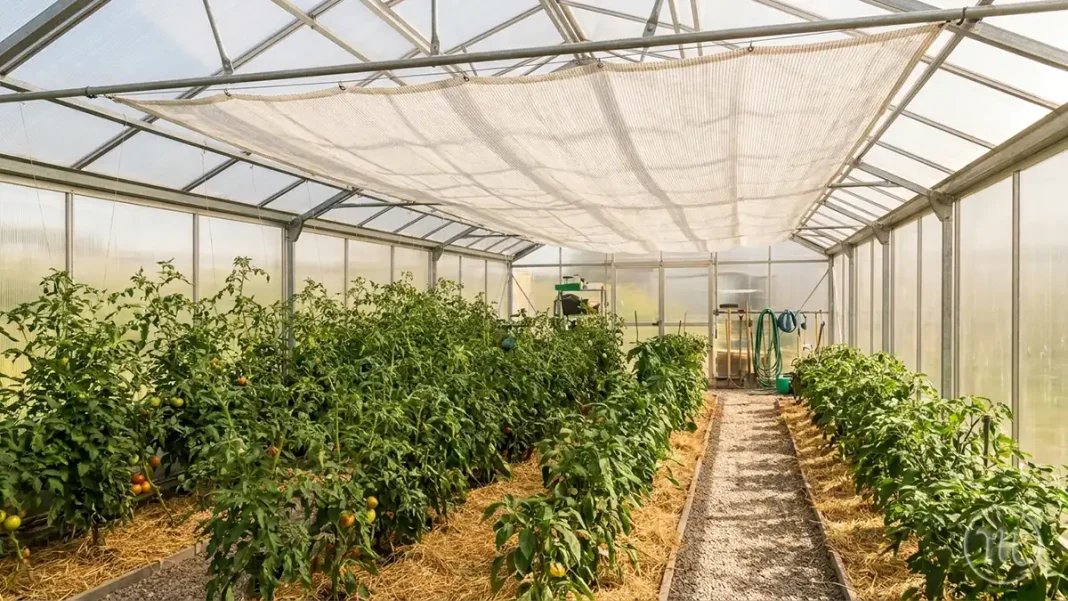
- Specialized Shade Sails and Netting. This is the most practical, high-tech option. Mesh nets with a shading coefficient of 30% to 50% are mounted above the structure, leaving a 10–20 cm air gap from the roof. They don’t heat up themselves, allow total air circulation, and will reliably serve you for many seasons.
Setting Up Ventilation and Evaporative Cooling
Airflow needs to be continuous. All available doors, roof vents, and side windows must stay fully open to maintain a constant draft, allowing trapped, superheated air to escape freely. To bring the temperature down, place wide, open water containers inside—like barrels, tubs, or buckets. Natural water evaporation absorbs excess heat energy like a charm. You can also hang wet pieces of heavy burlap or old towels to act as low-tech, DIY air conditioners.
| 🟢 Recommended Action | 🔴 Strictly Forbidden |
|---|---|
| Watering with warm water (68-77°F) | Watering with ice-cold water |
| Irrigating early in the morning or evening | Overhead watering during midday heat |
| Mulching with light-colored straw | Leaving the soil bare |
| Exterior shading setups | Interior dark curtains |
The Nuances of Watering Schedules and Mulching
Blasting your plants with ice-cold water straight from deep wells or boreholes during a heatwave is an absolute dealbreaker. For tender roots, this causes severe thermal shock, leading to instant leaf drop and flower loss. Your water should be well-settled and at least 68°F to 77°F. Schedule your watering either early in the morning (before 8:00 AM) or in the evening hours (after 7:00 PM). Apply water strictly to the root zone, since midday droplets left on leaves act like tiny optical lenses that burn straight through plant tissue.
Protecting the underground root zone from critical overheating is easy with high-quality mulch using light-colored organic materials. Dark substrates (un-decomposed peat, black plastic sheeting, or heavy humus) actively pull in the sun, trapping heat around the roots. On the flip side, dried grass clippings that have already turned pale or clean straw reflect light beautifully and keep the ground cool. You can also lay white landscape fabric directly over the beds, cutting cross-shaped slits for the plant stems.
Finally, focus on general plant immunity. Incorporating potassium humate into your feeding routine significantly improves the adaptive capacities of plant cells. A quick preventive application of potassium sulfate or potassium magnesium a few weeks before a forecasted heatwave will reinforce intercellular membranes, making your future harvest virtually bulletproof against summer weather spikes.
The Bottom Line
Record-breaking summer heatwaves are a tough test for any gardener. However, even in the most extreme conditions, you can keep crop losses to an absolute minimum by acting quickly, logically, and relying on basic plant biology. Timely anti-stress assistance, smart exterior shading, and a properly balanced air-humidifying routine are your best allies for securing a heavy, high-quality harvest. Keep a close eye on your beds, catch minor changes early, and never back down when nature throws a curveball. Wishing you amazing success, energy, and a wonderful summer season on your plot!
Advice from MODISTA
- Always keep a fresh supply of anti-stress adaptogens like Epin-Extra or Zircon in your garden first-aid kit to address early signs of wilting immediately.
- Never lock your greenhouse up fully on sunny days to “keep moisture in”—without a constant draft and proper venting, your plants will literally cook from the inside out.
- Stick exclusively to exterior shading methods, as any interior curtains or coverings will only accumulate unnecessary heat inside the structure.
How are your tomatoes and cucumbers handling the first record-breaking temperatures of the season? Bookmark this practical guide so the exact proportions for your anti-stress spray recipes are always right at your fingertips when you need them!
MODISTA Daily MODISTA Daily MODISTA Daily
ℹ️ REFERENCE
These unique recommendations for overcoming heat stress in agricultural crops were compiled based on long-term studies and practical tips published by leading experts on the Shkola Zhyttia information portal. 🌐