



Read in another language:
- • Why standard boiling water only gives you a temporary illusion of victory.
- • The “Golden Hour” for treatment: how air temperature dictates your success.
- • The truth about vinegar and why it fails to strike the root of the problem.
- • The ultimate danger: why burning leftover vines could be a fatal mistake for your lungs.
Poison ivy (Toxicodendron radicans) is a total nightmare for any homeowner. The real danger is hidden in urushiol—an oily resin that triggers severe contact dermatitis the moment it touches your skin. We’re talking unbearable itching, redness, and those dreaded blisters. It’s especially scary when this uninvited guest pops up where kids play, as they can’t always tell a dangerous plant from harmless greenery. And don’t forget your pets; they can easily carry the resin on their fur right into your living room, reports MODISTA.
If you’ve spotted a suspicious vine in your yard, you’ve got to act fast. Eradicating poison ivy in its early stages is the only way to prevent a massive infestation that takes months to clear. I’ve consulted with top weed-control experts to break down everything from identification to the most effective ways to wipe out this aggressive invader once and for all.
Where Poison Ivy Usually Lurks
This plant is a perennial vine or woody shrub that loves the edges of woods, riverbanks, and lake shores. As a vine, it uses aerial rootlets to climb up to 50 or 150 feet, wrapping itself around fences, walls, and trees. In its shrub form, it typically stands about two feet tall.
The growth phase hits its peak during spring and summer. By fall, the leaves turn a vibrant red, orange, or yellow before dropping. But here’s the thing: even without leaves, the plant is incredibly toxic. Its growth rate is staggering—a single vine can stretch 20 feet in one season. Luckily, poison ivy doesn’t handle regular mowing well, so you won’t often find it on a well-kept lawn; it prefers hiding in fences and woodpiles.
Підписуйтесь, щоб не пропустити нічого цікавого! | Follow us so you don't miss anything interesting! | Subskrybuj, aby nie przegapić niczego ciekawego!
How to Spot the Enemy
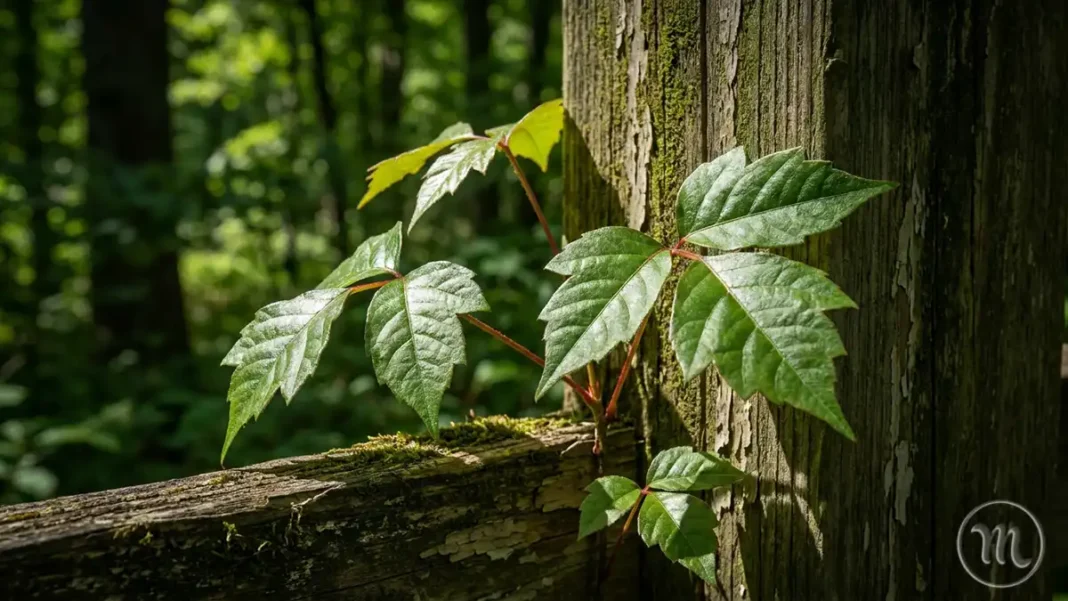
The main clue for identifying poison ivy is found in the old gardener’s rhyme: “Leaves of three, let it be.” The leaves are compound, meaning they consist of three distinct leaflets. These are attached to petioles that often have a reddish tint, and on older plants, they can even look “hairy.”
I always tell people to look closely at the edges of the leaflets; sometimes you’ll see a characteristic notch or lobe on just one side. Being able to ID this plant early will save you a lot of grief, but the best strategy is total elimination to keep your family and guests safe.
The Most Effective Ways to Kill and Remove Poison Ivy
Fighting this weed takes patience. Your choice of method depends on your preference, but each one has its pros and cons.
The Boiling Water Trick: Does It Actually Work?
Many people try to douse the plant with boiling water. Sure, it might kill the leaves, but the roots stay perfectly healthy and will just send up new shoots later. Plus, those scalded leaves still contain urushiol—touching them will give you the same nasty rash as a living plant.
Chemical Warfare: The Most Reliable Route
For a final victory, systemic herbicides are your best bet. Look for products containing dicamba, glyphosate, or triclopyr. These chemicals travel deep into the plant’s system to kill it from the inside out.
Crucial Tip: Always read the label. Some formulas can wreck your flowers or lawn if you’re messy with the spray. The perfect time to treat is a sunny, calm day when temperatures are between 60°F and 85°F.
The right way to spray:
- Thoroughly soak the leaves of young plants, making sure the mist doesn’t hit your favorite flowers.
- For massive vines, cut them 2–3 feet from the ground (wear gloves!) and paint the herbicide directly onto the cut stump with a brush.
- After you’re done, scrub your tools with soap or wipe them down with rubbing alcohol.
- If you see new sprouts, repeat the process. Don’t let up!
DIY Recipes: Myth vs. Reality
Homemade vinegar or salt solutions rarely provide lasting results. They might “burn” the green parts, but poison ivy roots are way too stubborn for these methods. The plant will bounce back quickly, and you’ll be right back where you started.
Hand Pulling (The Manual Method)
This is only for small, stray sprouts. It’s risky because any contact can lead to burns.
- Snip the top part with sharp shears (don’t rip it by hand to avoid spraying resin).
- Dig out the root with a small trowel.
- Immediately drop the remains into a heavy-duty trash bag.
The “Smothering” Technique
You can cover the ivy-infested area with a thick black tarp or plastic for a week or two. Deprived of light and oxygen, the plant will start to wither. If it’s still green after a week, keep it covered a bit longer.
Safe Disposal: The One Thing You Must Never Do
There is only one safe way to get rid of poison ivy debris: the trash.
- Never burn poison ivy! Urushiol travels in smoke. Inhaling that smoke causes severe lung irritation and internal reactions that can be life-threatening.
- Keep it out of the compost. The toxic oil doesn’t break down quickly and can stay active in your compost pile for years.
Protect yourself during every step: long sleeves, pants, closed shoes, and waterproof gloves are your mandatory armor.
My Opinion:
The only right move is to carefully bag everything up and take it to a landfill. Once the job is done, make sure to wipe your tools with alcohol or a strong disinfectant, and wash your work clothes separately from everything else in hot water. Trust me, it’s not worth the risk.
Advice from MODISTA
- Keep urushiol-removing wipes in your first aid kit if you spend a lot of time gardening.
- If you think you’ve touched the plant, immediately wash the area with plenty of cool water and a grease-cutting dish soap.
- Remember, the oil can stay active on tools or clothing for over a year—disinfecting your gear isn’t optional; it’s a necessity.
Have you ever had a run-in with this “treacherous triplet” in your yard? Share this guide with your fellow gardeners so they can stay safe and reclaim their outdoor space!
ℹ️ REFERENCE
Poison ivy (Toxicodendron radicans) is a species of woody vine in the Anacardiaceae family, native to North America and East Asia. It is famous for its ability to cause severe allergic reactions in humans due to urushiol, a toxic oil found in the plant. You can learn more about its biological characteristics on encyclopedia pages. 🌐