
- • Why traditional cheesecloth is officially outdated and the major flaws you need to know about.
- • The readily available material professional cleaners swear by instead.
- • A secret metallic helper that lets you iron clothes from both sides at the exact same time.
- • How to permanently protect your tailored suits and delicate tulle from heat damage.
Read in another language:
In many households, people still hold onto that familiar piece of mesh fabric passed down from previous generations. Pressing delicate items, tailored trousers, or intricate lace has traditionally meant reaching for a damp layer of cheesecloth. However, the home care industry has come a long way. Modern homeowners and cleaning pros abandoned these old-school methods ages ago, especially since they often leave unwanted lint or those dreaded shiny scorch marks on your clothes, reports MODISTA.
Taking proper care of your wardrobe calls for fresher, safer, and much more effective solutions. As it turns out, protecting tricky fabrics from burn marks and achieving a flawless finish is totally doable with much more practical everyday items. Not only will this elevate your clothing care to a whole new level, but it will also shave tons of time off your chores, freeing up your day for relaxation and things you actually enjoy.
Rethinking the Chore: Why Cheesecloth Is Officially Outdated
For decades, thin cheesecloth was considered the ultimate, non-negotiable tool for pressing a whole range of complicated garments. This becomes especially critical when dealing with crisp business suits that demand ultra-gentle handling. Without a protective barrier, jackets and trousers can develop unsightly shiny patches that are nearly impossible to remove.
Plus, without a reliable shield, sheer tulle, fine lace, and other finicky synthetic or silk materials either stay wrinkled due to low heat settings or simply melt under a hot iron. But using cheesecloth comes with serious downsides: it warps quickly, dries out in a flash, and frequently sheds tiny textile dust all over dark clothing. Professional cleaning experts unanimously agree that keeping this relic in your modern setup makes absolutely no sense.
Підписуйтесь, щоб не пропустити нічого цікавого! | Follow us so you don't miss anything interesting! | Subskrybuj, aby nie przegapić niczego ciekawego!
The Pro-Approved Alternative for Ultimate Fabric Protection
If that time-tested mesh material is nowhere to be found, or if you are simply ready to try something way more efficient, don’t panic. There is an incredibly simple alternative sitting right in your closet. Cleaning pros recommend swapping out cheesecloth for a piece of thick, heavy-duty cotton fabric.
Natural cotton distributes heat from the iron evenly, prevents delicate fibers from melting, and beautifully protects the surface from overheating. A clean piece of plain white cotton fabric or even an old, thin pillowcase works perfectly for this.
Sounds familiar when you have to spend ages smoothing out every single crease? Trust me on this, it actually works so much better because cotton doesn’t bunch up or slide around under the iron the way cheesecloth does, serving as a reliable shield for your favorite pieces.
The Lightning-Fast Method: How to Cut Your Ironing Time in Half
Now, let’s talk about the real game-changer. For anyone looking to streamline their housework and skip standing over an ironing board for hours, there is another brilliant trick. It speeds up the process significantly and delivers envy-inducing results with minimal effort.
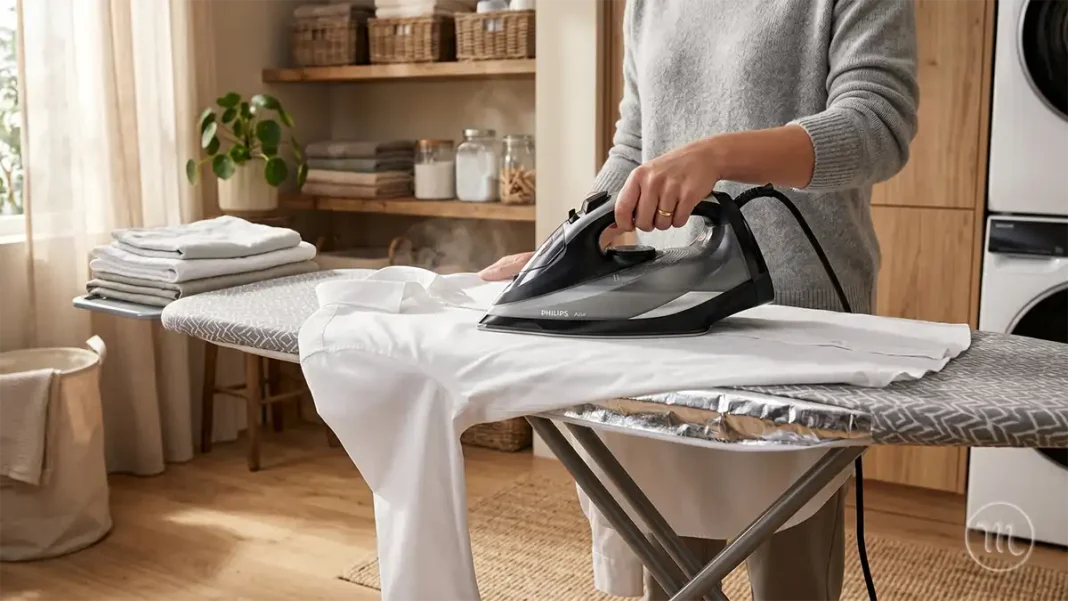
To pull off this clever home hack, you will need a standard roll of aluminum foil—the exact same kind you use for baking. Carefully place a layer of foil directly underneath the fabric cover of your ironing board, smoothing it out completely across the entire working surface.
Boom! Here’s the thing: aluminum is highly conductive and reflects the heat right back up into the fabric. According to experienced home experts, the hot air doesn’t just dissipate through the board; it bounces straight back into your clothes. This means the front and back of your garment are pressed at the exact same time. It doesn’t just save your energy; it minimizes the time delicate materials spend in contact with a hot surface, guaranteeing a flawless, boutique-worthy wardrobe.
Advice from MODISTA
- Always use un-dyed, solid white cotton fabric to protect your garments, preventing any accidental color transfer caused by the steam.
- Periodically check the condition of the foil under your ironing board cover, as it can wrinkle over time and will need a quick replacement to keep that maximum heat-reflecting effect.
- When dealing with ultra-delicate lace or silk, try utilizing a vertical steaming function if your iron supports it for an extra layer of safety.
What are your go-to secrets for tackling mountains of laundry without breaking a sweat? Bookmark this handy guide so you don’t lose this amazing foil trick before your next deep clean!
MODISTA Daily MODISTA Daily MODISTA Daily
ℹ️ REFERENCE
Ironing is the process of using heat and pressure to smooth out textile materials, a practice that originated long before the invention of modern electrical appliances. Today’s garment care techniques, developed by top home economics and textile experts, focus heavily on preserving fiber integrity while optimizing time efficiency. To learn more about the history of clothing care and textile tools, check out the free encyclopedia Wikipedia. 🌐
Наші стандарти: | Our standards: | Nasze standardy: Редакційна політика сайту MODISTA | Editorial policy of the MODISTA website | Polityka redakcyjna serwisu MODISTA
За матеріалами Modistaua.com | Based on materials from Modistaua.com | Na podstawie materiałów Modistaua.com
Підписуйтесь на новини | Subscribe to news | Subskrybuj wiadomości MODISTA в Telegram