




- • Spotting the difference: how to tell this nutritious gem apart from stinging nettle.
- • Why your skin and gut will absolutely love this vibrant spring superfood.
- • A step-by-step recipe for a velvety cheese and seed spread that elevates your morning toast.
- • Foraging calendar: where and when to hunt for the juiciest, vitamin-packed leaves.
Read in another language:
How many times have you been weeding your garden beds or strolling through a spring yard, only to ruthlessly yank out and throw away a small plant with fuzzy purple tops? Stop right there—you might have just tossed a literal wellness elixir! What most people dismiss as an annoying weed is actually an incredible superfood that gives fancy, store-bought supplements a serious run for their money. I do this every single spring—gathering these tender leaves because I know exactly how much they do for our bodies, reports MODISTA.
Today, we are shining a spotlight on purple dead-nettle—a wild edible that has unfairly lived in the shadow of its painful, stinging cousin. This amazing herb doesn’t bite, has a wonderfully mild flavor, and packs a massive punch for both your immune system and your home cooking. Let’s dive into why you should stop tossing it into the compost bin and start bringing it to your family table instead.
While meticulously manicuring flowerbeds or vegetable patches, so many of us have no clue about the treasure we’re holding in our hands. Purple dead-nettle literally blankets our gardens, trail sides, and park areas like a lush carpet. Instead of dropping hard-earned cash on pricey imported vitamins, all you need to do is look around your feet. Over the past few years, the hyper-local, seasonal foraging trend has exploded globally, and this humble wild herb has become a total rockstar in experimental kitchens.
I always tell my family: nature gives us exactly what we need right when we need it most. The young shoots of this herb pop up right as our bodies are feeling sluggish after winter, craving a fresh hit of nutrients. Its mild, slightly earthy aroma blends beautifully into your daily routine, turning ordinary meals into something unique and mega-healthy.
Підписуйтесь, щоб не пропустити нічого цікавого! | Follow us so you don't miss anything interesting! | Subskrybuj, aby nie przegapić niczego ciekawego!
How to Tell Dead-Nettle Apart From the Stinging Kind
At first glance, our secret ingredient looks a whole lot like standard stinging nettle. But look closer, and the differences are a game-changer. For starters, the leaves are incredibly soft to the touch and completely lack those treacherous, sting-inducing hairs that make us shudder. You can confidently pick it with your bare hands without fearing a single burn.
Secondly, the upper crown of this striking plant boasts a gorgeous purple-to-magenta gradient, which gives it its botanical name. Once it blooms, it pushes out delicate, super-cute pinkish-purple blossoms. The total lack of stings paired with that signature color is the easiest way to know you are dealing with a gourmet ingredient, not an annoying weed.
The Expert-Backed Power of Spring Greens
According to reputable international studies and data from databases like Plants For A Future, the young leaves and flowers of purple dead-nettle are 100% edible. Trust me on this, they aren’t just safe—they are incredibly good for you! The flavor profile is much more delicate and less intense than stinging nettle, meaning it plays well with a ton of different ingredients.
This wild green is loaded with natural flavonoids and unique phenolic compounds. Because of these active components, scientists are actively researching the plant for its powerful anti-inflammatory and antioxidant properties. By tossing it into fresh salads, light green smoothies, or whipped cheese spreads, you are protecting your cells from oxidative stress and giving your body a serious energy boost.
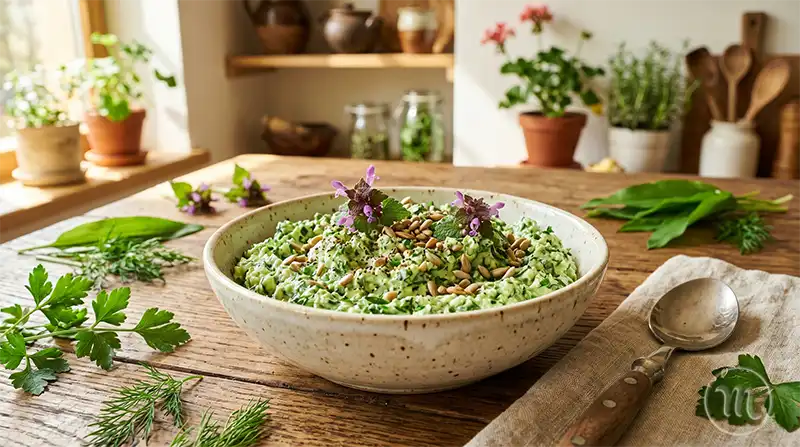
Vitamin-Packed Dead-Nettle and Cheese Spread
This dish comes together in just a few minutes, pulling in at around 145 kcal per 100 grams. Total prep and blending time won’t take more than 20 minutes of your day. It’s an absolute lifesaver for a quick, healthy breakfast!
Ingredients:
- Fresh purple dead-nettle leaves — 80g
- Cottage cheese or curd cheese (9% fat preferred) — 150g
- Sunflower seeds — 40g
- Fresh parsley — 20g
- Extra virgin olive oil — 30ml
- Fresh garlic — 5g
- Lemon juice — 1 tsp
- Salt — 1/2 tsp
- Freshly cracked black pepper — 1/2 tsp
Directions:
- Toss the raw sunflower seeds into a dry, preheated skillet. Toast them over medium heat for a few minutes, stirring continuously. As soon as they release a rich, nutty aroma and turn a beautiful golden brown, remove them from the heat and let them cool down completely.
- Meanwhile, thoroughly wash your gathered dead-nettle leaves under cold running water. Pat them completely dry with a paper towel or spin them in a salad spinner to remove any excess moisture.
- In a food processor or blender, combine the cottage cheese, dried dead-nettle leaves, fresh parsley, and the peeled garlic clove. Drizzle in the high-quality olive oil and fresh lemon juice. Blend everything thoroughly until you achieve a perfectly smooth, velvety cream texture.
- Season the mixture with salt and black pepper, then pulse the blender for a few more seconds to distribute the seasoning evenly. Right at the end, throw in the toasted sunflower seeds and give it a quick, brief pulse so some seeds stay chunky—this gives our spread an incredible, artisanal crunch. Transfer your finished masterpiece into a serving bowl and chill in the fridge for 15 minutes before spreading onto warm toast.
The Foraging Calendar: When Wild Greens Are Juiciest
This resilient plant is one of the very first to greet us after the winter freeze. It starts growing aggressively as early as March, and its growing season lasts from early spring all the way into late autumn. Finding it is a total breeze: check out any sunny clearing, look right beneath orchard trees, or walk along old fence lines and natural meadows.
My Opinion:
The absolute prime time for harvesting your culinary haul is during the spring months. From March to June, the leaves stay beautifully tender, juicy, and soft before the plant begins developing tough, fibrous stalks. My top tip: for the best flavor, snip only the top third of the plant along with the young flower clusters. And, of course, make sure you forage far away from busy highways, industrial zones, or agricultural fields that might be sprayed with chemicals.
Advice from MODISTA
- Before throwing your foraged greens into the processor, make sure they are thoroughly dried. Any leftover water droplets will thin out your spread and ruin that rich, creamy texture.
- Play around with the nutty notes: try swapping the sunflower seeds for lightly toasted walnuts or pine nuts to give the dish a high-end, restaurant-worthy finish.
- Keep your homemade spread in an airtight glass container in the fridge for no more than 48 hours so the greens retain their bright color and nutritional value.
Did you know about the incredible culinary potential hiding in this purple backyard plant, or did you always think of it as just another weed to pull? Bookmark this fresh spring recipe and share it with your besties who love clean eating and natural ingredients!
MODISTA Daily MODISTA Daily MODISTA Daily
ℹ️ REFERENCE
Purple dead-nettle (Latin: Lamium purpureum) is a well-known annual or biennial herbaceous plant belonging to the Lamiaceae (mint) family. Widespread across Europe and Asia, it is highly regarded for its medicinal, nectar-producing, and culinary qualities due to its high concentration of essential oils and antioxidants. You can dive deeper into the biological features and classification of this species on the Wikipedia free encyclopedia pages 🌐.