



- • The hidden power of lunar phases: exactly how our celestial neighbor guides plant sap and which periods are perfect for roots vs. leaves.
- • The green conveyor belt in full swing: a complete list of crops you can—and should—sow in mid-summer for a bonus round of veggies.
- • Red flags on the calendar: precise dates when you shouldn’t even touch the soil if you want your seedlings to survive.
- • The variety hack: why standard seeds won’t cut it and exactly what to look for when picking your planting material.
Read in another language:
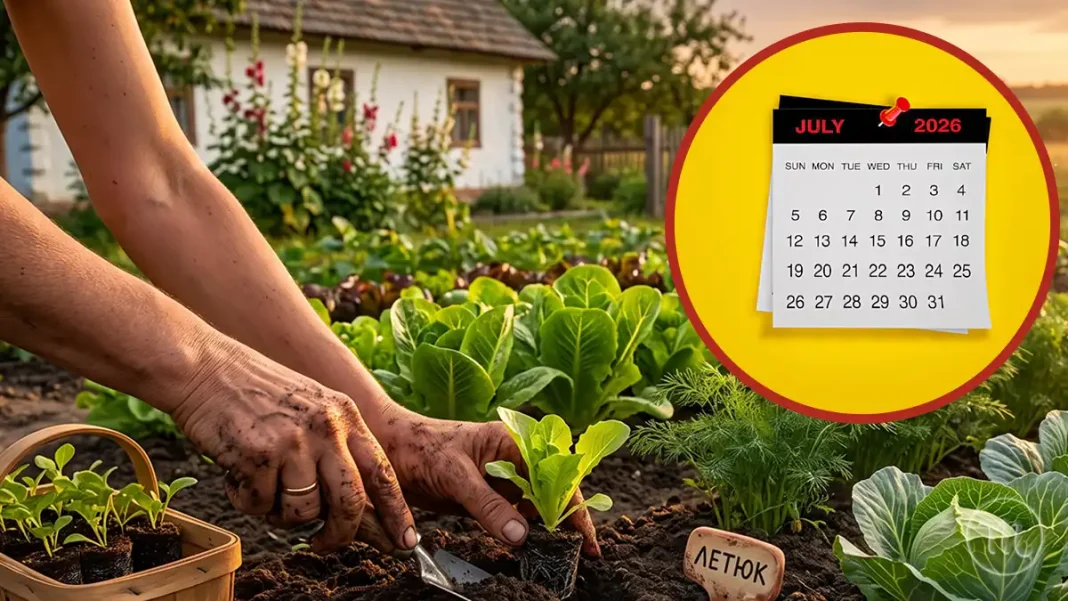
Mid-summer is traditionally all about harvesting your first crops and packing mason jars for the winter. However, seasoned gardeners know that July offers a unique window to give your plot a second wind. By replanting your beds now, you can keep fresh greens and crunchy young veggies coming right until the first frost hits. The secret is simple: don’t fly blind—sync your efforts up with the natural biorhythms of the planet and its lunar cycle, reports MODISTA.
While some might view old-school gardening advice with a bit of skepticism, the way lunar phases influence sap movement in plants is pure physics backed by centuries of observation. Hit the right timing, and your seeds sprout faster, seedlings resist disease, and pests will happily skip your garden beds altogether. Let’s dive deep into how the planting calendar for July 2026 works so you can make these dates work for you.
Natural Biorhythms: How Lunar Phases Control Your Garden Plot
Both astrological and folk traditions agree: every stage of the lunar cycle dictates strict rules for your yard. On certain days, the earth actively absorbs moisture and nutrients, while on others, it pushes all its energy upward toward the sun. Recognizing these shifts helps you plan your backyard projects without unnecessary exhaustion or disappointment.
- The Waxing Moon (July 15–28): Energy and sap flow upward from the roots toward the leaves and fruit. This is prime time to feed and plant anything that produces above ground—think lush greens, crisp cucumbers, juicy tomatoes, or vibrant flowers.
- The Full Moon (July 29): Energy peaks in the upper parts of your plants, but the soil itself becomes incredibly sensitive. On this day, it’s best to set your shovels and hoes aside, take a breather, and just let nature do its thing.
- The Waning Moon (July 1–13, and July 30–31): Sap moves downward, nourishing root systems. These periods are practically tailor-made for planting early root crops, pruning bushes, adding organic matter, and declaring absolute war on weeds and pests.
- The New Moon (July 14): The lowest point of energetic activity. Plants essentially freeze and rest, so any major disruptions or sowing attempts will likely end in frustration.
What to Plant in Mid-Summer: The Ultimate Second-Wave Crop List
July won’t wait around. Daylight hours are slowly shrinking, and the summer heat requires a strategic approach to watering. To pull off a spectacular second harvest, you need to rely exclusively on fast-maturing, early varieties that can cross the finish line before the autumn chill sets in.
Підписуйтесь, щоб не пропустити нічого цікавого! | Follow us so you don't miss anything interesting! | Subskrybuj, aby nie przegapić niczego ciekawego!
To make life easier, I’ve compiled the ultimate list of crops that are safe to pop into the ground this month:
- Radishes: Opt for super-early varieties (like the crowd-favorite “Zhara” or “18 Days”) and sow them between July 1 and July 20.
- Aromatic Greens: Dill, parsley, leaf lettuce, and nutrient-packed spinach can be sown in successive waves all month long to keep your dinner table stocked with fresh vitamins.
- Spinach and Beans: While spinach can wait until July 20, you’ll want to get your green beans into the ground during the first half of the month—ideally from July 1 to July 15.
- Beets and Carrots: Exercise some caution here. Stick to fast-growing varieties (for beets, “Bordeaux 237” or “Detroit” work beautifully; for carrots, go with “Nantes” or “Chantenay”). Get your beets sown by July 10, and carrots wrapped up by July 5–10.
- Cucumbers and Late Cabbage: Crisp cucumbers for your autumn salads should be sown from July 1 to July 10. This is also the ideal window to transplant late-season cabbage seedlings into their permanent homes.
Gardening Calendar: July’s Best and Worst Days Revealed
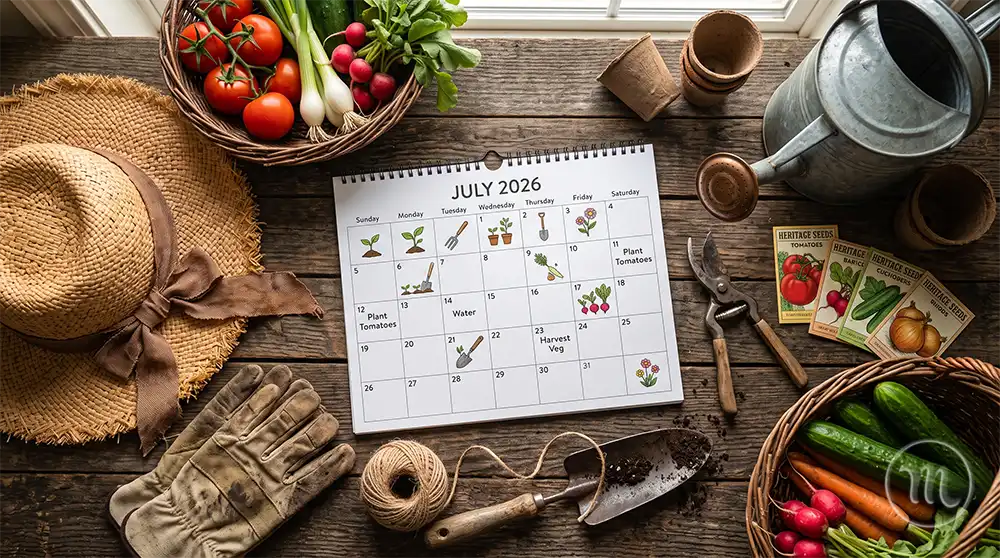
Instead of trying to track all the astronomical data yourself, keeping a clear schedule handy makes life so much simpler. Plan your weekend cottage trips around these dates, and you’ll notice how effortlessly your garden takes off.
When everything clicks: The absolute best days for sowing, transplanting seedlings, loosening soil, and heavy watering fall on July 1–7, 9–13, 15–21, 23–28, and July 30–31. During these windows, plants boast incredible resilience, adapt quickly to new spots, and build sturdy stems along with powerful roots.
When to chill in the shade: Your red-flag days for any serious garden work are July 8, 14, 22, and 29. You should also add extreme heatwaves or dry spells to this list. Even if the calendar claims it’s a perfect day, if the thermometer creeps past 35°C, call it a day. Stick to a refreshing evening watering session and let the land rest.
In my experience, I see beginners make the same mistake constantly: they try to drench bone-dry soil in the middle of a blazing afternoon, which instantly scorches delicate foliage. Remember, the July sun is ruthless. Blending a smart lunar rhythm with basic common-sense care is your golden ticket to a thriving backyard garden.
Advice from MODISTA
- Spread grass clippings or straw as mulch over your July plantings—this simple trick keeps delicate seeds from drying out under the intense sun and locks in valuable moisture.
- Sow your greens in the partial shade of taller crops (like corn or tomatoes) because direct, scorching sunlight can leave lettuce leaves tasting bitter and tough.
- Always prioritize a thorough evening soak right at the root zone using water that has warmed up in the sun all day; cold well water during a July heatwave causes severe thermal shock.
Have you ever experimented with mid-summer planting, or do you usually pack it in after the spring rush? Save this planting calendar to your browser bookmarks or share this guide with a friend who wants a lush, green garden all the way into autumn!
MODISTA Daily MODISTA Daily MODISTA Daily
ℹ️ REFERENCE
The lunar planting calendar tracks the synodic lunar month, which lasts roughly 29.5 days. As the Moon orbits Earth, its changing sunlight exposure alters our planet’s gravitational pull, triggering shifts not just in ocean tides, but within the cellular fluids of living plants. For deep scientific dives into how cosmic cycles impact the biosphere and plant life, explore the open pages of Wikipedia. 🌐