



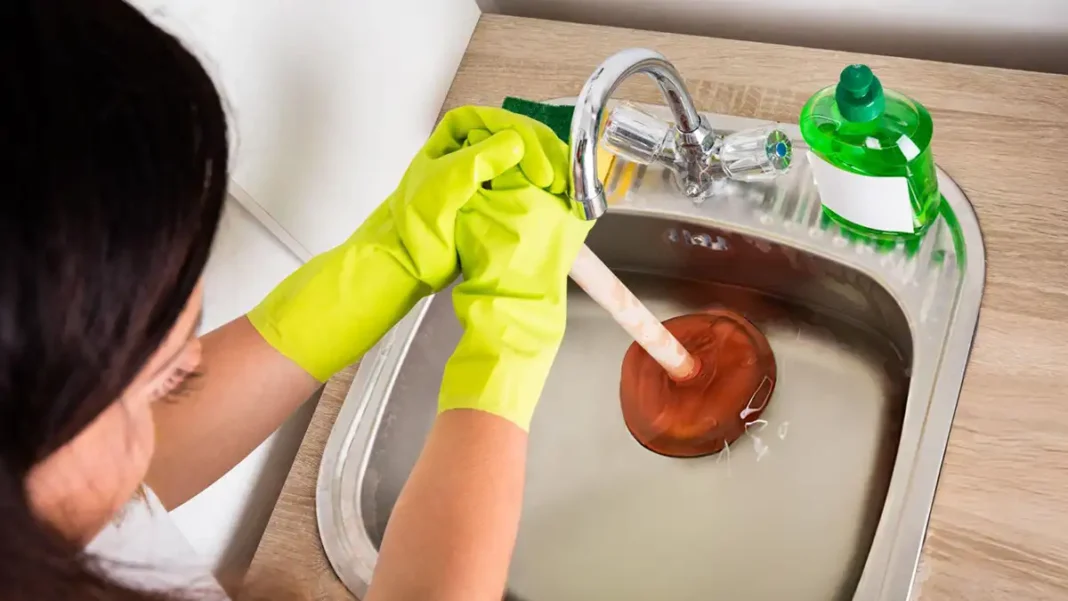
Most kitchen drain problems stem from the relentless buildup of everyday waste. Grease flushed from pans, soap residue, and tiny food particles settle on the interior walls of the pipes. Over time, they form a dense, slimy clog that prevents the free flow of water. Experienced homemakers know: these organic deposits can be tackled with a unique duo of common household products.
The Magic Mixture That Dissolves Greasy Blockages
To eliminate this nuisance, you only need two components that are likely already in your cupboard:
- Half a cup of liquid dish soap.
- Half a cup of regular liquid chlorine bleach.
The mechanism of this tandem is quite ingenious. The dish soap acts as a powerful emulsifier—it actively breaks down and dissolves the greasy blockages themselves, turning them into liquid. Meanwhile, the chlorine bleach not only disinfects but also destroys the slimy deposits on the pipe walls, and most importantly—it completely eliminates that unpleasant, stagnant odor often accompanying a clog. Together, they provide a gentle yet guaranteed effective cleaning solution.
How to Properly Apply the Drain-Clearing Solution
For this method to work optimally, you must follow clear instructions, especially regarding the contact time.
Mixing and Pouring the Solution
- Thoroughly but carefully combine both components in a small, non-metallic container. Using non-metallic cookware is important to prevent unnecessary reactions.
- The resulting mixture should be poured in a thin, steady stream directly into the drain opening.
The Critical Action Time
The main secret to success is time. The solution must be allowed to work. It is best to leave it in the drain for 8-10 hours, ideally overnight. During this extended contact period, maximum dissolution of even the most stubborn greasy deposits occurs.
Підписуйтесь, щоб не пропустити нічого цікавого! | Follow us so you don't miss anything interesting! | Subskrybuj, aby nie przegapić niczego ciekawego!
The Final Step — Flushing
The next morning, turn on the hot water tap (but not boiling water!) and flush the entire system with a powerful stream of water for 5–7 minutes. You will immediately notice how the water begins to disappear freely and unimpeded, and the air in your kitchen will become fresher.
Safety and the Limits of Home Cleaning
This method is significantly safer and gentler than industrial products, which often contain caustic alkalis and acids that can damage seals and metal pipes. It is ideal for regular maintenance—if used once a month, the risk of a serious clog is practically reduced to zero.
When Won’t This Method Help?
We must admit: even the best home remedy has its limitations. This mixture is an unrivaled helper only against organic blockages (grease, soap, food residue).
However, if the problem lies with a mechanical obstruction (for example, a clump of hair in the bathroom, sand accumulation, or a foreign object that accidentally fell into the drain), the home solution will be powerless. In such cases, unfortunately, you will have to resort to more radical methods: using a plunger or a plumber’s snake.
Important Safety Precautions
Since we are using chlorine bleach, strictly observe safety rules:
- Work only in a well-ventilated area, making sure to open the windows.
- It is strictly forbidden to mix this mixture with vinegar, ammonia, or any other acidic agents! Such a chemical reaction can lead to the release of extremely toxic, poisonous fumes.
Despite these warnings, the time-tested duo of dish soap and bleach remains the most economical, accessible, and reliable solution for maintaining ideal flow in your drains. Try it—and you’ll be convinced that a clear drain can be the result of simple ingredients.