



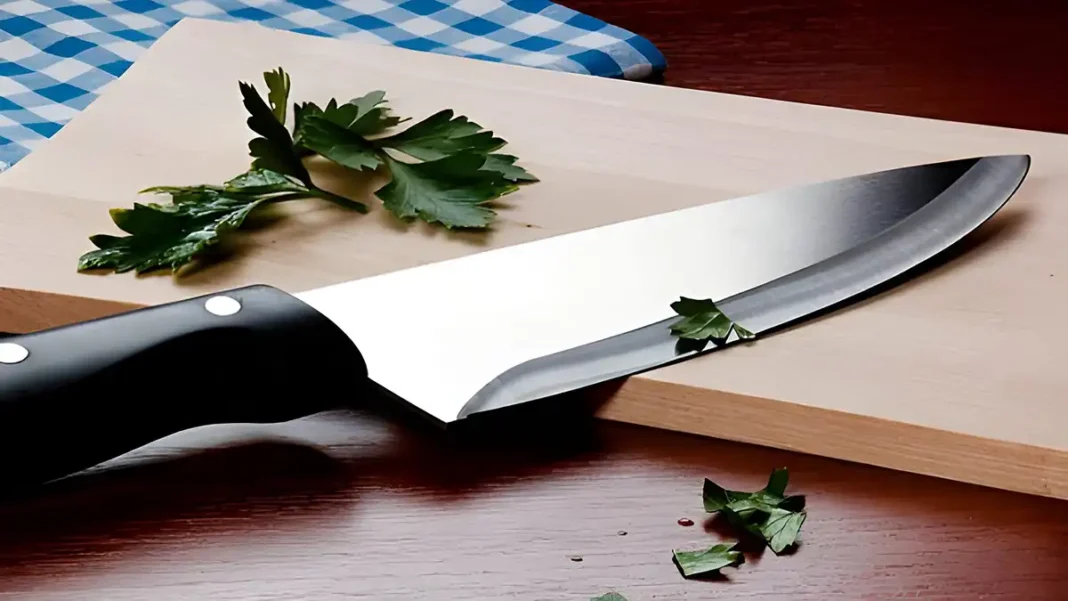
We all know that unpleasant feeling when a knife starts to saw through food instead of slicing it, crushing tomatoes, or slipping off meat. This isn’t just inconvenient—it’s dangerous, as a dull knife is much easier to hurt yourself with than a sharp one that performs its job precisely, reports MODISTA.
Due to daily use and mechanical action, the edges of our favorite kitchen helpers inevitably dull. Of course, in an ideal world, every kitchen should have a quality honing steel or a specialized sharpener. But what should you do when disaster strikes unexpectedly—for example, while relaxing at the cottage, visiting guests, or simply forgetting to buy a sharpening tool? I want to share a brilliantly simple emergency method that has saved me more than once.
The Ceramic Mug: Your Unexpected Sharpening Tool
The solution is literally right at hand—or rather, in your cupboard. We need an ordinary ceramic mug or cup. This method relies on the fact that the bottom edge of most ceramic items has a rough, unglazed ring which is perfect for a quick, albeit temporary, restoration of the cutting edge.
How to Properly Sharpen a Knife on Ceramic: Step-by-Step Guide
It’s important to act clearly and carefully here.
- Choosing the “tool.” Take the simplest ceramic mug. Please, leave Grandma’s set or Mom’s delicate porcelain alone! Their fine glazed coating simply won’t work, and you risk damaging a valuable item.
- Preparing the workspace. Flip the chosen mug upside down. So that it doesn’t slide across the countertop while you work (which is quite dangerous!), be sure to place something non-slip underneath it. A simple waffle towel or a paper napkin folded several times works great.
- Sharpening the blade. Find that rough ring on the bottom of the mug. It will feel coarse to the touch. This is what we will use to sharpen our knife.
- Place the blade against the rough edge at a slight angle (approximately).
- Draw the knife straight and evenly from the base to the tip of the blade, as if you are trying to shave a thin ceramic sliver.
- Alternate the sides of the blade, making an equal number of strokes on each side.
Will the Knife Be Razor Sharp? About the Method’s Benefits and Limitations
I have to be honest with you: after this express sharpening, your knife certainly won’t be perfectly sharp, like after professional treatment on a whetstone. However, it will significantly improve its cutting properties. You’ll be able to easily slice vegetables for a salad, chop greens, or prepare a small piece of meat.
Підписуйтесь, щоб не пропустити нічого цікавого! | Follow us so you don't miss anything interesting! | Subskrybuj, aby nie przegapić niczego ciekawego!
Why should you know this life hack?
I believe this option is the perfect “first aid” for the kitchen. In the 21st century, you can buy any gadget, but knowing how to get out of a tight spot using makeshift tools is a priceless skill. This is not a replacement for a full sharpener, but a backup plan that every person who loves to cook should adopt.