



In this article, you’ll learn:
- Why lacquered floors go dull and how light physics affects the perception of scratches.
- The secret ingredient from your bathroom that creates a “new varnish” effect.
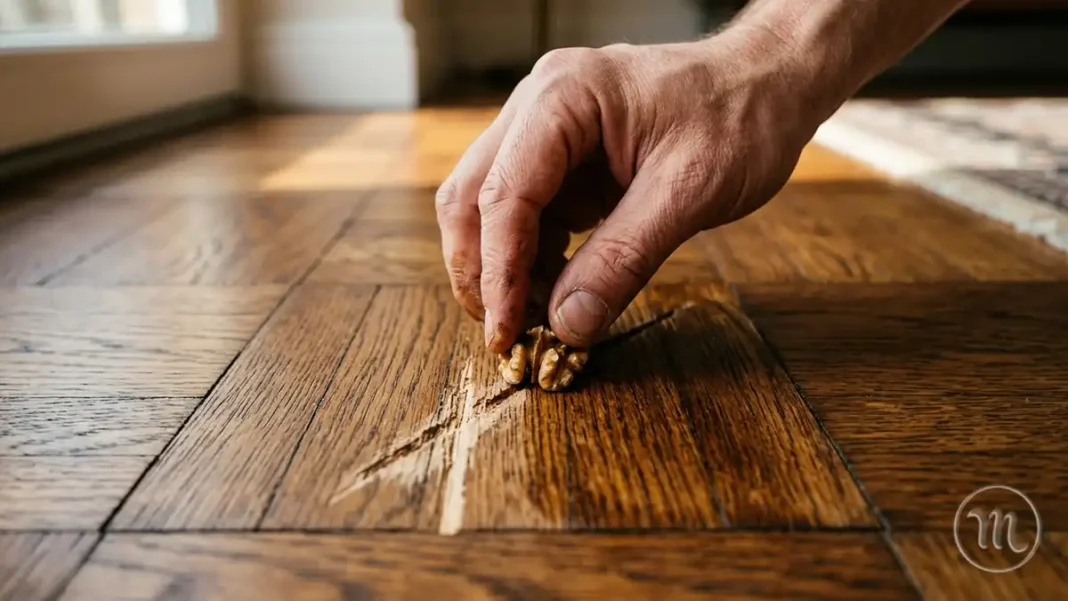
- How a simple walnut can become a professional restorer for deep cracks.
- Safe care rules to avoid damaging the wood’s structure.
A scratched parquet is a true stylistic disaster that can instantly ruin the aesthetic of your carefully arranged home. Before you frantically grab the phone to order expensive floor sanding, take a deep breath and look into your utility cupboard. You’ll be surprised, but the salvation for your wooden floors is right there, reports MODISTA.
I’ve found an incredibly effective solution for wood renewal that eliminates damage without dust, noise, or skyrocketing costs. This unconventional trick will bring back a salon-like shine to your floor, as if it’s just been covered with a fresh coat of varnish. Let’s dive into why it works and how to apply this method correctly in your own home.
The Anatomy of Damage: Why Wood Loses Its Flawless Look
Wooden flooring is a living, organic material that, even with high-quality varnish or oil treatments, faces inevitable mechanical stress over time. Your favorite heels, the unnoticed movement of heavy furniture, or tiny particles of sand brought in on shoes from the street—all of this creates a network of micro-scratches on the surface. These small imperfections disrupt the smooth surface of the lacquer, causing light to stop reflecting evenly.
I often notice this mistake: people assume the floor is just “old.” In reality, your once-perfect parquet becomes matte, dull, and visually tired precisely because the integrity of the top layer has been breached. The entire space loses that prestigious note we all strive for in our interiors. The traditional approach dictates calling a specialist, thorough machine sanding of the entire area, and multi-layer re-varnishing. It’s not just an extremely expensive process, but an invasive one too, as it requires clearing out the rooms and leaves behind that notorious fine dust. Fortunately, modern interior care offers much more elegant, targeted solutions that turn the physics of light refraction strictly in your favor.
Підписуйтесь, щоб не пропустити нічого цікавого! | Follow us so you don't miss anything interesting! | Subskrybuj, aby nie przegapić niczego ciekawego!
The Chemistry of Radiance: How Fabric Softener Smooths Micro-scratches
The solution for restoring surface shine and masking small defects is unexpectedly hidden not in specialized hardware stores, but in your bathroom. Using fabric softener on a wooden floor might sound like an urban legend, but from a technical standpoint, it’s a simple and highly effective chemical reaction. Softeners contain cationic surfactants and specific silicone polymers, originally designed to smooth textile fibers.
When I first tested this formula on lacquered wood, I was amazed: the polymers act as a microscopic coating. They physically fill the tiny cracks on the surface and create an extremely thin, even protective layer that optimizes light reflection. The process is simple and doesn’t require any special technical knowledge.
Here’s how I do it: I add just two caps of high-quality softener to a bucket of warm water. Boom! It’s vital to stick strictly to the dosage—too much can create an unwanted sticky layer on the floor. Dip a microfiber cloth into the solution, wring it out thoroughly, and wipe the most critical, scratched areas. Afterward, use the rest of the liquid to mop the entire surface evenly. The result is instant visual correction: light reflects perfectly again, scratches visually vanish, and your home gains an incredible scent along with the glowing floor. It actually works!
Native Polymers: Walnut Oils for Deep Wood Regeneration
But what if the mechanical damage is deeper and has cut through the protective varnish right down to the raw wood? In this case, polymers from the softener won’t help, as the damaged structure needs a physical filler and color correction. In the world of professional restoration, craftsmen often turn to natural lipids, and at home, ordinary walnuts are the perfect substitute.
This old carpenter’s trick works thanks to the exceptionally high content of linoleic acid and natural oils in the walnut kernels, which have the ideal molecular weight to penetrate porous wood fibers. For the repair, you only need half a walnut kernel (unshelled). Rub it directly into the scratch using circular motions and light pressure. The friction warms the kernel, causing the natural oils to release more quickly. They are immediately absorbed into the damaged, open structure of the wood.
This process achieves two key goals:
- It physically fills the microscopic indentation with organic material.
- It moisturizes the dry wood, which causes the damaged spot to darken naturally and blend in with the surrounding varnish.
After application, let the oil sit for a few minutes so the lipids can do their thing, then vigorously polish the surface with a soft, dry cotton cloth. The treated scratch becomes practically invisible, and the wood receives localized nourishment and protection from further decay. A sophisticated home doesn’t always require heavy investments, just smart and professionally grounded solutions.
MY OPINION:
I’ve seen firsthand that parquet care isn’t just about expensive products, but about understanding the material’s properties. The softener method was a total game-changer for me; it doesn’t just mask defects, it creates an anti-static effect that keeps dust from settling as much.
Advice from MODISTA
- Test on an inconspicuous area: Always check the effect of the conditioner or walnut in a corner of the room or under furniture to ensure it doesn’t change the color of your specific finish.
- Avoid excess moisture: Wood is “afraid” of water, so the cloth should be barely damp, not wet, to prevent joints from swelling.
Sounds familiar? Give these methods a try today, and your floor will thank you with a royal glow! Share this tip with a friend who also dreams of a perfect home without the extra effort. ✨
ℹ️ REFERENCE
City Magazine is a popular European publication specializing in lifestyle, trends, and useful home tips. This material is based on practical recommendations from interior experts who offer eco-friendly and budget-friendly alternatives to chemical products. You can find more interesting life hacks on their official resource 🌐.