



If your baking often disappoints, you might be choosing the wrong fat. I’ll tell you in which recipes saving money will work to your advantage, and where the stingy pays twice.
When I first started my culinary journey, I strictly followed recipes. Not a single step aside! That’s understandable: you want the dish to turn out exactly as pictured. But with experience comes the realization that some rules can be flexibly circumvented.
This is especially true for ingredient substitution. Yes, many of us eventually start experimenting, often swapping more expensive products for their budget counterparts. And one of the most popular questions in my kitchen is: can butter be replaced with margarine in baking? The answer is not as simple as it seems. Sometimes this saving really works, and sometimes it turns a potential masterpiece into a culinary failure. We don’t want to spoil the ingredients and, worst of all, be left without the desired pie, right?
Butter vs. Margarine: Understanding the Chemistry of Fats
Before rushing to the store for a cheaper product, let’s understand the main difference.
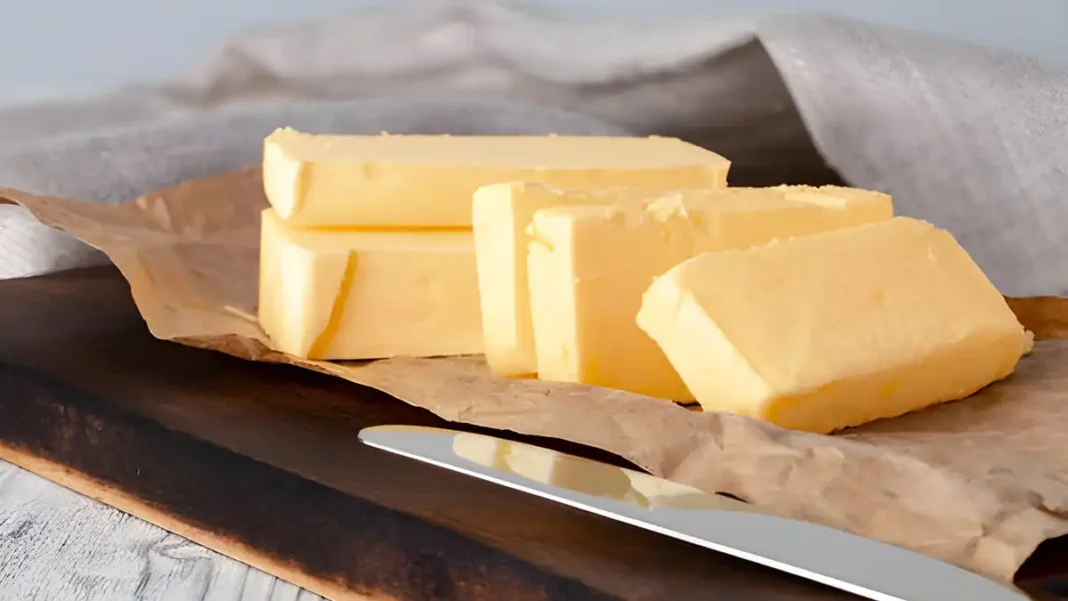
What is butter? It is a product created on the basis of dairy cream. That is, it is animal fat, natural and, as a rule, more expensive.
Підписуйтесь, щоб не пропустити нічого цікавого! | Follow us so you don't miss anything interesting! | Subskrybuj, aby nie przegapić niczego ciekawego!
What is margarine? It is a product made mainly from vegetable fats (oils) that have been hydrogenated to achieve a solid consistency.
Although both contain fats, their structure and effect on the dough differ fundamentally. This difference becomes critical when we talk about certain types of baking.
When Margarine is the Best Friend of Your Dough (and Wallet)
As a journalist who loves to cook, I always look for the perfect balance between quality and price. And here is where margarine can truly win this battle:
1. For Fluffy and Porous Dough
If you are making yeast dough, sponge cake, or other baked goods that need to rise well, become porous, and airy, feel free to use margarine.
What’s more, in some cases, margarine can even yield a better result! Its consistency helps create ideal conditions for air bubbles to form in the dough, providing that desired airiness.
2. In Puff Pastry Recipes
Puff pastry (croissants, turnovers, Napoleon) also works perfectly with margarine. Due to its structure, it helps form clear, separate layers. Therefore, for laminated products where flakiness is important, you can safely experiment with margarine.
When Saving Will Turn Against You: Where Only Butter is Needed
But there are types of baking where substituting the fat will be, to put it mildly, a mistake. Here, the stingy person truly pays twice—with spoiled taste and texture.
Shortcrust Pastry and High-Fat Baking
If you are making cookies, tarts, or pies based on shortcrust pastry, forget about margarine.
Shortcrust pastry is characterized by a high-fat content, which is responsible for its crispness, crumbliness, and delicate flavor. It is the fatty butter that provides this unique texture. Margarine will not be able to replicate this crumbliness, and the baked goods may turn out coarse and less aromatic.
Creams, Fillings, and Frostings
Don’t even think about substituting butter in creams!
A true buttercream, ganache, or frosting requires quality, fatty butter. It provides the perfect flavor, the dense texture needed for whipping, and, of course, a pleasant milky aroma. Margarine is completely unsuitable for cream—it will make it taste “plastic” and may whip poorly, causing it to separate.
That’s all there is to it. Now you know the main rule that professionals follow:
- Margarine — yes for puff pastry, yeast dough, sponge cakes, and other baked goods that need to rise. This is a great way to save money.
- Butter — only for shortcrust pastry, as well as for all types of buttercreams, frostings, and fillings. Here, it is not worth being stingy, as the taste of the entire dessert is at stake.
Take these simple but critically important rules into account, and your baking will always be perfectly tasty, beautiful, and fragrant!