



In this article, you will learn:
- Why shell color is crucial for dyeing.
- Whether brown eggs really have a stronger shell than white ones.
- Which natural dyes work best on different egg types.
- Simple tips to achieve a perfectly even and rich color.
Easter is a time of bright traditions, fragrant Paska bread, and, of course, vibrant “krashanky” (dyed eggs) symbolizing new life. For many of us, Easter preparations start with choosing the eggs, because the entire aesthetic of the holiday depends on this seemingly simple step. On store shelves, we see two familiar options: white and brown. And here arises the main question that concerns every hostess every year: which ones should I choose so my DIY dyed eggs turn out flawless?
There are many myths and prejudices regarding this choice. Some are convinced that color affects nutritional value, others—shell strength. But when it comes to dyeing, rules are dictated not by taste, but by simple color theory. In this article, I will reveal all the secrets and help you make the right choice so your Easter table in 2026 is truly unsurpassed.
White or Brown Eggs: Debunking Popular Myths
Before moving on to the dyeing secrets, it’s worth clearing up the most common stereotypes surrounding white and brown eggs.
Myth 1: Brown eggs are healthier and more “natural”
This is perhaps the most popular mistake. In fact, the color of the shell does not affect the nutritional value or taste of the egg in any way. It depends solely on the breed of the hen and her genetics. Chickens with light feathers and light earlobes usually lay white eggs, while birds with dark feathers lay brown ones. The content of vitamins, minerals, and protein in both types is identical, provided the hens were kept in the same conditions and received a similar diet.
Підписуйтесь, щоб не пропустити нічого цікавого! | Follow us so you don't miss anything interesting! | Subskrybuj, aby nie przegapić niczego ciekawego!
Myth 2: Brown eggs have a stronger shell
Another common prejudice that has no scientific confirmation. A strong shell is the result of proper nutrition and the good health of the hen, as well as her age, not the color. Both white and brown eggs can have either a thin or a strong shell. Therefore, when choosing eggs for boiling, I suggest focusing on their freshness and the absence of cracks, rather than the color.
How Shell Color Affects the Dyeing Result
This is where the main secret of perfect krashanky lies. From the perspective of the art of dyeing, the difference between white and brown eggs is colossal.
White Eggs — The Perfect Canvas
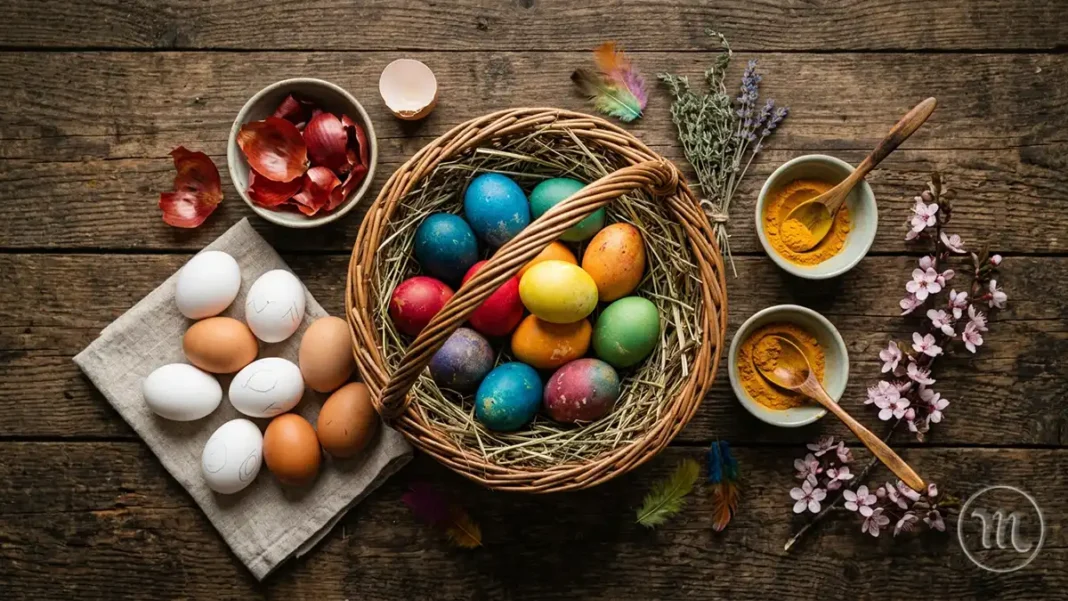
A white shell is like a blank sheet of paper for an artist. It serves as a neutral base that allows any dye to reveal its full potential. Colors come out bright, clean, and exactly as you expect. This is especially important if you plan to create Easter decor 2026 in delicate, pastel shades: blue, mint, lavender, or light pink. On a brown base, such colors will be almost invisible or will take on a muddy tint.
Brown Eggs — For Deep and Natural Shades
The brown shell itself already has a color that interacts with the dye, creating new, often unexpected shades. It is excellent for using natural dyes such as onion skins, coffee, hibiscus, or beetroot decoction. Thanks to the dark base, the colors turn out deep, rich, and “earthy.” For example, onion skins on brown eggs produce a noble burgundy or dark terracotta shade. However, for bright synthetic dyes, they are much less suitable.
Practical Tips for Flawless Krashanky
To make the dyeing process easy and the result pleasing, I follow a few simple rules that apply both to the preparation and the process itself.
Egg Preparation — The Key to Success
- Temperature: Take the eggs out of the refrigerator in advance so they warm up to room temperature. This reduces the risk of the shell cracking during boiling.
- Cleaning: Before boiling, I thoroughly but carefully wash each egg with baking soda. This helps degrease the surface so the dye lies more evenly.
- Boiling: Boil the eggs over medium heat in salted water for about 8-10 minutes after boiling starts.
Secrets of the Perfect Color
- Vinegar: I always add a tablespoon of vinegar to the dye solution. The acid helps the color fix better to the shell.
- Natural Dyes: If you choose to dye eggs using nature’s gifts (turmeric for yellow, hibiscus for blue, spinach for green), remember that they need time. Often, eggs need to be left in the decoction for several hours or even overnight.
- Gloss: Once the eggs are completely dry, I rub them with a napkin dipped in a small amount of vegetable oil. This gives them a beautiful glossy shine.
In summary, there is no single answer to the “white or brown” question, as it all depends on your desired result. If your goal is bright, clean, and saturated colors, especially pastels, your choice is definitely white eggs. If you want to create krashanky in deep, natural tones using organic dyes, feel free to take the brown ones. The main thing is to approach the process creatively and with love.
My Opinion:
I always choose only white eggs for dyeing. Although experiments with brown ones and onion skins have their own charm, it is on the white shell that I manage to achieve that purity and brightness of color that creates a true holiday aesthetic on the Easter table. — Maria Dymka
Advice from MODISTA:
- To ensure the color lies evenly, wipe the shell with vinegar before dyeing to degrease it.
- For a glossy shine, rub the eggs with a cloth lightly dampened with oil after they dry.
- Store finished dyed eggs in the refrigerator for no more than one week.
And which eggs do you prefer for creating krashanky? Share your secrets for perfect dyeing with your friends!
ℹ️ INFO
Krashanka is one of the four main types of decorated Easter eggs in Ukraine, along with pysanka, driapanka, and krapanka. Traditionally, krashanky are dyed a single color without patterns, most often using natural dyes, particularly onion skin decoction, which gives them a characteristic reddish-brown hue. This color symbolizes the blood of Christ and the joy of the Resurrection. 🌐