



- • Why ascorbic acid breaks down almost immediately post-harvest and how to stop it.
- • The clever water rule: why washing your berries early triggers mold growth.
- • Smart packaging secrets: why standard plastic wrap destroys the berry’s health benefits.
- • The ideal fridge environment to keep your fruit juicy and sweet.
Read in another language:
Freshly picked summer fruits, especially delicate raspberries, lose their concentration of biologically active compounds at an incredibly rapid pace. The biggest victim is delicate ascorbic acid (vitamin C), which breaks down quickly when exposed to oxygen and warmth. While everyone wants to savor the taste of summer, poor storage setups completely ruin the benefits. Figuring out exactly how to store raspberries to protect these precious nutrients from degrading is a game-changer, and we are breaking it all down at MODISTA.
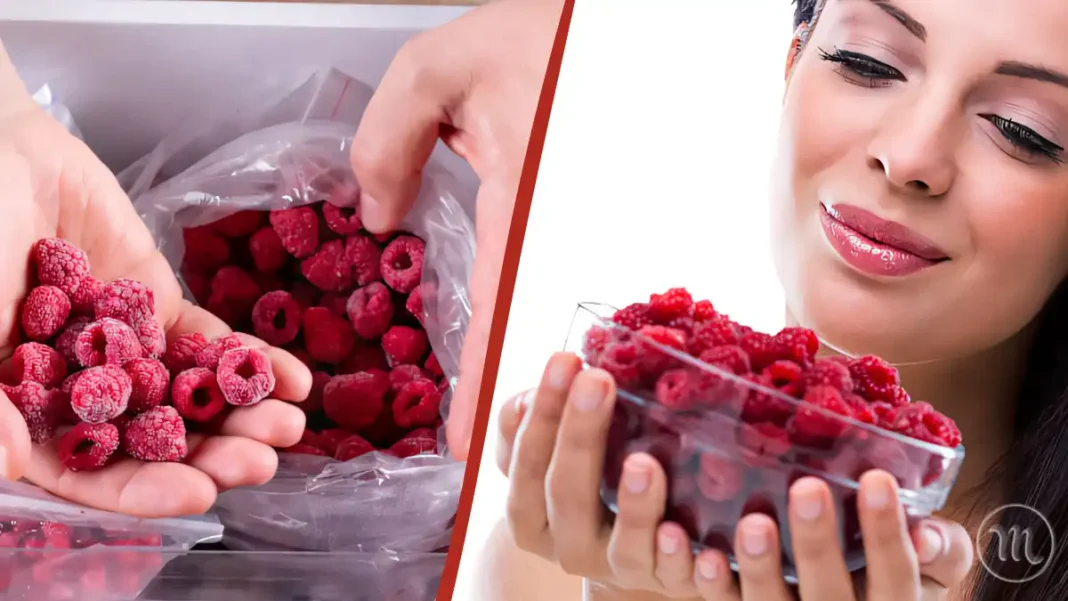
Seasonal raspberries are like a direct shot of natural wellness, packed with powerful antioxidants and essential nutrients. When you need to keep your harvest fresh for the long haul, deep freezing is your best bet. Meanwhile, for short-term freshness, experts over at the Instagram account dobra_yagoda shared their top tips on how to handle these delicate berries. They emphasized that a gentle touch with every single berry is absolutely crucial if you want to keep them pristine.
Sorting and Moisture Protection
First things first: during prep, you have to ruthlessly sort through your stash and pull out any bruised or damaged pieces. Once the outer skin breaks, those raspberries will spoil in a fraction of the time. Rotting and oxidation kick off instantly in crushed spots, causing the fruit to lose its nutritional value while ruining neighboring berries. If you want to keep them long-term, choose only dry, firm structures.
If you find yourself with a massive haul from the store or the garden, hold off on washing the whole batch. Water activates mold spores that absolutely thrive on sweet juice. Instead, separate only the portion you plan to eat right away and wash that specific amount. Fresh berries need to stay in low-temperature environments because room-temperature warmth triggers the growth of harmful microflora and mycelium.
Підписуйтесь, щоб не пропустити нічого цікавого! | Follow us so you don't miss anything interesting! | Subskrybuj, aby nie przegapić niczego ciekawego!
Never leave these delicate berries sitting on the kitchen counter or under direct sunlight. In environments like that, vital nutrients vanish in mere hours, leaving the fruit watery and flavorless. For daily eating, your best option is to stash them in your refrigerator’s crisper drawer, where the temperature stays at a steady 4–5 °C.
A clean, dry food container with built-in ventilation is the perfect vessel. Avoid tight plastic bags at all costs—they create a greenhouse effect that destroys berries. To keep them safe from strong kitchen odors, cover the container with a lid while allowing air circulation, then place it on the middle shelf of your fridge.
My Opinion:
The first time I tried saving a big batch of raspberries in a tightly sealed plastic container, I woke up the next morning to messy condensation and the first signs of fuzz. Lesson learned! In my experience, if you line the bottom of a container with a regular paper towel and arrange the berries in a single or double layer, they stay perfectly fresh and vibrant for up to five days, keeping every single drop of healthy juice intact.
Advice from MODISTA
- Always arrange your berries in thin layers without packing the container to the top so the bottom layer does not get crushed under its own weight.
- Use only cool water and a gentle colander for rinsing, and always let the moisture dry completely on a paper towel afterward.
- To preserve vitamins long-term, use a quick flash-freeze method on a flat tray before transferring the solid berries into storage bags.
Did you know that washing raspberries before freezing can completely ruin their texture once thawed? Share this helpful guide with a friend on Telegram who loves making summer preserves and cares about keeping things healthy!
MODISTA Daily MODISTA Daily MODISTA Daily
ℹ️ REFERENCE
Official storage guidelines for perishable garden crops are based on research from the Institute of Horticulture of the National Academy of Agricultural Sciences of Ukraine. The institution analyzes the biochemical makeup of fruit and berry plants to develop modern methods for preserving antioxidant properties after harvest. You can explore more scientific papers on maintaining nutrients in berry crops on the organization’s official website. 🌐