



In this article, you’ll learn:
- Why you strictly must not touch the woody part of the bush.
- The beauty calendar: exactly when to pick up the shears for the best results.
- How to correctly shape the bush so it doesn’t go “bald” in the center.
- Post-pruning care secrets for explosive flowering.
Ever dreamed of having your own endless purple fields of Provence right in your backyard, but the reality is much more mundane — the bushes look dry and sparse? Don’t rush to get upset, because the secret to that “Instagrammable” lavender lies not in special fertilizers, but in the right scissors and the perfectly chosen moment.
Many make a fatal mistake that turns a blooming beauty into pitiful deadwood. But if you master just one technique, your lavender will become a true garden star, sparking genuine admiration from every passerby. Let’s figure out how to properly care for this temperamental yet rewarding plant so it delights you with its fragrance for years to come.
The Main Taboo When Working with Lavender
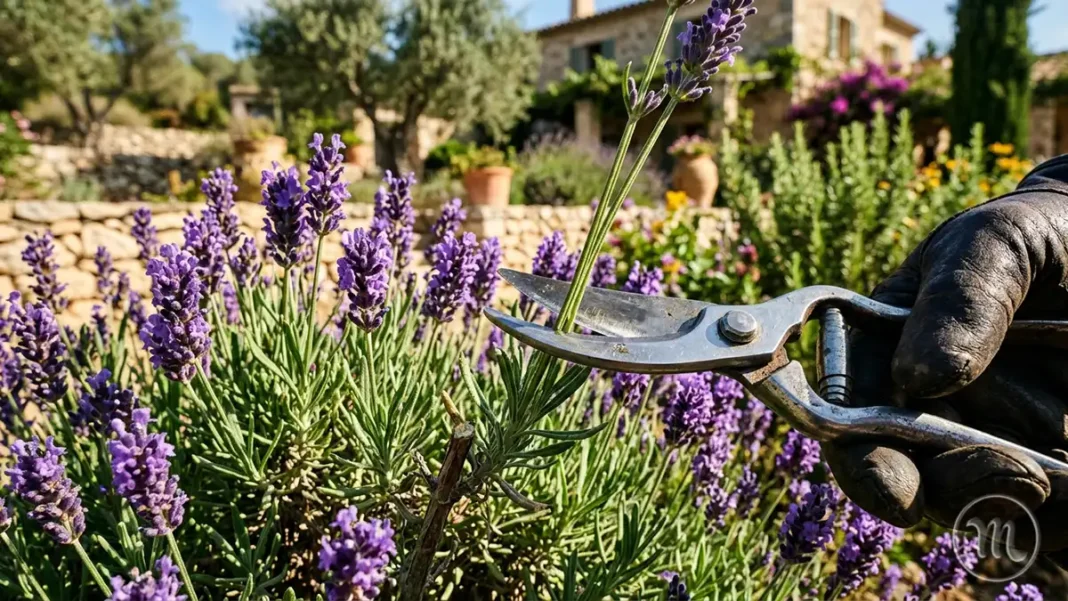
Let’s start with the most important lesson that should be taught in school: never, under any circumstances, cut into the old, woody part of the lavender! If you touch that brown, dry area at the base, the plant will react like a true prima donna — it’ll simply stop “cooperating” with you. The thing is, new green shoots will never grow from old wood.
Your mission for creating that perfect look is to visually find the line between the old wood and the young green sprouts. Imagine you’re a top stylist who only trims the split ends. Focus only on what carries freshness and life energy!
Підписуйтесь, щоб не пропустити нічого цікавого! | Follow us so you don't miss anything interesting! | Subskrybuj, aby nie przegapić niczego ciekawego!
Care Calendar for the Mediterranean Beauty
Just as our skin needs different care depending on the season, lavender requires a clear and strategic schedule. Proper pruning ensures that much-desired compactness — forget about loose and bald bushes.
Spring Awakening
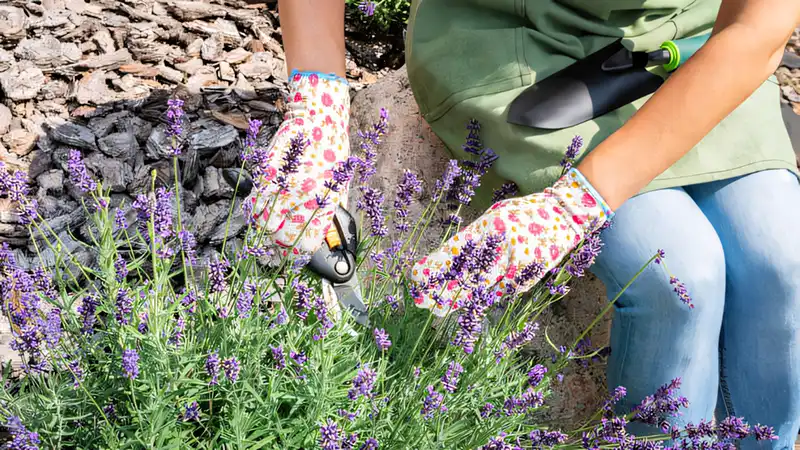
This is the time for your main procedure. We prune everything down to the edge of the woody part, right where those first green leaves are shyly poking through. Be bold, but don’t be aggressive. Remember the “golden rule” of the untouchability of old wood. It’s the spring manipulation that lays the foundation for the bush’s future shape.
Summer Correction After Blooming
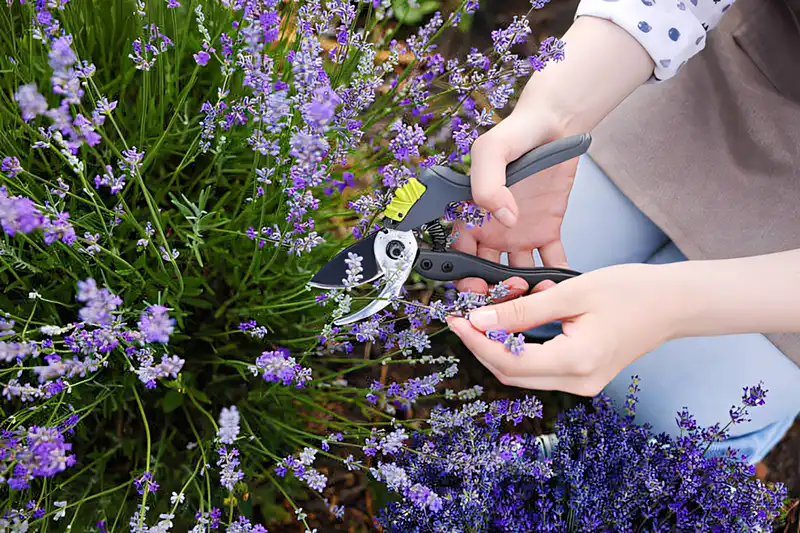
Once your lavender has finished flowering and completed its first fragrant performance of the season, it’s time for some light modeling. We carefully remove dry inflorescences and slightly shorten young shoots. It’s like a visit to the hairdresser just to trim your bangs and maintain that perfect spherical shape.
Autumn Minimalism
Here, we become as gentle as possible. We only remove the last dry flowers and minimally touch up the silhouette. The plant is actively preparing for winter, so any stressful shocks are unnecessary.
What should you avoid? Radical autumn pruning! If you shorten the bush significantly in late autumn, the lavender won’t have time to recover before the first frosts. The result could be tragic — your Provençal dream might simply perish.
Surgical Precision: How to Use Your Tools
Now that the theory is mastered, let’s get down to practice. By pruning, we stimulate growth — the bush will become denser, and next year’s bloom will be so abundant that the neighbors will turn green with envy.
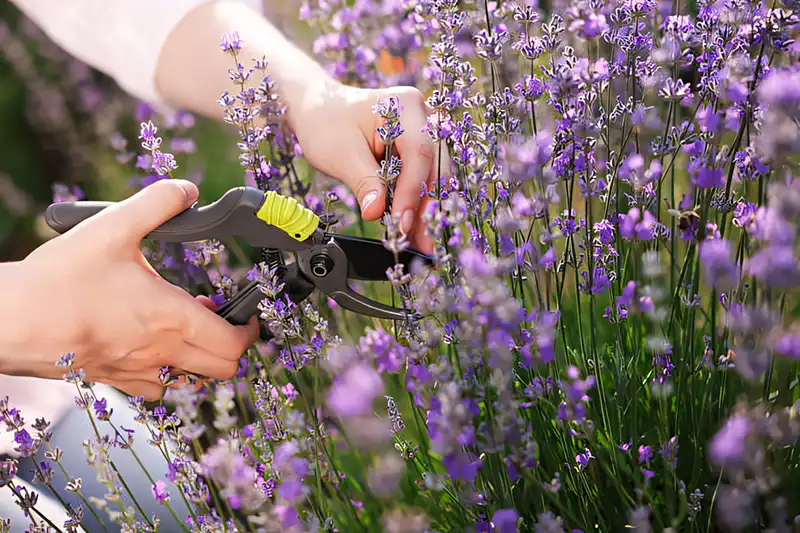
First, assess the situation. With a sharp eye, find that magic border between the “past” (old wood) and the “future” (greenery). Second — make the right cut. Your shears should be aimed slightly above the green shoots, about 5–7 centimeters above the woody zone.
And as for the tools — I beg you, let them be perfectly sharp and clean! Using blunt scissors on a plant is like cutting hair with a kitchen knife. A clean cut helps avoid diseases and damage that could undo all your efforts.
VIP Procedures After Pruning
Did you think that once you put the scissors down, the job was done? Oh no, the real care is just beginning. After such an intensive “peeling,” your lavender deserves a bit of luxury.
Water the bush moderately. Remember: lavender hates “wet feet” and standing water, so don’t go overboard. If needed, add a bit of high-quality compost. It’s like applying an expensive cream after a deep facial cleanse. With regular and proper pruning, your lavender will stay compact, incredibly healthy, and gift your garden a dizzying scent for many years to come.
MY OPINION:
I’ve noticed time and again how beginner gardeners try to “rejuvenate” an old lavender bush by cutting it almost to the root. This is a fatal mistake that leads to the plant’s death. The secret to success is consistency: it’s better to do a little bit every season than a radical chop once every three years.
Advice from MODISTA
- Always disinfect your pruning blades with alcohol before moving to another bush to avoid spreading infections.
- If your bush is already too old and has fallen apart, you’re better off planting a new one rather than trying to save it with a radical “to the stump” pruning.
Are you managing to maintain that perfect spherical shape, or does your lavender grow however it wants? Share this secret with a friend who also dreams of a little Provence on their windowsill or at their cottage!
Join our community where comments are open just for you!
ℹ️ REFERENCE
Lavender is a genus of plants in the Lamiaceae family, consisting of about 47 species. The most popular species for garden cultivation is Lavandula angustifolia (English lavender), which is valued for its hardiness and essential oils. 🌐