



- • Why this exotic guest’s unusual way of traveling is sparking panic among gardeners.
- • How to spot the difference between the vibrant female and the low-key male of the species.
- • Whether these striking eight-legged creatures pose any real threat to humans or your favorite plants.
- • Humane, eco-friendly tricks to manage their population and keep your backyard peace intact.
Read in another language:
Bugs and creepy-crawlies are just part of the package deal when you’re cultivating a gorgeous garden or a cozy backyard patch. While some uninvited guests are an absolute nightmare—think buzzing mosquitoes, ticks, or crop-destroying locusts—others are actually the ultimate garden sidekicks. Natural pollinators and fierce predators do the heavy lifting by hunting down aphids and pesky bugs, keeping your green space perfectly balanced, reports MODISTA.
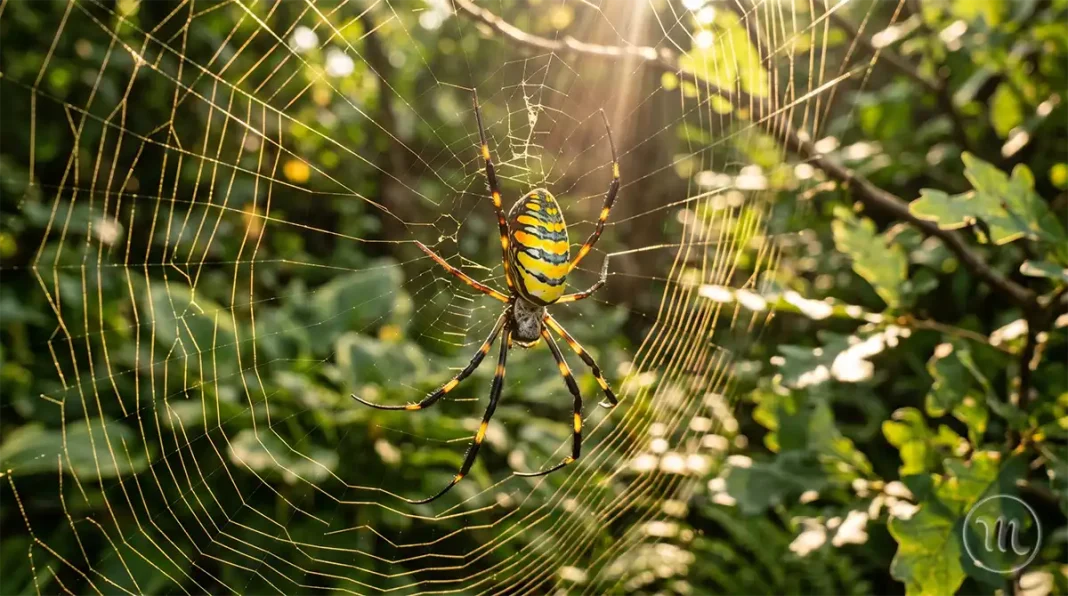
Even though these eight-legged creatures aren’t technically insects, seasoned gardeners know they’re invaluable allies that give common pests zero chance of survival. But lately, a vibrant new newcomer known as the Joro spider (Trichonephila clavata) has been making serious waves. Known for literally sailing through the air on their own silk threads to conquer new territory, these striking arachnids have left homeowners a bit on edge. Luckily, top pest control experts and botanists have broken down exactly what this Asian influx means for your plants—and their verdict is a major sigh of relief.
The Wild Origins of These Flying Exotic Creatures
Often dubbed “parachutists” thanks to their incredible habit of spinning long silk strands to catch the wind and glide across massive distances, the Joro spider is hard to miss. They boast impressive proportions and a distinct, elongated body, usually spinning their massive webs high up in sturdy tree branches or tall garden shrubs. The species is highly dimorphic: the females are showstoppers with their bold, bright yellow-and-black striped patterns, while the males stay completely low-key—they’re much smaller and sport muted brown-and-gray tones.
Native to Asia, these creatures accidentally hitched a ride to the United States, according to official research from the Penn State Extension program. They most likely crossed the ocean in shipping containers or nestled deep in the soil of imported ornamental plants. Right now, established populations have already set up camp in states like Alabama, North and South Carolina, and Tennessee.
Підписуйтесь, щоб не пропустити нічого цікавого! | Follow us so you don't miss anything interesting! | Subskrybuj, aby nie przegapić niczego ciekawego!
Nicole Carpenter, a pest control specialist and CEO of Black Pest Prevention, notes that the sudden appearance of these creatures is definitely a mystery for local ecosystems since they’re completely new to the area. However, recent scientific observations and targeted studies offer plenty of reassurance: Joro spiders have a minimal impact on the environment and pose absolutely no direct threat to human health or safety.
How These Asian Newcomers Really Impact Your Garden Ecosystem
Certified entomologist and integrated pest management expert Molly Keck points out that predatory arachnids should never be viewed as the enemy of your landscaping. She explains that by nature, they’re strictly carnivorous predators, which means they do incredible work for your yard by wiping out tons of destructive little plant-eating bugs.
Sounds familiar? Boom! Here’s the thing: there isn’t a single spider species on the planet that dines on leaves, flowers, or fruit. Instead, they act as an organic shield for your vegetable patches, trapping the exact pests that are trying to ruin your harvest. This makes them a critical piece of the puzzle when it comes to supporting natural biodiversity in your backyard.
According to Keck, the only minor detail worth watching is the broader ecological ripple effect of their rapid spread. Because they’re an introduced species, their massive numbers could theoretically shift the delicate balance between local predators and prey, creating a little extra competition for native backyard spiders.
What to Do If You Spot This Unusual Guest in Your Yard
Given their hefty size—a mature female’s body can span an inch long, with a leg width reaching up to four inches—bumping into one can definitely make you jump. But if you just let them do their thing, they won’t hurt your property or your plants. Honestly, they’re doing you a massive favor by cleaning up annoying invaders like brown marmorated stink bugs.
That said, if a giant web starts causing real annoyance by taking over your walkways, doorways, or window frames, you can gently clear it away. This will prompt the owner to relocate somewhere else, though keep in mind they’re incredibly fast at rebuilding their homes. Experts from the University of Georgia Extension suggest leaving webs alone if they’re higher than 10 feet off the ground, only focusing on those built directly around pollinator-heavy flowerbeds so they don’t accidentally disrupt local honeybees.
If you’re absolutely not down with sharing your space with these giant neighbors, there’s an incredibly simple, eco-friendly trick you can try. You can plant specific herbs around your yard that boast intense aromas to act as natural deterrents. Add these to your shopping list:
- Peppermint;
- Garden sage;
- Citronella.
Considering how entirely harmless Joro spiders are, the best move is usually to just look the other way. Professional gardener Stacey Hill adds that homeowners should embrace beneficial predators and ditch the heavy chemical pesticides. Even if you choose to relocate an exotic traveler to the outer edges of your property, remember: they’re still an effective, totally free helper in the quest for a thriving garden.
Advice from MODISTA
- Try to steer clear of broad-spectrum chemical sprays so you can protect the helpful arachnids that keep your pest population down naturally.
- If a web pops up right at eye level near your porch or path, simply use a stick to gently move the spider deeper into your yard’s taller shrubs.
- Plant peppermint and sage around the perimeter of your patio—it’s a gorgeous landscaping choice that double-tasks as a chic way to keep bugs out of your lounge space.
How do you feel about these giant eight-legged neighbors setting up camp in your yard? Share this article with a fellow plant lover who can’t stand spiders so they can finally breathe a sigh of relief!
MODISTA Daily MODISTA Daily MODISTA Daily
ℹ️ REFERENCE
This guide was created using expert data and findings from the renowned home and garden publication The Spruce, which delivers trusted, practical advice from certified entomologists and top botanists worldwide. 🌐