



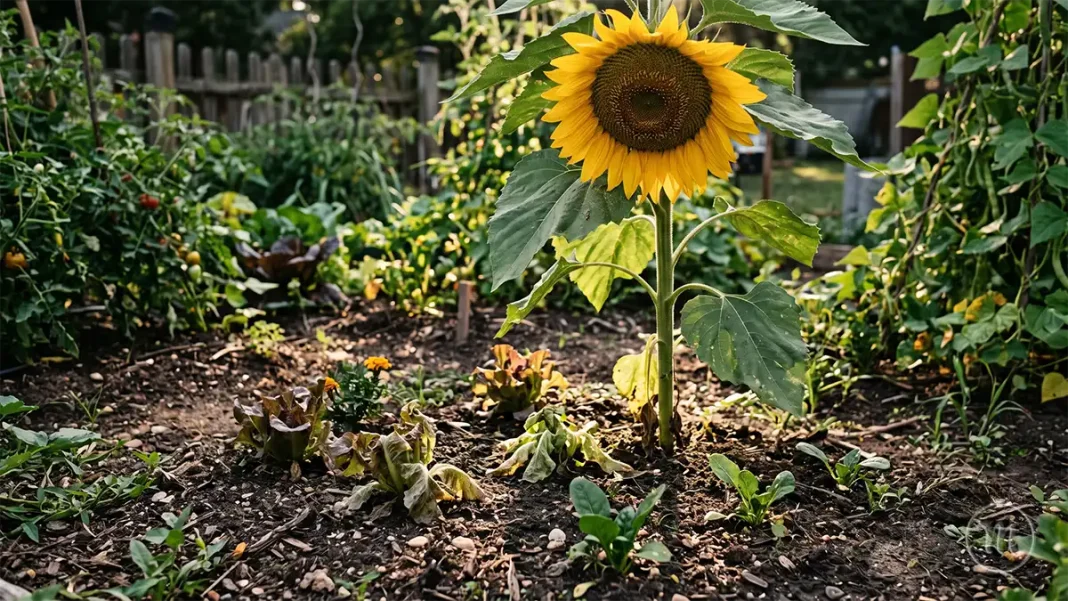
- • Total soil depletion: this giant pulls nitrogen and potassium from the dirt way faster than any weed.
- • Hidden biological weapon: the root system releases inhibitory compounds that stunt neighboring crops.
- • Feathered pest magnet: birds swarm for seeds and peck through your berry harvest along the way.
- • Dangerous potato neighbor: planting them alongside nightshades cuts tuber yield in half.
Read in another language:
A field of sunflowers on the horizon is gorgeous, but planting this giant crop near your vegetable beds is a bad idea. Sure, harvesting your own seeds sounds idyllic, but keeping them right by your veggies is a recipe for disaster, reports MODISTA.
After years of digging in the dirt, I’ve seen it firsthand: this plant acts like a total invader. If you think you’re just adding a pretty bloom, think again—it will happily steal all the light, water, and nutrients from neighboring crops.
Can You Plant Sunflowers Next to Vegetables and How They Ruin Soil
Sunflowers ruin soil by absorbing massive amounts of nitrogen, potassium, and phosphorus through a massive root system that turns fertile dirt into a dry wasteland. The real problem hides deep underground. Their root system is so aggressive that it strips the ground of vital organic matter in just one season.
They consume soil nutrients with relentless greed. They pull potassium, phosphorus, and nitrogen in such heavy doses that even basic greens struggle to grow there next year. Sure, you could dump chemical fertilizers or pile on compost to fix soil depletion, but why create extra work? Potatoes suffer the most—plant them side-by-side, and you’ll harvest tiny tubers the size of walnuts.
Підписуйтесь, щоб не пропустити нічого цікавого! | Follow us so you don't miss anything interesting! | Subskrybuj, aby nie przegapić niczego ciekawego!
Allelopathy and Shade: How Sunflowers Stunt Neighboring Crops
Sunflowers stunt neighboring crops by releasing toxic chemical compounds into the dirt through a natural biological process called allelopathy. It’s not an urban legend—it’s pure biology. In simple terms, the plant secretes natural inhibitors to suppress any nearby competition.
The roots pump toxic substances into the surrounding soil layer, stopping development dead in its tracks. Even stubborn weeds hesitate to sprout near them, so delicate garden pests or tender tomatoes don’t stand a chance. Throw in their seven-foot stature, and their massive leaves block vital sunlight. Under such dense shade, sun-loving vegetable beds stall and fade away.
Feathered Pests: Why Birds Will Ruin Your Garden Over One Flower
Sunflowers attract birds that will devour your crop harvest, peck at ripe fruit, and destroy young garden seedling starts. While backyard birds usually help pick off caterpillars, the second those seed heads ripen, all bets are off.
Your vegetable garden becomes an all-you-can-eat buffet for neighborhood flock swarms. They won’t just strip the flower head bare—while waiting their turn at the feeder, they’ll peck at your sweet cherries, rip up fragile seedling starts, and ruin fresh strawberries. Trust me, if you want fresh seeds, it’s cheaper to buy a bag than to fix garden damage from these bird pests.
My Opinion:
When I first experimented with planting a few seeds along my squash row, I regretted it by July. My squash completely stopped growing, and the ground under those giants took two full years and piles of compost to recover. In my experience, growing these in a home garden creates a total agricultural pest situation—they belong on expansive farmland, not near your home crops.
Advice from MODISTA
- If you love the look, stick strictly to dwarf ornamental varieties planted far away from your main vegetable beds.
- Maintain a buffer zone of at least 10 to 12 feet from potatoes, tomatoes, and peppers—or plant them outside your main fence.
- After harvesting, immediately sow green manure cover crops like mustard or phacelia to rebuild depleted soil health.
Have you ever tried growing these giant blooms near your house, or do you stick to traditional home crops? Share your garden hacks and experience in our Telegram channel—let’s chat about top outdoor gardening tips together!
ℹ️ REFERENCE
The annual sunflower (Helianthus annuus) is a species of herbaceous plant in the daisy family, native to North America. The plant features a heavy taproot structure capable of penetrating dirt up to 6–10 feet deep. Its rapid absorption of water and minerals makes it a major cause of soil depletion in agricultural setups. Read more about its biological traits on its Wikipedia page 🌐.