



- • The 120-Day Bloom Secret: How Lagerstroemia indica (Crape Myrtle) can blanket your garden in vibrant floral clouds for months on end.
- • Top Variety Picks: The best dwarf and full-sized varieties that will survive chilly winters and thrive in your backyard.
- • Spring Pruning Hacks: A simple trick with your shears that triggers an explosion of brand-new, massive flower buds.
- • Fatal Bud-Killing Mistakes: Why over-fertilizing and poor watering habits make the plant drop its blossoms, and how to fix it fast.
Read in another language:
We’re all used to the classic lineup of flowering shrubs in our yards: lilacs fade by late May, jasmine delights us for just a couple of weeks, and then we’re left with nothing but a wall of plain green leaves. A bit boring, right? Well, I’ve found the absolute superstar for your late-summer-to-autumn garden landscape: Lagerstroemia indica, widely known as the “Southern lilac” or crape myrtle. If you treat her right, this gorgeous exotic beauty is capable of blooming for an unbelievable 120 days a year! It’s honestly mind-blowing how long she stays covered in color, reports MODISTA.
When I first heard about this marathon bloomer, I met the news with a healthy dose of backyard skepticism. I assumed she was just another high-maintenance exotic import that would rot after the first heavy rainstorm or freeze to death during the January frosts. But boy, was I wrong! It turns out that if you know a few crucial secrets and avoid simple watering and fertilizing mistakes, this shrub transforms into a fluffy pink, red, or white cloud from early summer straight through late autumn. Let’s skip the overly technical manuals and look at how to easily introduce this stunner to your garden.
Unveiling the Exotic Crape Myrtle: Stunning Looks and Top Varieties to Plant Now
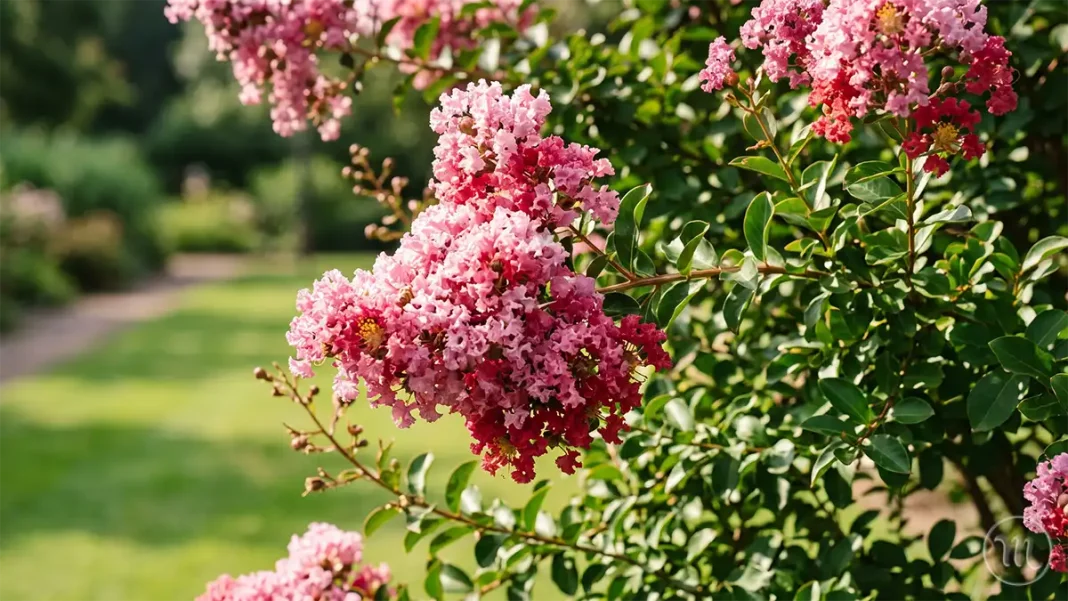
Crape myrtle isn’t just your run-of-the-mill bush; it’s a visual masterpiece. In its warm native habitats, it grows into a majestic tree, but in our home gardens, it usually behaves as a neat, dense, multi-stemmed shrub reaching up to 13 feet (4 meters). A signature feature is its smooth, pinkish-gray and brown bark, which peels away in patches to reveal a striking under-bark layer. It looks incredibly stylish even in winter when the branches are bare. During spring and summer, the leaves are thick and dark green, but come fall, they put on a spectacular show, shifting into fiery yellow, orange, and red tones.
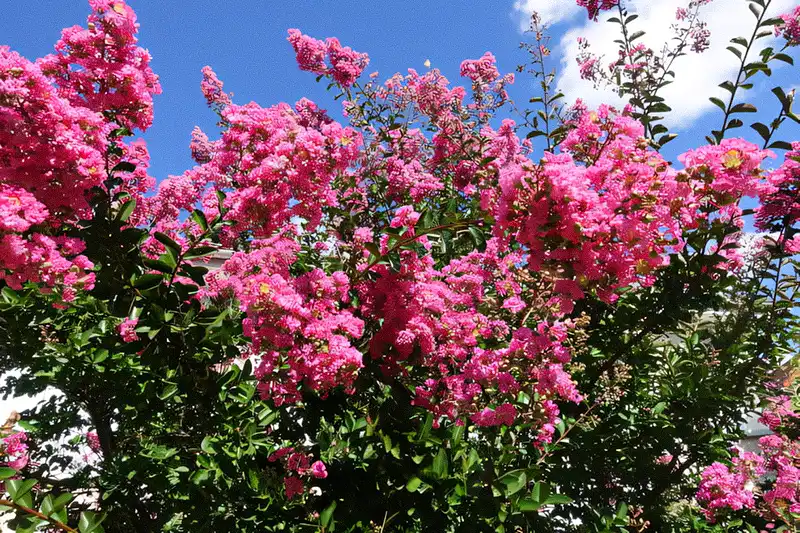
But the real showstopper is, of course, the flowers. They gather in massive, crinkly panicles up to 8 inches (20 cm) long. The delicate petals are so intensely ruffled and crinkled that the flower clusters resemble fluffy paper pom-poms. Bright yellow stamens peek out from the center of these vibrant blooms, creating an eye-catching, high-contrast look that instantly elevates any landscape.
Підписуйтесь, щоб не пропустити нічого цікавого! | Follow us so you don't miss anything interesting! | Subskrybuj, aby nie przegapić niczego ciekawego!
Wondering which varieties are perfect for your garden? I’ve handpicked the absolute best cultivars that you can easily track down at local nurseries:
Petite Red
This dwarf variety is small, bold, and packs a punch. Reaching only 3 to 5 feet (1 to 1.5 meters) in height, it fits effortlessly into compact garden corners or large patio containers. Its flowers are a fiery, rich red, often showing off deep purple undertones under the summer sun.
Red Imperator
If you love grand garden statements, this is the one. A vigorous grower, this giant can reach up to 13 feet (4 meters). If you need a striking focal point right in the middle of your lawn, plant this gorgeous specimen and watch your neighbors stop in their tracks.
Petite Pink
Another fantastic compact option tailored for smaller outdoor spaces. It peaks at around 6 feet (2 meters) and produces an overwhelming abundance of bright pink blossoms. It has a wonderfully soft, dreamy look, reminiscent of pink cotton candy.
Berry Dazzle
A true crowd-pleaser and a hot favorite in recent years. It stays relatively compact at 5 to 6 feet (1.5 to 2 meters) but steals the show with its unique, saturated dark purple foliage and intense fuchsia-pink flowers. It’s a marvelous way to inject some dramatic color contrast into your yard.
Rosea
A classic, graceful choice that grows between 6 and 13 feet (2 to 4 meters) tall. It produces delicate, pastel-pink blossoms. It grows relatively quickly and responds beautifully to light pruning and shaping.
Sarah’s Favorite
A majestic, tree-like giant that can soar to an impressive 13 to 20 feet (4 to 6 meters) in ideal conditions. Its crisp, pure white blossoms look incredibly elegant and offer a cool, refreshing sight during hot, sultry summer afternoons.
Crape myrtles bloom for an incredibly long stretch — starting in late spring or early June and keeping the momentum going all the way until the first frost. While mature bushes can survive temperatures down to 0°F (-18°C) without much fuss, let’s keep it real: if your winters are freezing or plagued by biting winds, young shrubs absolutely need a layer of burlap, straw wraps, or frost cloth to survive the cold season.
Simple Care Rules: How to Keep Your Southern Lilac Blooming at Full Power
Despite its reputation in fancy gardening books as a tricky diva, crape myrtle is actually quite tough. The key is starting things off on the right foot. Make sure you plant your shrub in the absolute sunniest, warmest spot in your garden that is shielded from harsh, chilly drafts. She needs at least 6 hours of direct, unfiltered sunlight every single day. If you plant her in the shade, you’ll end up with a bunch of green leaves and maybe three sad, tiny flowers. The soil should be fertile, loose, and slightly acidic. Before tucking your young plant into the ground, mix a generous amount of well-rotted organic compost into the planting hole — your new addition will love you for it.
When it comes to watering, think of it as a balancing act. If you let the soil dry out completely, the shrub will immediately throw a tantrum and drop all its precious flower buds. On the flip side, if you water it so heavily that the roots are swimming in soggy clay, they’ll quickly rot, and you’ll be tossing your plant in the green waste bin.
To take the guesswork out of watering, I rely on one simple trick: I cover the root zone with a thick layer of organic mulch, like pine bark or rich compost. This locks in consistent moisture and stops the soil surface from baking into a hard crust. Because crape myrtles spend a massive amount of energy pushing out constant blooms, they need regular fuel. Feed them a balanced, slow-release fertilizer for flowering shrubs every two weeks throughout the season, and top-dress the base with fresh compost in early spring.
And don’t put away those pruning shears! You should prune your crape myrtle strictly in the late winter or early spring, just as the worst frosts have passed but before the new buds start waking up. This plant only sets flower buds on fresh, current-season growth. More new wood means way more fluffy flower heads. It’s as simple as that.
Crucial Mistakes to Avoid: Why Your Shrub Might Be Refusing to Bloom
Most issues with crape myrtles come down to loving them a bit too much or picking a bad spot. We’ve already established that heavy shade is an absolute dealbreaker. If your plant is stuck in the shadow of a tall fence or tucked under a mature apple tree, it will grow painfully slow, look spindly, and struggle to produce even a handful of flowers.
Another major mistake is planting in heavy, clay-rich soil that holds water like a sponge. Crape myrtle roots simply cannot breathe in standing water. If your garden has dense clay soil, you must mix in organic matter and build a thick drainage layer of gravel or crushed brick at the bottom of the planting hole.
Over-fertilizing with nitrogen-heavy plant food is another classic pitfall. Gardeners often think, “Let me feed it more urea or manure, it’ll grow faster!” But the result is a shrub that channels all its energy into massive green shoots and huge, dark leaves, completely “forgetting” to bloom. Save the nitrogen for early spring, and then switch over to phosphorus and potassium-rich feeds to boost bud production.
Lastly, steer clear of late-season pruning. If you start clipping branches in mid-summer when the first tiny flower buds are forming, you’re literally cutting off your future flower show and pushing back the bloom cycle into chilly autumn, when the buds won’t even have enough heat to open. Keep your hands off the shears once the growing season is in full swing!
My Opinion:
When I first planted crape myrtle in my yard, I was terrified about how it would handle its very first winter. My personal experience proved that the real key to success is brave spring pruning: the more confidently you cut back old wood, the more spectacular the floral show on the new shoots. I also discovered that without a thick layer of pine bark mulch, keeping the roots cool and damp during hot, dry July afternoons is practically impossible, so don’t skip this easy step.
Advice from MODISTA
- Always plant your crape myrtle on the south or southwest side of your garden, where it can absorb maximum heat and stay sheltered from cold northern winds by a house wall or a solid fence line.
- Cut off all nitrogen-heavy feeding by mid-summer; this encourages the tender green wood to harden off properly before the autumn frosts hit, helping the shrub overwinter successfully.
- Protect young, newly planted shrubs for their first two or three winters by mounding loose compost, dry leaves, or peat around the root crown and wrapping the tender branches in layers of breathable garden fabric.
Have you ever tried growing this exotic summer beauty in your own garden, or are you still worried about the winter chill? Share your success stories, tips, or even your first gardening fails over on our Telegram channel — let’s talk dirty and swap some green-thumb secrets!
ℹ️ REFERENCE
Crape myrtle (Lagerstroemia indica) is a highly prized decorative plant in the Loosestrife family (Lythraceae). Although native to China, Korea, and Japan, it was named after the Swedish merchant Magnus von Lagerström, who first introduced this spectacular species to European botanists after collecting specimens from Indian trading ports. To discover more about its fascinating botanical history, check out Wikipedia 🌐 Lagerstroemia indica.