



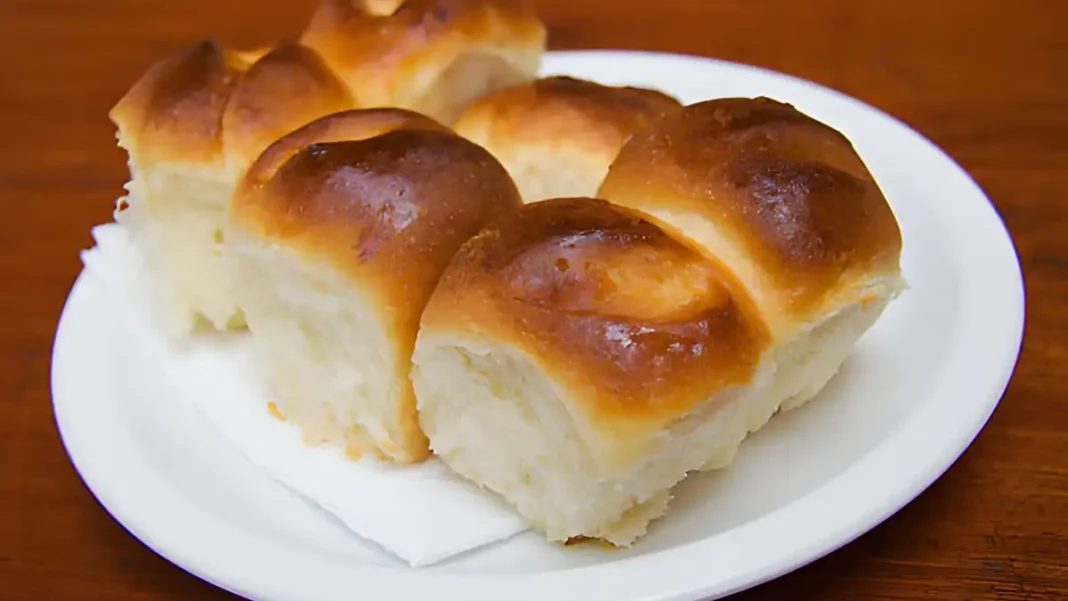
You know, I have always believed that true love for baking can be measured not by the complexity of cakes, but by the quality of ordinary enriched buns. Everyone in my family loves them – from the youngest to the oldest. So, when I started looking for my “the one” yeast dough recipe, my goal was simple: it had to be so good that you wanted to hug it!
This version, which I am sharing today, is the result of many experiments and, frankly, several failed attempts. I have perfected it: the dough turns out surprisingly aromatic, with a slight creamy taste and such an airy texture that the finished product seems to melt in your mouth. This is a real find, especially if you are just starting to make friends with yeast. Believe me: if you try it even once, you won’t want to look for another recipe for sweet pastries!
Ingredients for the Airy Dough
To make everything work out best, I advise measuring everything out beforehand.
| Ingredient | Quantity | Notes |
| Wheat flour (sifted) | 500 g | Must be sifted! |
| Milk (3.2% or whole) | 250 ml | Preferably room temperature. |
| Butter (82%) | 100 g | Should be melted, but not hot. |
| Sugar | 5 tbsp. | For the sponge and the dough. |
| Dry yeast (fast-acting) | 11 g (1 packet) | Can be replaced with 25 g of fresh yeast. |
| Chicken eggs | 2 pcs. | Room temperature. |
| Vanilla sugar | 1 packet (10 g) | For a delicate aroma. |
| Salt | Pinch | Enhances the flavor! |
| Sweet filling | To your taste | Poppy seeds, cinnamon, cheese, jam, nuts. |
Step-by-Step Preparation: From Sponge to Golden Brown
Step 1. Activating the Yeast (My “Safety Net”)
I always advise starting with the sponge – this is my “insurance” that the dough will rise 100%. For this, I slightly warm the milk (it should be barely warm, not hot!), add dry yeast, a couple of spoons of sugar, and one spoon of flour. I mix everything thoroughly, cover the bowl with a towel, and place it in a cozy, warm spot. I like to put it near a warm radiator or in a turned-off but slightly preheated oven. After 15-20 minutes, the sponge should rise like a “cap” – this is a sign that the yeast is working.
Step 2. Kneading the Enriched Dough
When my sponge is ready, I beat one egg into it (we will need the second one for brushing), add the remaining sugar, vanilla sugar, and a pinch of salt. I pour in the melted (but not hot!) butter and begin to gradually add the sifted flour. My advice: add the flour in portions, as the exact amount depends on its quality. I knead the dough by hand until it becomes soft, elastic, and stops sticking to my palms.
Підписуйтесь, щоб не пропустити нічого цікавого! | Follow us so you don't miss anything interesting! | Subskrybuj, aby nie przegapić niczego ciekawego!
Step 3. The First Rise (Sacred Time)
I transfer the formed dough to a large bowl, lightly greased with oil (so it doesn’t stick), cover it with a towel, and send it to “rest” in a warm place. I always check that there are no drafts in the kitchen – they are the worst for yeast dough. I usually wait at least 60-90 minutes until the dough doubles in volume. While the dough is rising, it’s time to prepare your favorite filling.
Step 4. Shaping and Baking
When the dough has risen, I punch it down and divide it into equal parts. I shape the buns – with filling or just classic “empty” ones – they are incredibly tasty even without it! I place the finished buns on a baking sheet lined with parchment paper. I beat the remaining egg (yolk) with a tablespoon of milk and brush the surface of the products with it. Next – another important stage: proofing. I let the buns stand for another 20 minutes so they can rest and rise again.
I bake on medium heat in an oven preheated to 180 °C. Usually, 20-25 minutes is enough for me. When they turn a golden-brown color, I take them out and enjoy that incredible aroma!
Tips and Variations from Me
- About flour: Never be afraid to slightly change the amount of flour. Less is better than more! Overworked dough will not be so airy.
- About butter: If you want the maximum creamy taste, part of the butter can be replaced with good quality fatty margarine for baking, but I prefer quality butter.
- Variations: Try adding a little lemon zest to the dough – it will add freshness. Or replace part of the milk with heavy cream. And instead of vanilla sugar, use natural vanilla.
I am convinced that this recipe will become a favorite in your family too, because it gives not only delicious pastries but also true pleasure from the process. The dough, prepared with love according to this recipe, always turns out soft, airy, and simply incomparable. Enjoy your meal!
Brief History of the Dish
Buns are one of the oldest types of baked goods, with roots dating back to ancient Egypt and Greece. Enriched yeast dough, similar to the one we use today, became popular in Europe in the Middle Ages. At that time, it was mainly accessible to the wealthy due to the need for plenty of sugar, butter, and quality flour.
In Ukrainian lands, enriched pastries have always held a special place, particularly as ceremonial bread and an adornment of the festive table. Over time, recipes were refined, and new fillings appeared (poppy seeds, cheese, jam). Today, the bun is a symbol of home comfort and generosity, a dish that unites people at the table, reminding them of the warmth of a grandmother’s kitchen.
| Characteristics | Value |
| Preparation Time (Active) | 40 minutes |
| Preparation Time (Total) | 2.5 hours |
| Calorie Content (Approximate per 100g) | 300-330 kcal |