



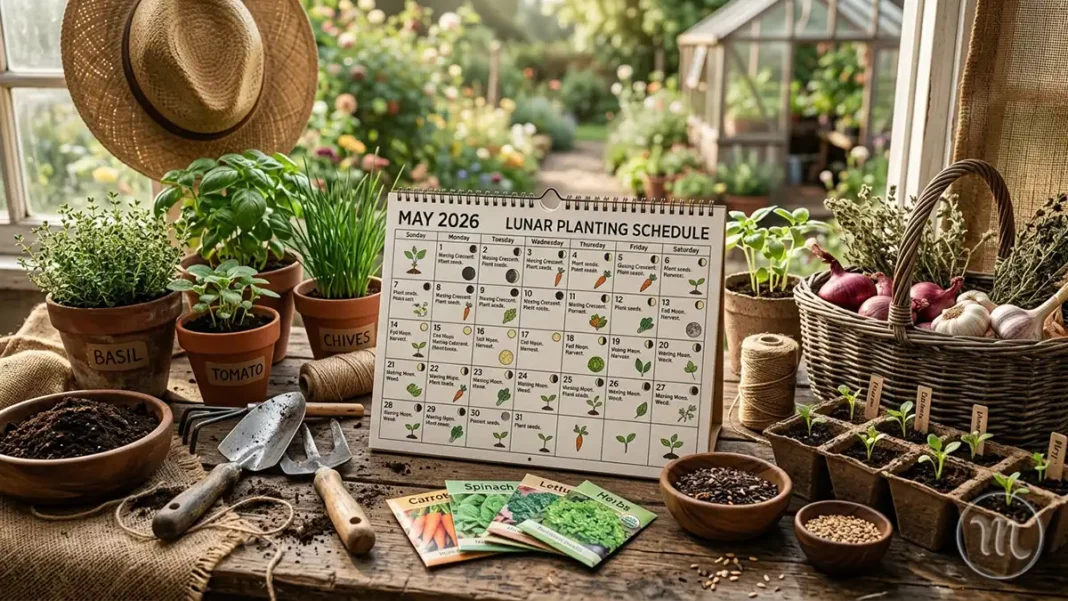
- •Which Moon phases directly affect the development of root crops and above-ground plants.
- •Secret May dates when plants have the highest potential for survival.
- •Full schedule for planting vegetables, herbs, and flowers to achieve a record harvest.
May 2026 promises to be an incredibly intense and responsible period for everyone who feels the magic of the earth. I’ve studied the celestial map for this month and noticed that the energy of the spring bloom this year is closely intertwined with the phases of our night luminary. A sowing calendar built on lunar rhythms isn’t just a tribute to tradition, it’s a subtle psychology of human interaction with nature. When we act in unison with cosmic cycles, even the most temperamental sprouts find the strength to break through the soil.
In May, the sun already gently warms the earth, and the night chills are finally receding, giving us the green light for the boldest agricultural experiments. I’ve noticed that right now the very foundation is being laid that’ll turn into full pantries by fall. Using knowledge of Moon phases helps structure the chaos of spring work, turning hard labor into a conscious ritual of creation.
Rhythms of the Night Luminary: Moon Phases in May 2026
To ensure your efforts aren’t in vain, I suggest first understanding the energetic structure of the month. The lunar cycle in May 2026 has its own characteristics that dictate the rules of behavior in the garden beds:
- May 1 and 31 — Full Moon (time of maximum energy concentration, but minimal planting activity).
- May 2–15 — Waning Phase (ideal for everything that grows “downwards” — root crops).
- May 16 — New Moon (a period of rest when it’s better not to disturb the earth).
- May 17–30 — Waxing Moon (the best time for plants that bear fruit “above the ground”).
I’ve noticed that understanding these cycles helps avoid many mistakes. For example, during the waning Moon, all the plant’s strength goes into the root, and during the waxing Moon — into the leaves and fruits. It’s pure natural physics that we can use to our advantage.
Best Days For Sowing And Planting In May 2026
If you’re looking for the perfect moment to head out to the garden with seedlings, pay attention to these dates. Astrologically and agrotechnically, I’ve identified the most favorable periods as: May 2, 3, 4, 5, 6, 7, 11, 12, 20, 21, 26, 27, 28, 29, and 30.
Підписуйтесь, щоб не пропустити нічого цікавого! | Follow us so you don't miss anything interesting! | Subskrybuj, aby nie przegapić niczego ciekawego!
On these days, the energy of the day promotes quick rooting. Plants set out during this time seem to receive an extra boost for growth; they get sick less often and handle the transplant from the greenhouse to open ground more easily. Boom! And your garden beds are already turning green.
Full Gardener’s Calendar: What And When To Plant
May is a month of endless possibilities. We’re planting practically everything, from finicky eggplants to hardy greens. I’ve prepared a detailed list of crops and the best dates for them:
- Tomatoes, physalis, peppers, and eggplants: they’ll feel best if they hit the soil on May 2–7, 11–12, 20–21, or 26–30.
- Cucumbers, zucchini, pumpkins, squash, as well as sweet watermelons and melons: aim for May 2–7, 11–12, 20–21, and 26–30.
- Corn and legumes (peas, beans): optimal to sow on May 2–7, 11–12, or 20–21.
- Cabbage of all types and various greens (dill, lettuce, spinach): May 2–7, 11–12, 20–21, and at the end of the month on May 26–30.
- Root crops (carrots, beets, radishes) and potatoes: since they love depth, choose May 2–7 or 11–12.
- Fruit trees, berry bushes, and flowers: for beauty and the garden, May 2–7, 11–12, 20–21, and 26–30 will be ideal.
Time To Rest: Unfavorable Days In May 2026
There are days when the magic of nature stands still, and any interference in plant life can be traumatic. I recommend putting away the seeds and seedlings on May 8, 9, 10, 15, 16, and 17.
This doesn’t mean you should sit idle. This is the time for “technical maintenance” of your garden:
- Weeding and clearing garden beds of weeds.
- Effective spraying against pests.
- Watering and applying fertilizers.
- Loosening the soil for better oxygen access.
- Preparing equipment and strategic planning for the next steps.
From a logic standpoint, such pauses in planting allow us to better prepare the ground for future victories.
My Opinion:
I’ve researched many sowing calendars and realized one thing: the Moon only suggests a rhythm, but the real magic is in your hands and your love for the earth. My top tip is to always combine the stars’ hints with the actual weather outside your window, because nature loves harmony in everything.
Advice from MODISTA
- Always check the soil temperature before planting heat-loving cucumbers; it should be at least 12-15°C.
- Don’t be afraid to talk to your plants during planting — psychologists say it lowers your stress levels, and plants grow better in a calm atmosphere.
- Keep a garden journal to compare this year’s results with the next.
Do you believe in the Moon’s influence on the harvest, or do you rely exclusively on modern fertilizers? Share this article with your fellow gardeners so everyone has time to prepare for the busy season!
ℹ️ REFERENCE
A lunar sowing calendar is a system based on the astronomical cycles of the Moon and their influence on tides, which is also reflected in the movement of sap inside plants. More detailed information on agricultural cycles and the impact of Moon phases on the biosphere can be found on thematic resources or Wikipedia 🌐.