



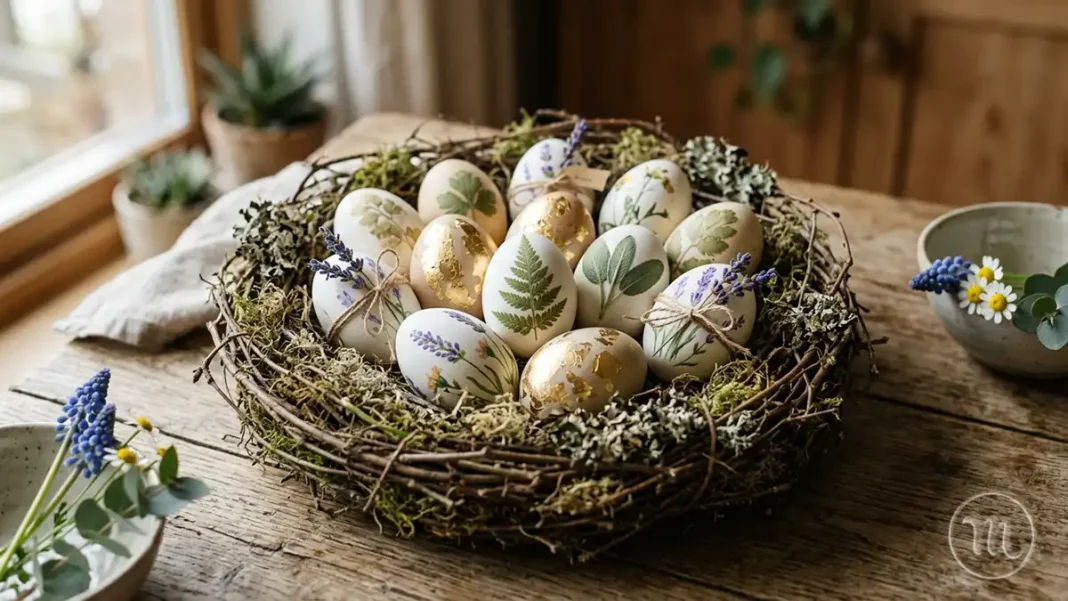
In this article, you’ll learn:
- How to properly prep eggs using different methods before you start decorating.
- Secrets to creating stylish patterns using herbariums and fabric.
- Why simple paper and twine might become your Easter basket’s best friends.
Many people think that creating real masterpieces for Easter is only for experienced crafters. However, I’ve looked into this and noticed that even the simplest tools can turn an ordinary egg into a work of art. I’m fascinated by how combining tradition with modern decorating techniques lets us create a special holiday atmosphere without much effort. I’ve realized that the main thing here isn’t perfect lines, but the creative spark we put into the process while getting ready for that bright Sunday morning.
“I’m not really a creative person,” people often say when they’re afraid of messing up holiday decor. But here’s the secret: you don’t need to be a professional artist to decorate Easter eggs! All you need is some basic knowledge and a pinch of inspiration. Before we dive into the world of design, it’s worth mentioning the three main ways to prep your base: hard-boiling, blowing out the insides, and basic dyeing.
Boiling involves placing eggs in a large pot of water, bringing it to a boil, then turning off the heat and letting them sit for 10 minutes. Blowing them out takes a bit more patience: you make a tiny hole at the top and a slightly larger one at the bottom, break the yolk with a needle, and blow the contents into a bowl. Don’t forget to rinse the shell and seal the holes with a drop of hot glue before working. It actually works!
As for dyeing, we all remember that childhood ritual: half a cup of hot water, a tablespoon of white vinegar, and two tablespoons of liquid dye. Keep the egg in the solution for about 30 minutes for a rich color. Now, here’s the kicker: these eggs are strictly for interior decoration—they aren’t edible because we’re using glue and paints. But they’re so pretty you wouldn’t want to eat them anyway! Boom! Let’s start creating.
Підписуйтесь, щоб не пропустити нічого цікавого! | Follow us so you don't miss anything interesting! | Subskrybuj, aby nie przegapić niczego ciekawego!
1. Elegant Lavender And Textured Twine
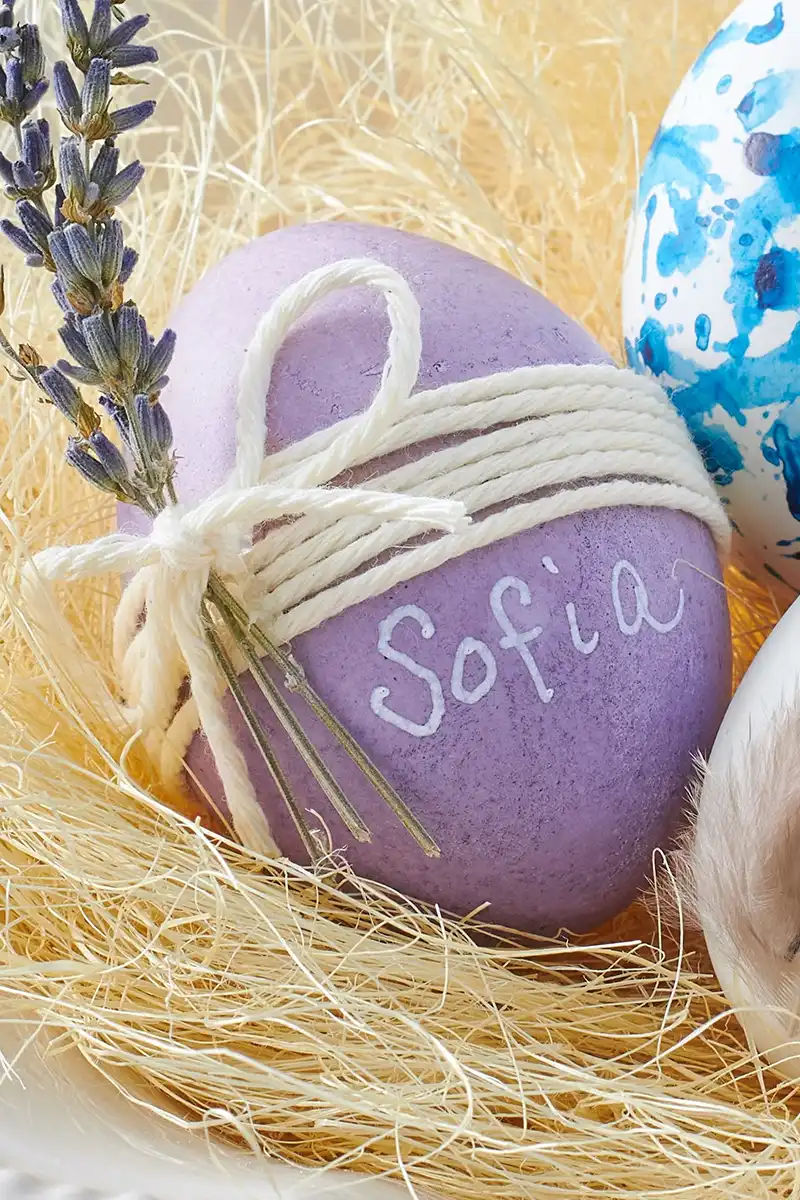
The combination of soft color and fresh botanical elements always looks like a win. If you’re planning a holiday dinner, these eggs can double as lovely place cards for your guests.
- White eggs
- Dye and vinegar
- Hot glue
- Cotton twine (jute)
- Dried lavender sprigs
- White paint-based marker
- Dye the eggs your desired color and let them dry completely.
- Apply a tiny drop of hot glue in the middle of the egg to secure the twine.
- Wrap the twine around several times and tie a bow on the opposite side.
- Carefully slide three lavender sprigs under the knot of the twine.
- Write the names of loved ones or holiday wishes with the white marker.
2. Retro-Style Paint Splatter Effect
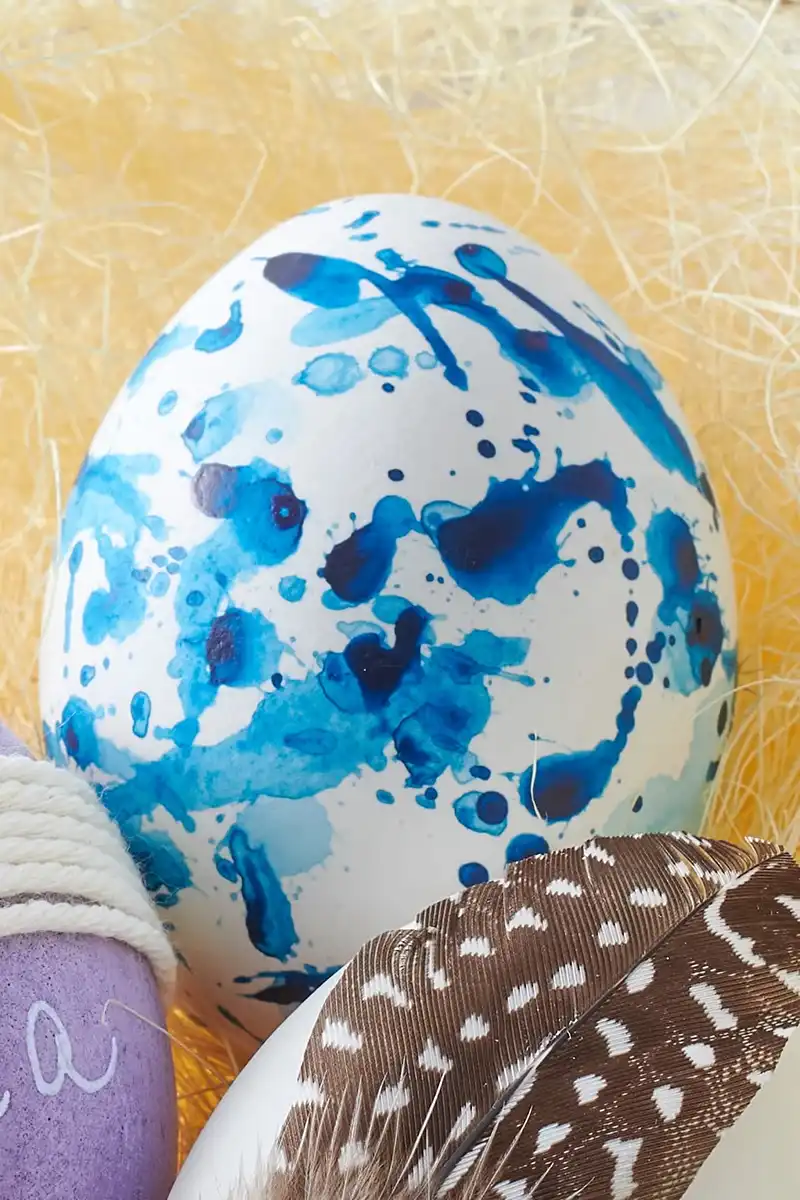
Kitchenware often inspires unusual designs. If you love the look of vintage speckled ceramics, this method lets you let your imagination run wild.
- White eggs
- Blue acrylic paint
- An old shoebox
- A small paintbrush
- Thin the acrylic paint slightly with water until it’s the consistency of light cream.
- Place your prepped eggs in the box.
- Dip the brush in the paint and use sharp movements to flick splatters onto the shells, creating a chaotic and chic pattern.
3. Weightless Bird Feathers
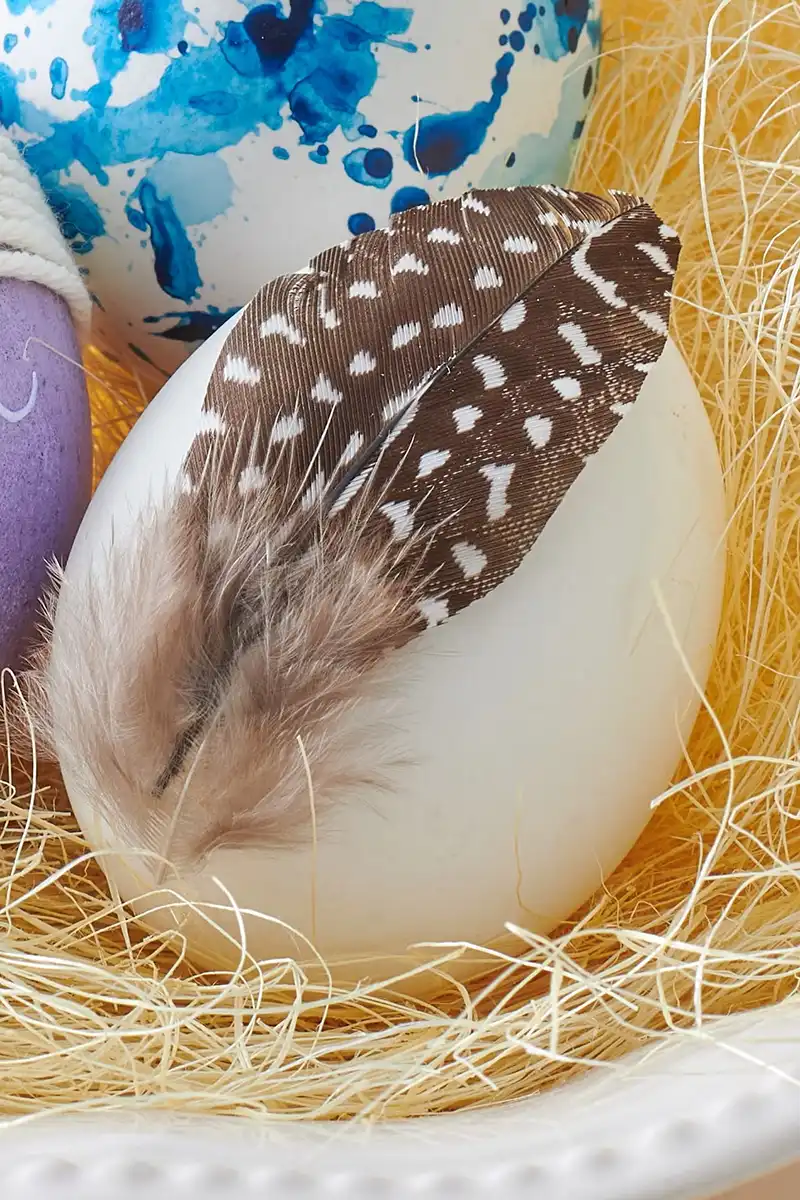
This is true natural beauty that looks incredibly fragile. You can mix and match feather colors and sizes depending on your mood.
- White eggs
- Tiny decorative feathers
- Decoupage glue
- Paintbrush
- Pick out the prettiest and smallest feathers from your set.
- Apply a small stroke of decoupage glue to the center of the egg.
- Place the feather on the glue and gently press with your fingers or a dry brush to secure it.
4. Playful Polka Dots And 3D Decor
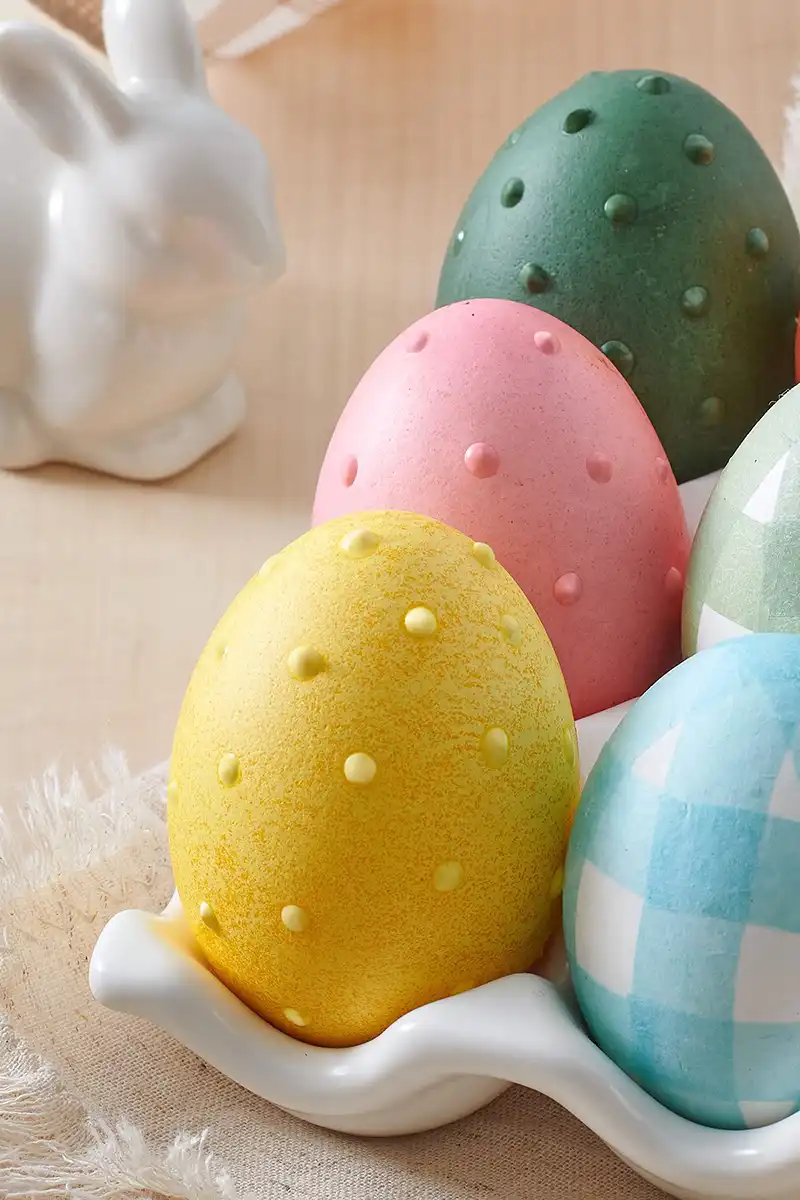
Is there any print more spring-like than good old polka dots? Interestingly, using puff paint adds a tactile texture to the eggs that feels great to the touch.
- White eggs
- Dye and vinegar
- Puff paint in a matching shade
- Dye the eggs your base color and wait for them to dry.
- Apply small dots of puff paint all over the surface, creating an even pattern.
5. Gingham Plaid From Paper
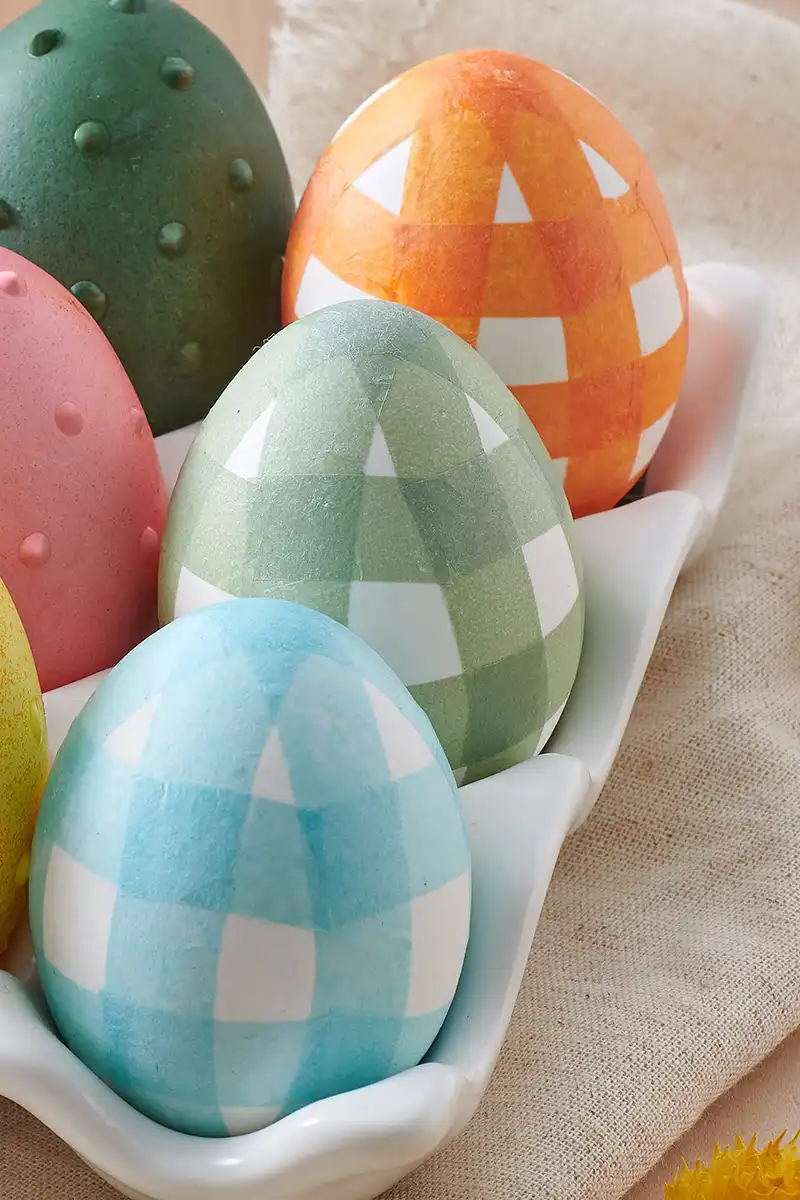
Traditional plaid is a spring classic. In this method, we’re using thin tissue paper to create a graphic design.
- White eggs
- Scissors
- Colored tissue paper
- Decoupage glue
- Paintbrush
- Cut the paper into thin strips about 0.5 cm wide.
- Using the brush, apply glue in strips onto the egg.
- Stick the paper vertically first, then horizontally, to create the gingham grid.
6. The Luxury Of Gold Leaf
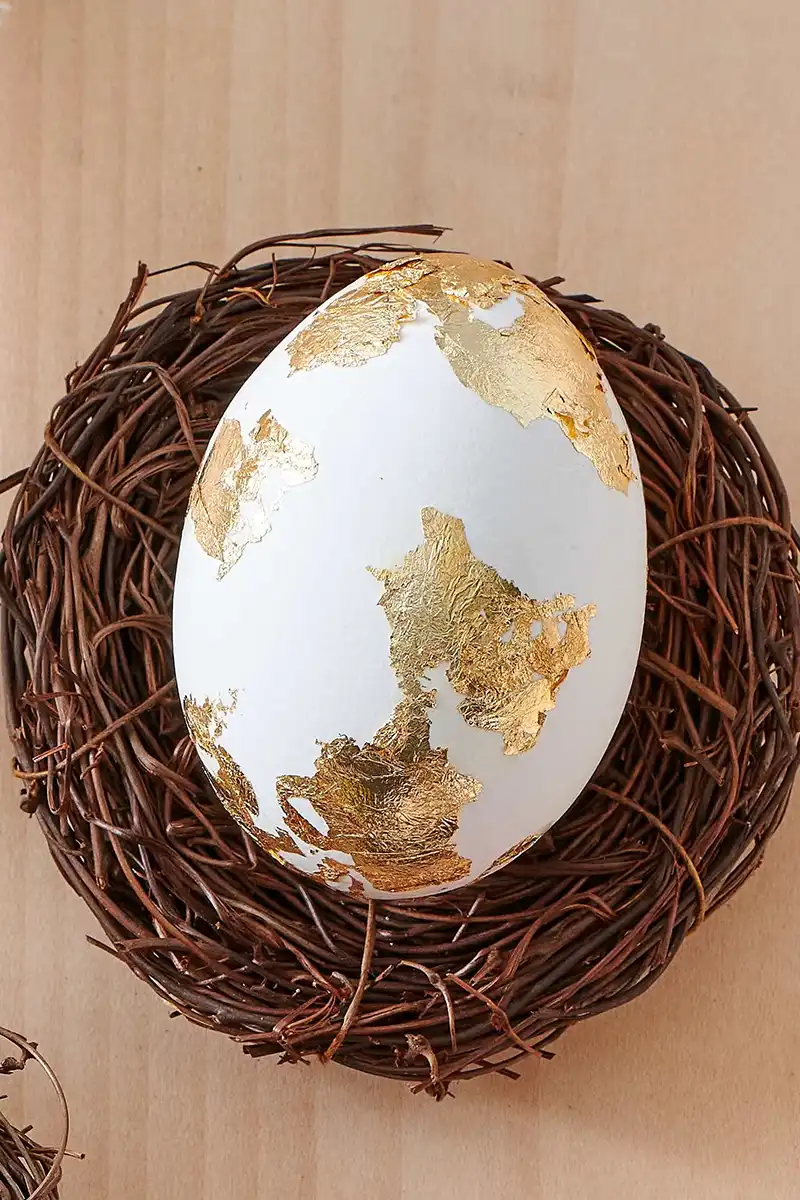
For special occasions like Easter, golden accents are perfect. This creates the effect of a high-end, antique piece.
- White eggs
- Decoupage glue
- Gold leaf
- Soft brushes
- Thin the glue slightly with water.
- Apply the glue with a thin brush in spots or a random pattern.
- Place pieces of gold leaf onto the glued spots and use a soft, dry brush to gently remove the excess gold.
7. Modern Chalky Stripes
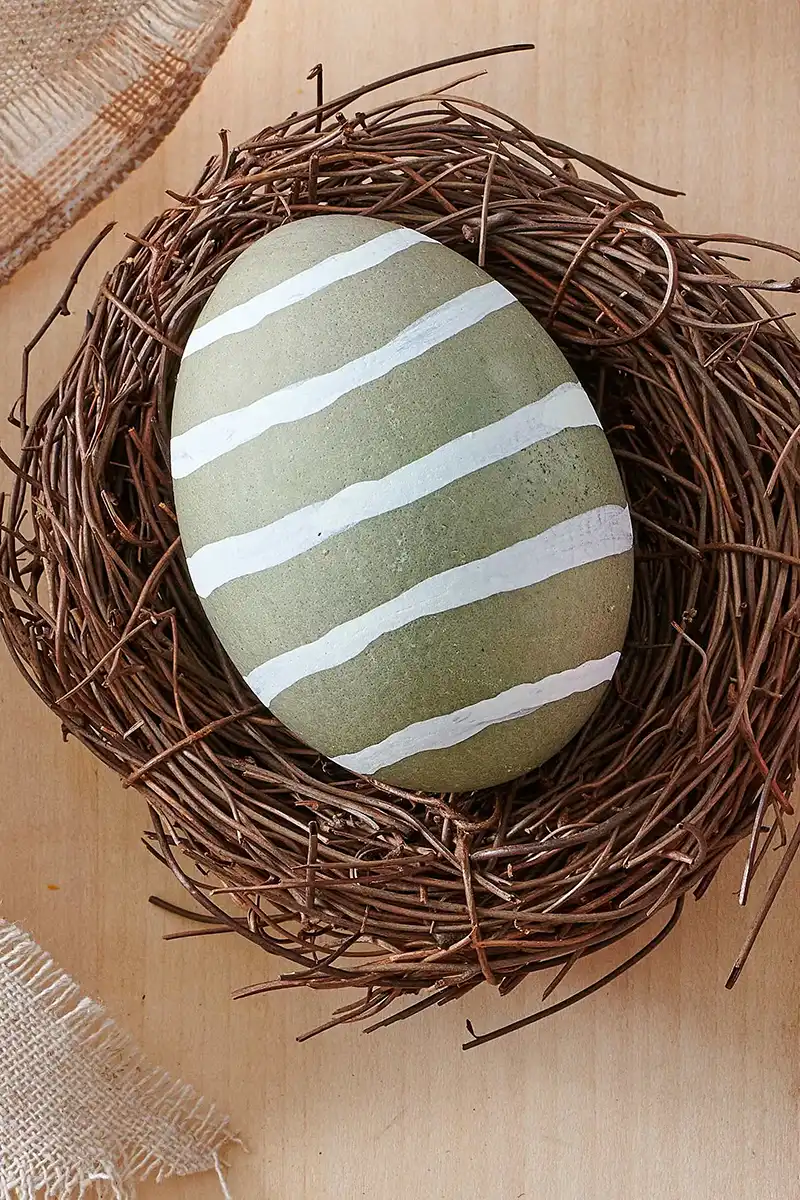
This idea is the perfect balance between modern style and handmade charm. Using matte paint gives the decor a special depth.
- White eggs
- Dye and vinegar
- Acrylic paint with a chalky finish
- Thin paintbrush
- Dye the base and dry it.
- Use a thin brush to paint even (or intentionally uneven) stripes around the egg with the chalky paint.
8. Cozy Patchwork Quilt Style
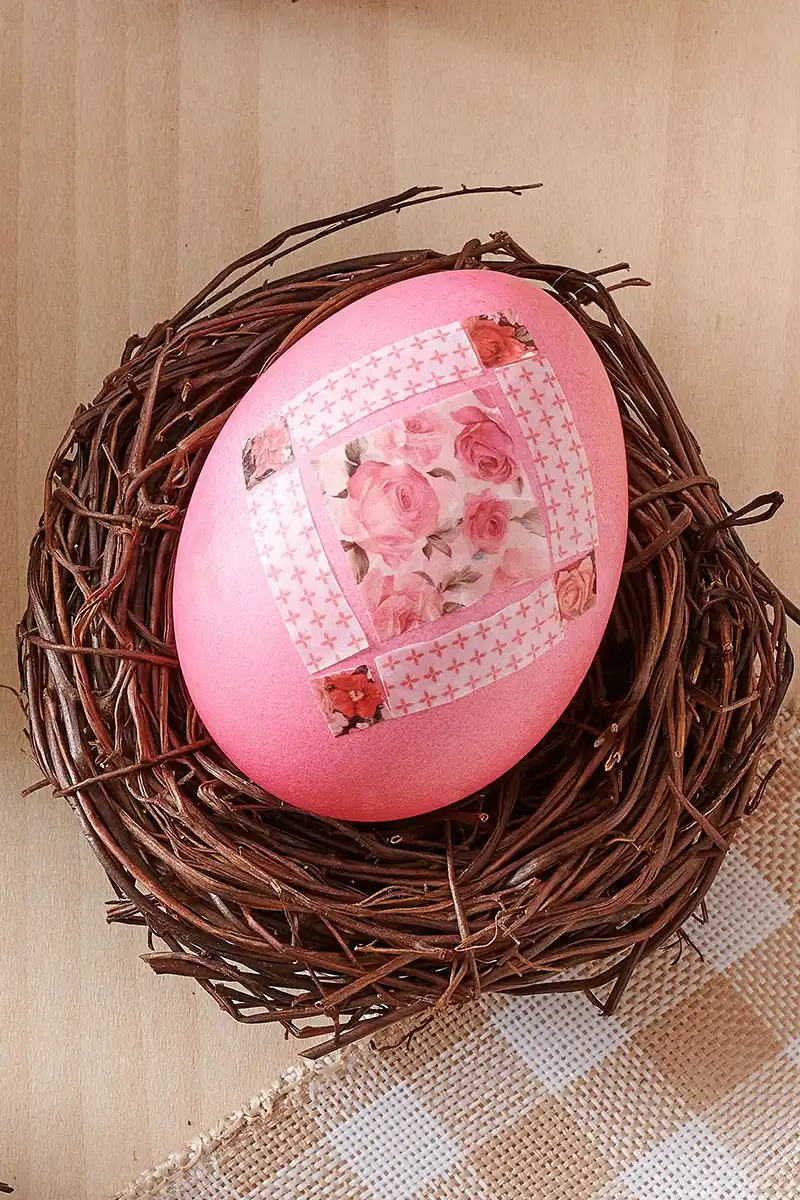
Homegrown charm is always in fashion. Inspiration for this design could be an old heirloom quilt or your favorite textiles.
- White eggs
- Dye
- Washi tape with patterns
- Scissors
- Create a colorful base through dyeing.
- Cut small squares, triangles, and strips from the Washi tape.
- Stick these elements onto the egg, mimicking classic patchwork patterns.
9. Original “Zipper” Pattern
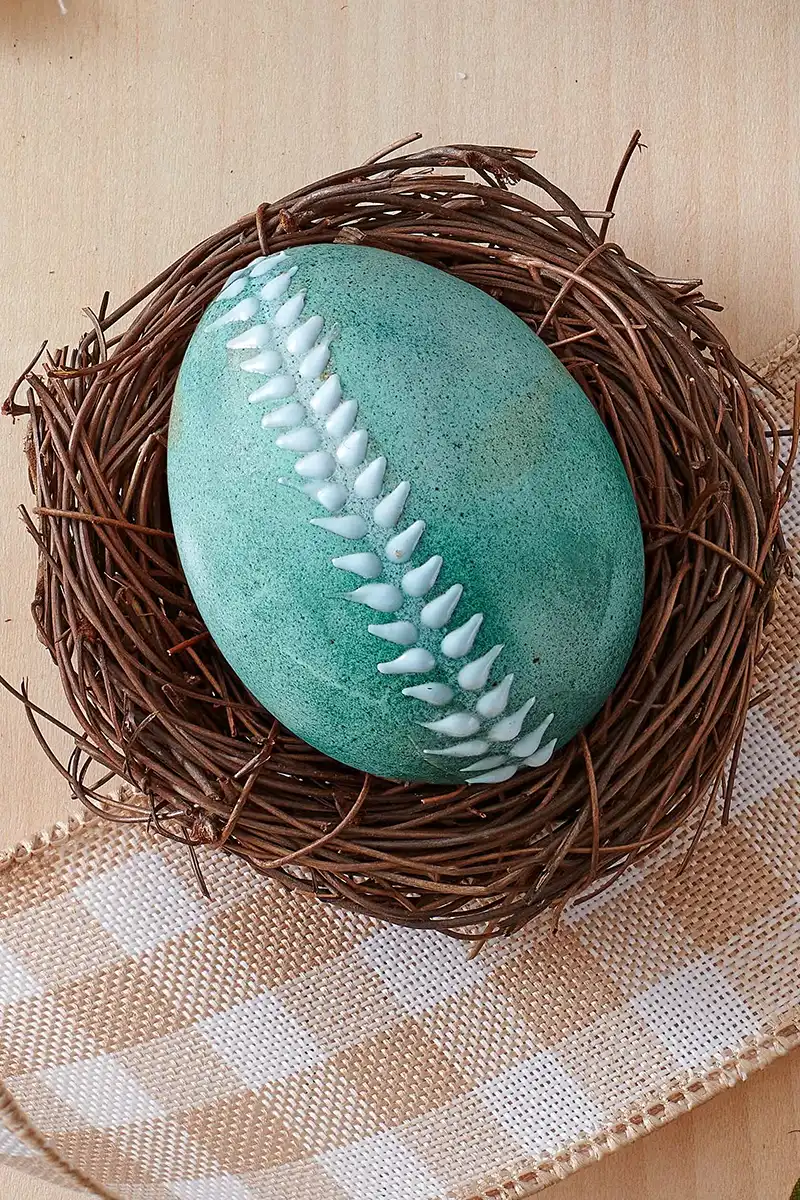
If you’ve got a steady hand and love details, try creating graphic designs using outlines. It looks very unusual and contemporary.
- White eggs
- Dye
- White puff paint
- Dye the eggs and let them dry.
- Apply small dots of paint in two parallel lines, making slight “tails” outward from each dot to mimic a zipper.
10. Botanical Impressions Of Nature
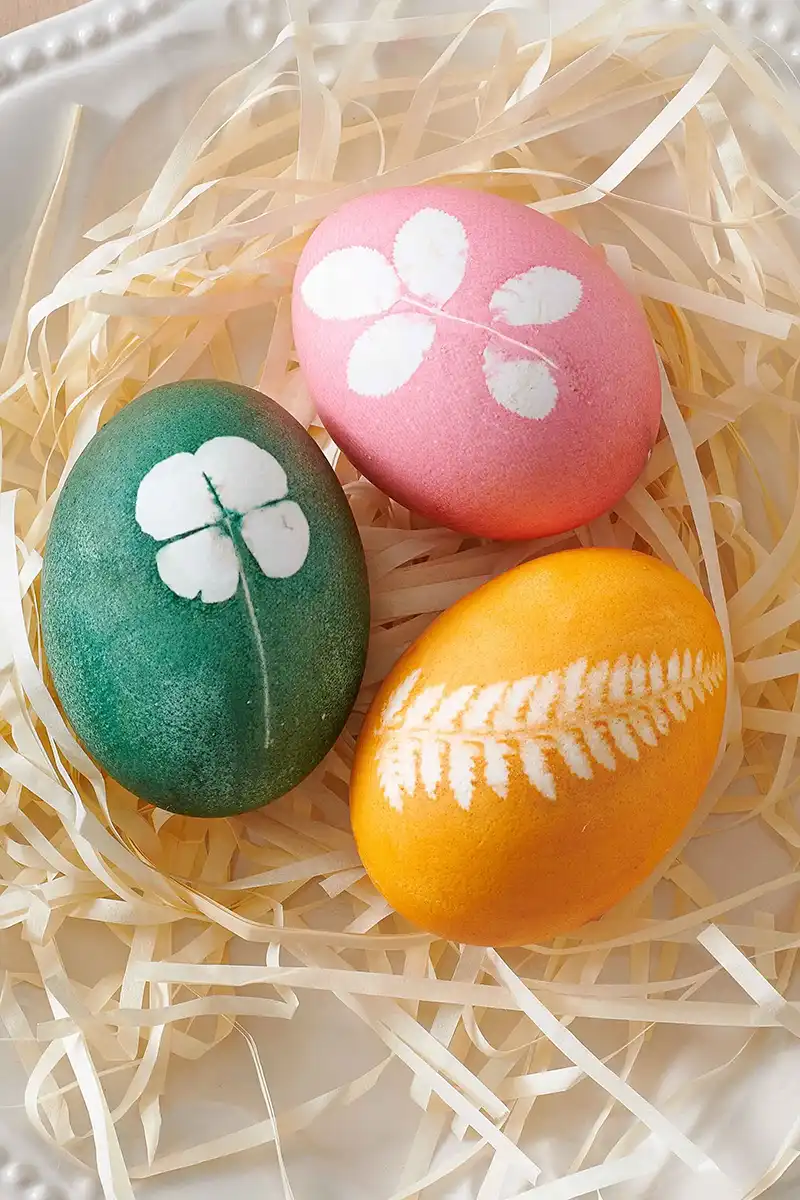
Spring is here, so why not look for inspiration right under your feet? Tiny clover leaves, the first flowers, or ferns are perfect for this project.
- White eggs
- Small leaves or petals
- Gauze or old nylon stockings
- Dye and vinegar
- Place the leaf against a raw or boiled egg.
- Wrap the egg tightly with gauze or nylon so the plant doesn’t shift, and tie a knot.
- Dip the bundle into the dye. After dyeing, remove the fabric and leaf—a sharp white silhouette of the plant will remain on the shell.
My opinion:
I believe that Easter decor isn’t about a competition of skills, but about the opportunity to slow down and enjoy a moment of creativity. Try starting with the simplest leaf method—nature has already created perfect shapes; we just need to highlight them.
Advice from MODISTA
- To ensure the dye applies evenly, always wipe the eggs with alcohol or vinegar before you start to degrease the surface.
- Use drying racks (like bottle caps or pins stuck into foam) to avoid smudging the finished decor.
What egg dyeing techniques are passed down in your family from generation to generation? Share this article with a friend to choose an idea for a creative evening together!
ℹ️ REFERENCE
The Pioneer Woman is a popular American lifestyle brand founded by Ree Drummond, covering cooking, home life, and crafting. The publication is known for its accessible and heartfelt advice for creating a festive atmosphere. 🌐