



Read in another language:
- • Why a human approaching will make wolves leave their den without a fight and hide.
- • How these predators weigh threats from other wild animals versus a two-legged hunter.
- • The harsh, pragmatic math of the wild that has helped the species survive for millennia.
- • The rare, exceptional situations where a predator will fight to the death and sacrifice everything.
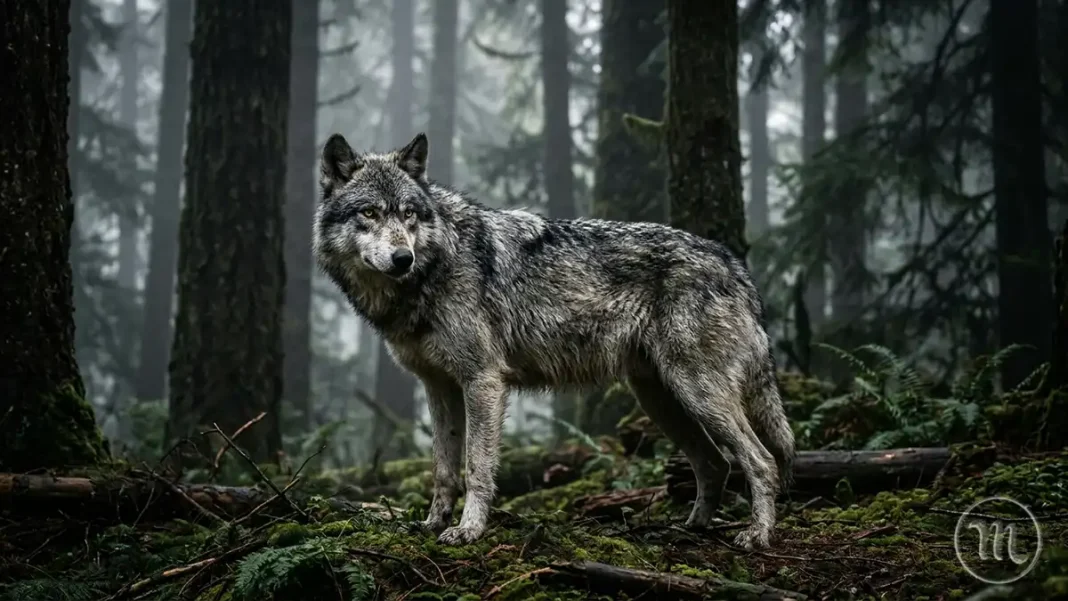
We’ve all been raised on a specific set of wildlife stories: a furious mother bear tearing anyone to shreds to protect her cubs, or a mother hen bravely launching herself at a massive dog if it gets too close to her little chicks. In the human world, parental protection is viewed as something sacred and absolute. However, some facts completely shatter our usual stereotypes and assumptions about the animal kingdom. For instance, if a human approaches a wolf den, the adult wolves… simply walk away. They leave their defenseless pups behind and instantly melt into the deep forest, reports MODISTA.
Sounds like total betrayal and cowardice, doesn’t it? It’s easy to feel an emotional sting and want to slap human labels on these fierce forest dwellers. But let’s not jump to conclusions. It’s time to set aside our human drama and sentimentality. Nature operates on a whole different set of rules—ones that don’t care about Hollywood heroism but rely on cold, hard math designed to keep the species alive.
Battle Strategy: When Fangs Are Powerless Against a Natural Disaster
Here’s the thing: an adult wolf knows exactly who it can take in a fair fight, and who it absolutely can’t. If a massive grizzly bear, a sneaky jackal, or a predatory lynx wanders too close to their den, the pack will unleash absolute hell, making the uninvited guests bitterly regret their visit. When dealing with other forest creatures, it’s an even playing field: sharp fangs against powerful claws, strength against strength, agility against agility.
But humans? To a wolf, a human isn’t just another competitor or rival predator. A human is an unpredictable natural disaster against which an animal’s biological weapons are totally useless. For thousands of years, humans have relentlessly hunted wolves with cruel traps, deadly poison, and massive, bloody raids directly on their dens. Over countless generations, a brutal rule has been hardwired into their DNA: a two-legged figure with a stick or a rifle can kill from a massive distance, and there is no defending against them in an open fight.
Підписуйтесь, щоб не пропустити нічого цікавого! | Follow us so you don't miss anything interesting! | Subskrybuj, aby nie przegapić niczego ciekawego!
The Harsh Math of the Wild: Why an Adult Pair Is Worth More Than a Litter
In moments of mortal peril, wild animals rely on pragmatic survival math. An experienced adult wolf, masterfully skilled at hunting through brutal winters and intimately familiar with every trail in its territory, is the bedrock of the entire pack. If an adult male or female throws their life away in a pointless attempt to defend a den, the tiny pups won’t stand a chance of surviving on their own anyway. They would simply face a slow, painful end from hunger and cold.
On the flip side, if the adult pair manages to escape the hunters, they’re guaranteed to raise a new litter by the very next spring. Through the lens of human morality, this looks selfish and cruel. But if wild animals played the noble hero and sacrificed themselves for a single litter, they would have been wiped out back in the days of the first primitive hunters. This exact strategy is what allowed the species to survive the heavy pressure of human civilization.
Paranoia on Guard and the Exceptions to the Rule
Don’t assume these parents abandon their litter at the slightest rustle, though. They’re actually incredibly paranoid in the best evolutionary sense of the word. A wolf will never walk straight to its den, making sure not to give away its location to other predators. They might circle the forest for hours, masterfully tangling their own tracks and listening to every single sound.
If they spot mushroom foragers or armed hunters heading anywhere near the den from afar, the pups are immediately relocated. Devoted parents always have a few backup dens hidden away in brush so thick no human would ever venture there. They only run when humans are practically stepping on the den. Even then, the adults will often wait it out in thick brush half a kilometer away, anxiously hoping the danger will pass.
However, there’s one critical exception where a wolf will fight tooth and nail, completely disregarding its own life: when it’s cornered. If hunters and trained hounds trap a mother wolf directly inside the den with nowhere left to run, a terrifying last stand begins. Knowing it’s the end, she’ll try to take down as many threats as humanly possible. Plenty of hunting hounds have met their match in those dark tunnels, experiencing the full fury of a cornered predator.
Deep in the wild forest, there’s no room for theatrical gestures or romantic myths—only cold evolutionary logic and the primal drive to survive. Perhaps by observing this unyielding math of the wild, we learn to appreciate what makes us human. Our unique ability to act against our own survival instincts, staying by the ones we love even when there’s no hope left.
My Opinion:
Nature doesn’t care about our sentimentality; it operates on the scale of eternity. A wolf’s retreat isn’t cowardice—it’s a clear manifesto of evolution, where protecting the genetic blueprint matters more than a dramatic final stand. Cruel? Maybe. But it’s this exact cold pragmatism that allows life to endure against all odds.
Advice from MODISTA
- Never try to track down wolf dens during your forest hikes; cornering a apex predator can trigger a fierce, violent attack in self-defense.
- Keep this survival math in mind when analyzing other wildlife behavior—the self-preservation instinct almost always overrides emotion in the wild.
- Respect the personal boundaries of forest dwellers and avoid leaving your tracks where animals might be raising their next generation.
Did you know about this unusual, pragmatic survival strategy used by apex predators, or did you still believe the classic storybook myths? Save this intriguing piece to your browser bookmarks so you don’t lose these amazing facts about the animal kingdom!
MODISTA Daily MODISTA Daily MODISTA Daily
ℹ️ REFERENCE
The gray wolf (Canis lupus) is one of the largest predatory mammals in Europe and a prominent member of the Canidae family. For centuries, this species faced intense pressure and hunting by humans, which deeply shaped its behavioral patterns, nocturnal lifestyle, and unique defense instincts geared toward population survival. Detailed scientific research regarding the distribution and habits of these fascinating animals can be explored across the pages of the free encyclopedia. 🌐