In this article, you’ll learn:
- Why using bags is more effective than traditional open garden beds.
- How to properly prepare the planting site so roots don’t feel a lack of space.
- Which soil mix composition is perfect for the “bag” method.
- Key care nuances that guarantee healthy seedlings and an abundance of fruit.
Every year, many gardeners face the same trouble: no matter how much effort is put into the beds, tomatoes stubbornly refuse to yield the desired results. Low productivity, diseases, and exhausted soil can ruin the mood of even an experienced gardener. It would seem that traditional advice no longer works, and the land is simply “tired.” However, there’s a way out, and it comes to us from the East. An old Asian method of growing vegetables is exactly the life-saver that allows you to get luxurious fruit even on the most unsuitable plots.
I often notice that we’re used to fighting nature instead of adapting to it. The Asian approach to gardening is a completely different philosophy. It’s based on maximum efficiency under limited resource conditions. Looking at the experience of farmers from Asia, one can only admire their ingenuity. For example, Japan, with its specific geography and complex soils, is considered an extremely difficult region for agriculture. Nevertheless, local farmers handle this challenge fantastically, demonstrating yields that the whole world envies.
The Secret of Asian Tomato Beds
The main trick of this technique is that we abandon classic garden beds in favor of mobile and isolated systems—bags of soil. This is an ideal solution if the soil on your plot is poor, rocky, or too clayey. Instead of trying for years to improve the entire garden, you create an ideal microworld for each individual plant. My top tip: if you see that your tomatoes are “acting up” in open ground, try to set aside at least a small area for this experiment. The result will definitely impress you!
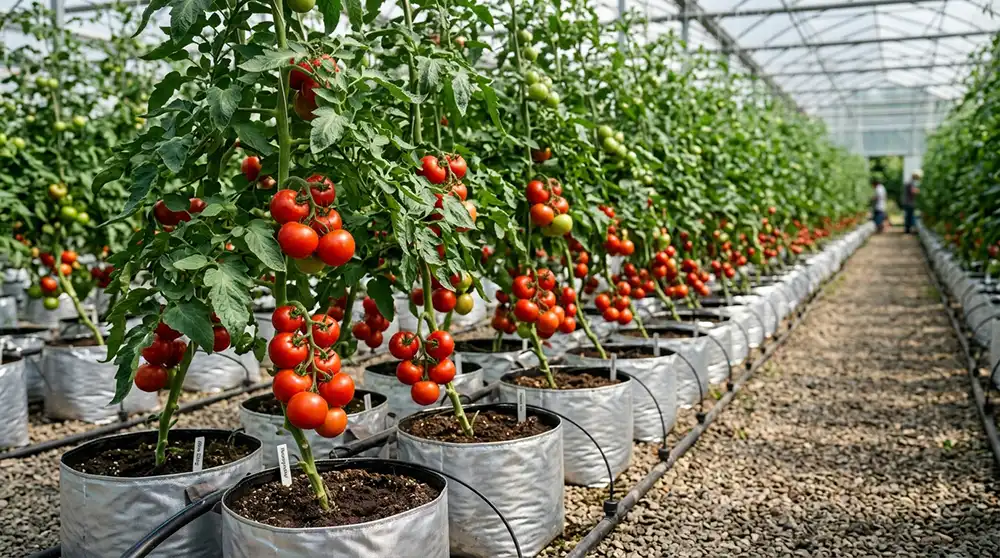
To implement the method in the garden, small depressions—holes—are first made. In them, we place bags filled with high-quality substrate. This way, the plant gets everything it needs from the first days of life, without wasting energy struggling with the unfavorable environment around it. Of course, the seedlings for this method must be exceptionally healthy and strong. If the variety is tall, you should take care of supports right away. Install them in time so as not to damage the root system, which develops very actively in bags.
Підписуйтесь, щоб не пропустити нічого цікавого! | Follow us so you don't miss anything interesting! | Subskrybuj, aby nie przegapić niczego ciekawego!
How to Prepare the Perfect “Home” for Tomatoes
Filling the bags is the foundation of your future success. I do this myself: I mix high-quality store-bought soil with a small amount of humus for nutrition and black soil. To make the earth loose and “breathable,” I always add a bit of sandy soil. Such a mixture doesn’t compact and allows moisture to be distributed evenly. Remember, tomatoes are plants that like to grow a deep root system if they’re watered correctly.
To ensure the roots aren’t limited only by the volume of the bag, you need to make several holes in its lower part. This will allow the strongest roots to go deeper into the main ground if the need arises, and also provide excellent drainage. Excess water won’t stagnate, which is critically important for preventing fungal diseases and rot. It actually works! The plant feels protected but still has access to the deep resources of the plot.
Another important nuance is the choice of the material itself. It’s best to choose bags made of natural fabrics that can decompose naturally over time. It’s eco-friendly and convenient. If you use synthetic materials, keep in mind: at the end of autumn, they must be dug up and disposed of. Don’t leave them in the ground so you don’t turn your own garden into a plastic waste dump. Cleanliness and order on the plot are the keys to the health of your future harvests.
By using this Asian life hack, you’re essentially creating a personal “sanatorium” for each bush. Even on the poorest land, your tomatoes will look like they’re from the pages of gardening magazines. Boom! And instead of puny bushes, you get real tomato trees hung with juicy fruit. The bottom line is—don’t be afraid to experiment and step away from the patterns we’ve used for decades.
My opinion:
I’ve noticed this Asian method is a real find for those who have already lost hope of getting a harvest on difficult plots. I’m convinced that an individual approach to each plant through planting in bags minimizes stress for tomatoes and allows for full control over soil quality.
Advice from MODISTA
- Choose only tested substrate for filling bags, free of weed seeds and pests.
- Watch the moisture: the soil in bags can dry out faster than in open ground, so watering must be regular.
- Don’t forget about mulching the soil surface in the bag to preserve precious moisture and coolness for the roots.
Have you already tried growing vegetables in bags or containers, or do you prefer traditional beds? Share this unusual method with a friend who also dreams of a royal tomato harvest!
ℹ️ REFERENCE
Japan is a country with very limited resources for agriculture due to its relief, so Japanese farmers have become masters of intensive farming and using every inch of land. You can learn more about Japan’s agricultural traditions and innovations on official resources. 🌐
Asian Tomato Planting Technique:
Наші стандарти: | Our standards: | Nasze standardy: Редакційна політика сайту MODISTA | Editorial policy of the MODISTA website | Polityka redakcyjna serwisu MODISTA
За матеріалами Modistaua.com | Based on materials from Modistaua.com | Na podstawie materiałów Modistaua.com
Підписуйтесь на новини | Subscribe to news | Subskrybuj wiadomości MODISTA в Telegram