



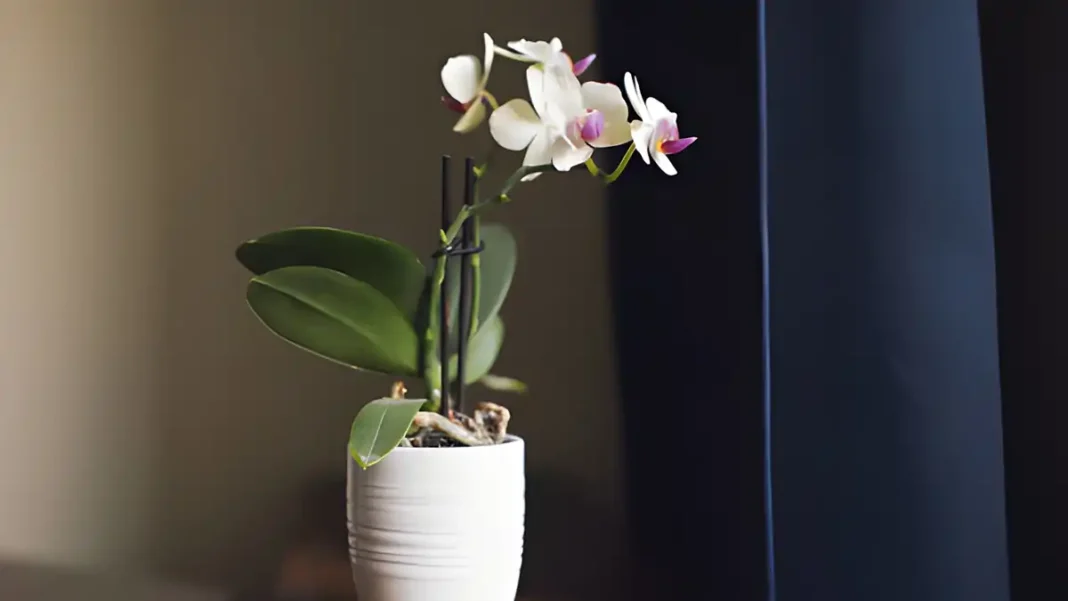
Everyone who has ever bought an orchid in a store knows that euphoria: a magnificent, blooming potted plant that seems to bring celebration into the home for a long time. But, unfortunately, this state lasts only a few weeks. When the last petals fall, disappointment sets in. Often people just throw the plant away, believing that it “has served its purpose” or that re-blooming is true magic, inaccessible to the average gardener.
I always feel bad seeing such beautiful pots end up in the trash. After all, forcing an orchid (most often this applies to the popular Phalaenopsis) to throw out a flower spike again is not so difficult. It just requires not only fertilizer but also an understanding of its natural needs.
“Temperature Shock”: A Life Hack from Experienced Experts
Usually, when we seek to stimulate blooming, we immediately reach for special feeds. Of course, high-quality fertilizer is important, but it is not always the decisive factor. There is one tricky, but extremely effective technique used by professionals: creating an artificial temperature drop.
How Does Temperature Stimulation Work?
For your orchid to start forming flower buds again, it needs a clear signal that the conditions have changed, and it’s time for reproduction (i.e., blooming). In nature, this signal is the night cool-down.
It turns out that to stimulate the orchid, the air temperature at night only needs to be 5 degrees Celsius lower than during the day. It is this gentle but stable contrast that triggers the complex biological processes that lead to the formation of a new flower spike.
Підписуйтесь, щоб не пропустити нічого цікавого! | Follow us so you don't miss anything interesting! | Subskrybuj, aby nie przegapić niczego ciekawego!
If the pot stands in a room where the temperature is the same, comfortable for us, day and night, the plant sees no reason to bloom. It just “rests” and builds up green mass.
Step-by-Step Instructions for Stimulating Bloom
How can this necessary drop in temperature be created in a normal apartment? In fact, it is simpler than it seems.
1. Change of Location for the Night
To ensure a nighttime drop in temperature, you will have to move the plant. Find a room or area in your home where the air temperature is truly slightly lower. This could be:
- A balcony (if it is consistently warm but cooler than the living room).
- The kitchen (if it is less heated).
- The bedroom that you air out before bed (but without drafts!).
Important: The difference should be minimal—about the same 5 degrees. Do not take the orchid out into the frost!
2. Duration of the Procedure
This “nightly migration” must be repeated for several weeks. This is not an instantaneous process, so be patient. It is the regularity of the temperature fluctuations that will eventually lead to the appearance of a small, new flower spike.
3. Protection from the Sun
When you decide to move the orchid, remember its vulnerability. Orchids, especially Phalaenopsis, do not like direct, scorching sun.
Remember: the pot should not be left in direct sunlight, especially in summer or near a south-facing window. This will cause stress to the plant, and instead of blooming, it will fight for survival. The leaves can get burned, and you can forget about blooming then.
Creating the right temperature regime is the key to success. Try this simple trick, and you will see that your orchid is capable of delighting you with lush flowers not just once or twice a year!