



In this article, you’ll learn:
- Why early wake-ups are critical for the health of your rose garden.
- How to properly calculate the amount of water based on the bush’s age and the season.
- A simple “finger test” that’ll save your plants from overwatering.
- Technical secrets of watering at the root and the role of mulching.
Roses are a true classic that absolutely everyone loves. Whether it’s passionate red buds or delicate peony-like varieties, they’re always a garden highlight and a perfect gift. However, anyone who’s ever tried growing these “queens” themselves knows: they can be quite temperamental. Taking care of them requires precision, especially when it comes to hydration.
The hardest part of growing roses is finding that perfect balance in the watering schedule. When’s the right time to pick up the watering can? How often should you do it without causing harm? Overdo it, and you’ll face root rot. Forget for a few days, and you’ll see the petals wilting sadly under the sun. I’ve researched advice from leading experts and I’m ready to tell you how to hydrate your flowers correctly so they’ll thank you with an incredible scent and strength.
The Golden Hour for Your Garden
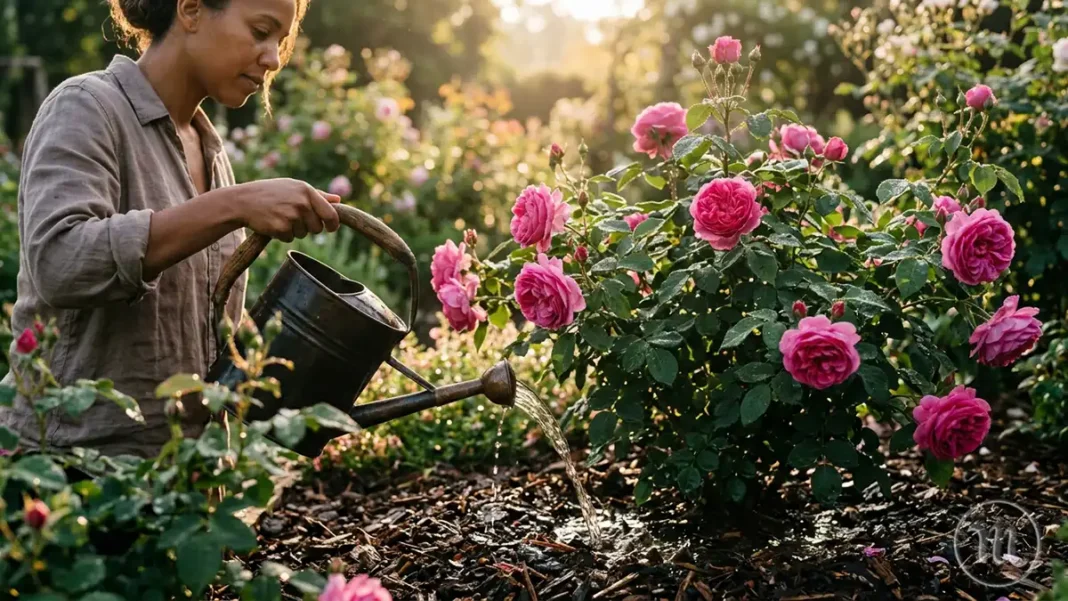
If you’ve decided to get serious about roses, get ready to become an “early bird.” According to Bouquet Box founder Courtney Sixx, the best time to water is early morning. There are two very compelling reasons for this. First, morning hydration gives plants a chance to fully soak up the moisture before the sun starts burning relentlessly. Second, any droplets that accidentally hit the leaves will have time to dry during the day.
I’ve noticed that many beginner gardeners ignore this fact, watering their flowers in the evening. That’s a huge mistake. Moisture left on leaves overnight creates the perfect environment for fungal diseases to thrive. So, set your alarm earlier and aim the water stream exclusively at the base of the plant. It’s important to saturate the soil around the roots rather than spraying the bush from above. This also prevents soil splashing, which is often a cause for spreading infections.
Підписуйтесь, щоб не пропустити нічого цікавого! | Follow us so you don't miss anything interesting! | Subskrybuj, aby nie przegapić niczego ciekawego!
Watering Schedule: From Sapling to Mature Bush
Watering frequency isn’t a constant; it depends on many factors: air temperature, rainfall, and how long ago you planted the flowers. Young, newly planted roses need your attention most of all. They should be watered every other day to help the root system strengthen and adapt to the new spot.
For mature, established bushes, the rules are slightly different. In moderate weather, one thorough watering per week is usually enough. But don’t forget that this isn’t a one-size-fits-all recipe. During hot or dry spells, even old bushes might need a “drink” two or three times a week to stay in top shape.
Not sure if it’s time for a water session? I always use a tried-and-true hack — the finger test. Just stick your finger into the soil to a depth of 5–7 centimeters. If the earth is dry there, get to work immediately. If you feel moisture, it’s better to wait a day or two to avoid triggering water stagnation.
Seasonal Features and Proper Technique
The seasons dictate their own terms. In winter, roses are usually dormant and require minimal extra hydration, especially in cool or rainy climates. But summer is a completely different story. During warm months, moisture must be consistent, and during intense heatwaves, watering might become a daily ritual.
You can use a standard watering can or a garden hose with a soft spray attachment. On average, one bush needs 6 to 10 liters of water, depending on its size and environmental conditions. If you see water starting to pool or run off, take a break. Let it soak in, then continue. Only deep hydration reaches the very tips of the roots.
Also, don’t forget about mulching. I recommend creating a small bowl-shaped depression around the base of the bush — this helps direct the water exactly where it’s needed. A few centimeters of mulch (bark, straw, or grass clippings) on top will help hold moisture in the soil and protect the roots from overheating.
MY OPINION:
I’ve seen it for myself: roses are incredibly grateful plants if you respect their morning schedule. Don’t be lazy about heading into the garden at sunrise, because those minutes of peace and proper care guarantee you healthy bushes without a single spot of fungus.
Advice from MODISTA
- Mulch is a must: It’s not just about aesthetics; it’s a lifesaver against rapid water evaporation.
- Avoid the evening shower: Wet leaves at night are an open door for diseases.
- Quantity matters: It’s better to water deeply and generously once than to “spritz” a little every day.
How are your roses doing this spring? Maybe you’ve got your own secret ingredient for lush blooming? Share this article with your gardening friends so their rose gardens can become a point of pride too!
ℹ️ REFERENCE
Information prepared based on expert advice from Courtney Sixx, founder of the famous floral brand Bouquet Box, which specializes in professional cultivation and floral design. More professional gardening secrets can be found on official resources regarding decorative plant care. 🌐