



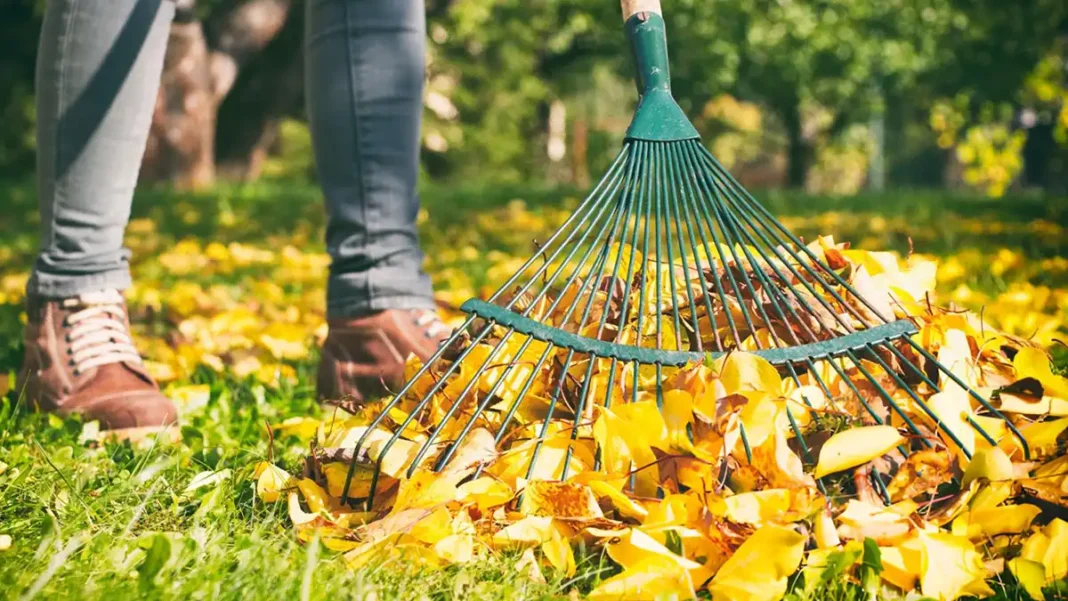
As soon as autumn arrives, the annual “ritual” begins for garden and yard owners — grabbing the rake. Piles of fallen leaves seem like an unnecessary mess that needs to be removed immediately. But is this truly the case? I was surprised to find that the question “to rake or not to rake” is not as simple as it seems. Experts, especially ecologists, urge us not to rush. They convince us that what we consider waste can, under certain conditions, become an invaluable resource.
We are accustomed to seeing perfectly clean lawns, but nature has its own rules. Whether we need to interfere in this process depends on many factors — the condition of your lawn, the types of plants growing in the area, and even the climate where we live. The publication Popsci discussed these interesting nuances that force us to rethink our attitude towards autumn cleanup.
Why leave fallen leaves: Benefits for the soil and wildlife
The secret to natural soil enrichment
When we remove leaves, we are essentially taking valuable elements out of the nutrient cycle. Experts emphasize: when leaves remain on the ground and begin to decompose naturally, they turn into free, organic fertilizer. This is a real cocktail of nutrients essential for the soil: nitrogen, phosphorus, and potassium. This process not only maintains the natural balance but also allows us to use chemical fertilizers less often. Isn’t this a wonderful saving?
Moisture, structure, and little “helpers”
I always thought a thick layer of leaves “smothers” the soil, but it turns out the opposite is true. Fallen leaves act as natural mulch. They perfectly retain moisture, which is especially important during dry periods, and significantly improve the soil structure, making it looser. In addition, leaves create an ideal environment for the development of a whole army of beneficial microorganisms and, no less importantly, earthworms. And we know that these little workers are the best friends of any gardener, as they increase soil fertility without asking for anything in return.
A reliable haven for fauna
Leaves are not just organic mass; they are a vital environment for wildlife survival. In fact, you are leaving a “hotel” for countless small creatures for the winter. Beetles, spiders, caterpillars, as well as mice, chipmunks, frogs, and salamanders hibernate here. The layer of leaves acts as a warm, protective blanket that shelters them from severe frosts. And in the spring, birds find food in it — insects or seeds. Thus, by leaving the leaves, you contribute to the support of biodiversity.
Підписуйтесь, щоб не пропустити нічого цікавого! | Follow us so you don't miss anything interesting! | Subskrybuj, aby nie przegapić niczego ciekawego!
Saving effort and time
Let’s be honest: raking leaves is a job that requires a lot of effort and time. Bagging it, hauling it away — it’s a real marathon. If you decide to let the leaves decompose naturally, you not only save your own energy but also the money you might spend on cleanup services or buying fertilizer.
Drawbacks to consider: When leaves become a problem
Despite all the benefits, a complete refusal to clean up has a downside. Moderation is important here.
Threat to the lawn and diseases
The main risk is associated with too thick a layer of leaves. If the lawn is completely covered, the grass can “suffocate” because it does not receive the necessary sunlight and air access. Moreover, fungal diseases develop ideally in a damp, dense environment, which can cause significant damage to the lawn.
Aesthetics and unwanted guests
The visual aspect cannot be ignored either. A large amount of leaves can give the impression of being unkempt or even contradict local landscaping rules. And, unfortunately, leaves sometimes attract unwanted guests — rodents and insects that can damage your garden plants or, worse, try to enter the house.
How to find the golden mean: A smart compromise in cleanup
Ecologists and gardeners advise against going to extremes, but rather seeking an optimal balance.
Mulching: The ideal option for the lawn
The simplest and most effective compromise is mulching. Take a lawnmower and simply shred the fallen leaves. Leave a thin layer of it on the ground. Shredded leaves decompose much faster, do not “suffocate” the grass, and still enrich the soil with nutrients. This solution is a true “two-in-one.”
Selective approach: Raking where necessary
If mulching is not suitable for you, use selective raking. Leave the leaves where they interfere the least and provide benefit: for example, under trees, berry bushes, or along fences. But leaves should, of course, be removed from paths, main lawns, and driveways. This will allow you to maintain a neat appearance of the area while benefiting the soil.
Community cooperation: Composting
If there are too many leaves, and there is no place to compost them on your plot, learn about local composting programs. Many communities have initiatives where leaves are collected and turned into high-quality fertilizer, significantly reducing waste and making a substantial contribution to environmental protection.
Conclusion: Don’t rush to grab the rake
So, the decision of whether to rake leaves depends on your specific circumstances and priorities. If you have a well-maintained plot, and the layer of leaves does not turn into a “blanket” several centimeters thick, leaving it is beneficial for both the soil and the local ecosystem. Remember that nature rarely creates anything superfluous. Perhaps it is worth slightly changing your approach to autumn cleanup so that your garden becomes not only more beautiful but also healthier.
A reminder, at the same time, one must be careful with invasive weeds. For example, one of the most harmful varieties is bindweed, which has a tendency to quickly “take over entire plots” and choke neighboring plants.