



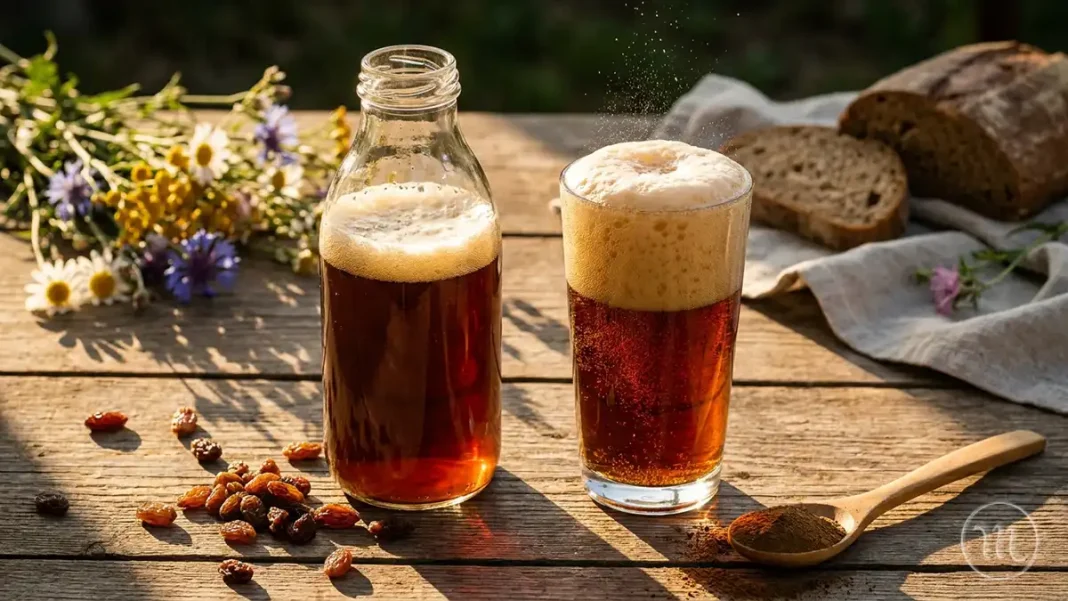
- • How a humble root vegetable transforms into a potent probiotic powerhouse without a single pinch of commercial yeast.
- • Why this specific ruby-red brew is considered the ultimate natural secret weapon for a deep liver detox.
- • The unexpected kitchen staples that add a zesty kick and speed up the natural fermentation process.
- • A foolproof, step-by-step guide to brewing this vibrant elixir right on your kitchen counter.
Read in another language:
When most people think of a refreshing brewed beverage, their minds immediately fly to cold tea or perhaps a classic fermented bread drink. However, culinary history holds a much more potent, deeply healing variation of this traditional Slavic staple. Centurago, this fermented gold was the ultimate daily tonic for monks and farmers alike, who valued its restorative properties far more than plain water. Over generations, this alive, cultured beverage evolved into countless regional variations. Today, I want to share my absolute favorite way to make it—not with stale bread, but with raw, earthy beets. I’ve been brewing this exact recipe for years because it’s a total game-changer for full-body wellness, reports MODISTA.
Sounds familiar when, after a heavy week or indulgent holiday feasts, you’re left feeling completely weighed down and sluggish? Let’s be honest—the deep, earthy flavor of beets isn’t everyone’s cup of tea. But when transformed into a fermented tonic, it becomes an absolute miracle worker for your liver. That’s exactly why it’s become such a massive darling in the modern wellness community as a holy-grail detox drink. My friends, I like to supercharge this specific recipe with fresh garlic and spicy ginger. The result? A tart, bubbly, incredibly refreshing tonic that snaps you right into focus, gives you a natural energy boost, and keeps your heart and gut running beautifully. Plus, making it is incredibly easy, especially if you have a little liquid gold starter from other wild-fermented foods. A splash of sauerkraut juice, kimchi brine, kefir whey, or fermented pickle juice is all it takes to jumpstart those friendly lactobacteria. My personal top tip: I love tossing in a splash of brine from fermented serrano peppers. That subtle, fiery kick plays so beautifully with the sweet, gingery profile of the beets.
The Prep: Getting Your Beets Fermentation-Ready
Homegrown beets are always the dream choice, but organic root veggies from your local farmers’ market or supermarket work beautifully too. You’ll want to grab three medium-to-large beets for this batch. First things first: chop off the leafy tops—but don’t you dare throw them away! Those greens are packed with nutrients; toss them into a fresh salad or braise them into a light, comforting soup. Trim off any hairy little root ends and give the beets a thorough scrub under cold running water with a stiff veggie brush to get rid of every spec of soil.
And here’s the golden rule: whatever you do, do not peel them! The vast majority of the wild yeasts and beneficial bacteria responsible for the magic live right on the skin of raw root vegetables. Simply chop your clean beets into rough 1-inch cubes. Don’t worry about making them look pretty or uniform—just make sure you don’t grate them or blitz them into a purée. If you cut the pieces too small, the beets will release too much sugar too fast, sending the fermentation into overdrive and turning your healing tonic into an alcoholic beet beer. When brewed correctly, the natural ABV never climbs past 1%, keeping it entirely family-friendly.
Підписуйтесь, щоб не пропустити нічого цікавого! | Follow us so you don't miss anything interesting! | Subskrybuj, aby nie przegapić niczego ciekawego!
The Brine: Crafting the Perfect Liquid Base
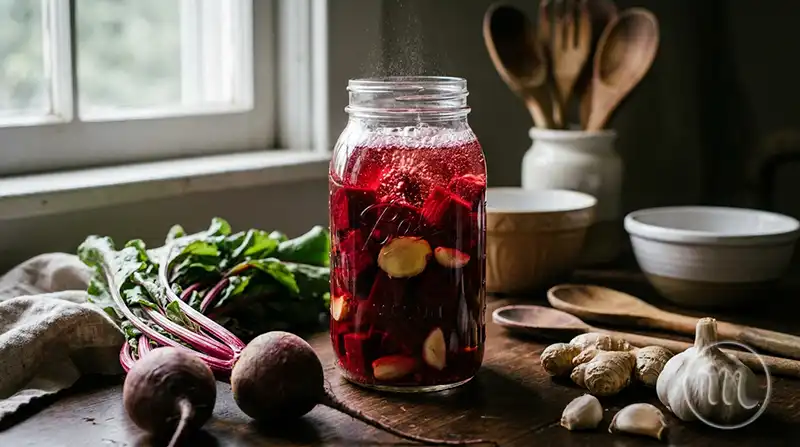
A true wild-fermented tonic requires significantly less salt than your standard pickling recipe. All it takes is one single teaspoon of pure, unrefined sea salt for every quart (about 1 liter) of filtered, non-chlorinated or reverse-osmosis water. Pack your beautiful beet cubes right into a clean 1-quart glass jar, sprinkle in the sea salt, and pour the water over them, filling it almost all the way to the top.
This is the exact moment I slide in a few peeled cloves of fresh garlic and a couple of thick slices of raw ginger. Ginger is an incredible natural catalyst, packed with wild yeasts and active enzymes that give the fermentation a major boost while lending the brew a warming, invigorating aroma and flavor profile that cuts through the earthiness perfectly.
The Starter Spark and Countertop Fermentation Magic
As with any successful lacto-fermentation, a rapid drop in pH is your ultimate secret to success. The beet skins carry plenty of indigenous microbes to start a spontaneous ferment, but depending on how warm your kitchen is, it can take a few days to get rolling. Trust me on this: it goes so much faster when you use a starter. Just two tablespoons of live sauerkraut juice, raw whey, or kimchi brine added into your quart jar acts like an immediate ignition switch for the beneficial bacteria.
For the actual countertop phase, you’ll want a tight-fitting lid or a specialized silicone fermentation airlock designed for home canning jars. Keeping oxygen out is absolutely vital because our salt ratio is quite low. Pro-tip: set your jar inside a shallow bowl or small tray. As the fermentation gets active, the ruby-red liquid expands and can easily bubble over—and let me tell you, beet juice stains countertops like nobody’s business! Double-check that all your veggie chunks are fully submerged below the liquid line, then seal it up tight.
Let the jar sit in a cozy spot at room temperature for about 4 to 7 days. Make a habit of checking it daily to give the jar a gentle burp to release any built-up carbon dioxide pressure. Within 24 to 48 hours, you’ll start seeing tiny, playful bubbles dancing up from the bottom. Go ahead and start tasting it around day three. You’re looking for a gorgeous, pleasantly sour, tangy lactic-acid punch. Once the tartness hits that absolute sweet spot for your palate, strain the deep crimson liquid into a clean bottle and celebrate.
Here’s a fantastic bonus: you can actually get two or three consecutive batches out of the exact same beets! Simply leave the cubes in the jar, pour a fresh batch of salted water over them, and let the magic happen all over again. The subsequent rounds will ferment even faster, though the color and flavor profile will become slightly lighter and more delicate.
A Quick Word of Caution: If you live in a super hot, humid climate, a thin white film can occasionally form on the surface. If you see this, or if your liquid turns thick, viscous, and ropey, it’s best to throw that batch out and start fresh. To safeguard your ferment, squeeze the fresh juice of half a lemon into your initial brine—it lowers the pH right out of the gate and adds a beautiful citrus brightness.
Boom! Your ultimate home-brewed elixir is officially ready. Try serving this vibrant, blood-red tonic poured over a glass of crushed ice with a fresh lemon wedge. For an extra wellness boost, swirl in a few drops of premium extra-virgin olive oil. You can also experiment by swapping in golden beets or pairing them with other nourishing roots—radishes, horseradish, carrots, and turnips make brilliant brewing companions. And tossing in fresh dill with red beets? Absolutely out of this world. Give it a try, and your gut and liver will absolutely thank you for it!
Homemade Ginger-Garlic Beet Tonic Recipe

Step-by-Step Instructions:
- Thoroughly scrub your beets under cold running water with a stiff brush to clear all soil residue. Cut away the stem tops and bottom root tips, leaving the nutrient-dense skins completely intact.
- Chop the prepared raw beets into substantial, rustic cubes roughly 1 inch in size.
- Pack the chopped beet cubes neatly into a clean, sterilized 1-quart glass jar. If using, slip in your peeled whole garlic cloves and ginger slices.
- Sprinkle the sea salt over the ingredients, then fill the jar with clean, filtered water, leaving about an inch of headspace at the top.
- Pour in the two tablespoons of active starter liquid if you want to fast-track your fermentation process.
- Seal the jar firmly with its lid or secure a fermentation airlock. If using a standard lid, remember to place the jar inside a deep dish to catch any overflow.
- Set your brew to ferment in a dark corner at comfortable room temperature (ideally between 18–21°C) for 4 to 7 days.
- If you opted for a standard lid, gently open it once a day to vent the built-up carbon dioxide gas.
- Begin sampling the liquid on day three. Once it develops a beautifully sharp, tangy aroma and a crisp, sour taste, strain the liquid through cheesecloth or a fine sieve into a clean storage bottle.
- Keep your finished brew chilled in the refrigerator. The remaining beet chunks in the jar can be refilled with freshly salted water for a second healthy batch.
Advice from MODISTA
- Always rely on high-quality filtered, spring, or distilled water; standard tap water containing chlorine can completely kill off the beneficial lactobacteria needed for fermentation.
- If you notice a very thin, white powdery layer on top (known as Kahm yeast), don’t panic—it isn’t toxic mold. Skim it off carefully with a clean spoon and keep an eye on the texture of the liquid.
- Enjoy your finished tonic chilled, drinking about half a cup first thing in the morning on an empty stomach to achieve the ultimate detox effect and wake up your digestion.
Did you have any idea that a humble, ordinary beet could offer such an incredible body reset and massive energy boost? Save this gut-healing guide to your favorite recipe bookmarks so you always have the perfect brine ratios on hand, and make sure to pass this along to a friend who loves natural wellness!
MODISTA Daily MODISTA Daily MODISTA Daily
ℹ️ REFERENCE
Beet kvass is a traditional wild-fermented tonic rooted in classic Slavic culinary heritage, produced through the natural lactic-acid fermentation of raw beets. The entire transformation is driven by beneficial wild microbes naturally residing on the vegetable’s skin without any industrial or baker’s yeast, making its health properties incredibly similar to renowned functional superfoods like kombucha, kimchi, or Korean makgeolli. To dive deeper into the rich culinary history, biochemical profile, and traditional brewing techniques of these live-cultured ferments, feel free to browse the comprehensive articles on the free online encyclopedia, Wikipedia. 🌐