



- • Root-watering secrets: Why overhead watering destroys future fruit sets and the exact amount of warm water each plant craves.
- • A living shield against summer heat: Three tall companion crops that naturally shelter your peppers from harsh midday sun.
- • The light mulch trick: Why using peat or humus in July actually suffocates your roots and what you need to swap them for immediately.
- • Late-season feeding calendar: Chlorine-free mineral and organic nutrients that guarantee a massive second wave of fresh harvest.
Read in another language:
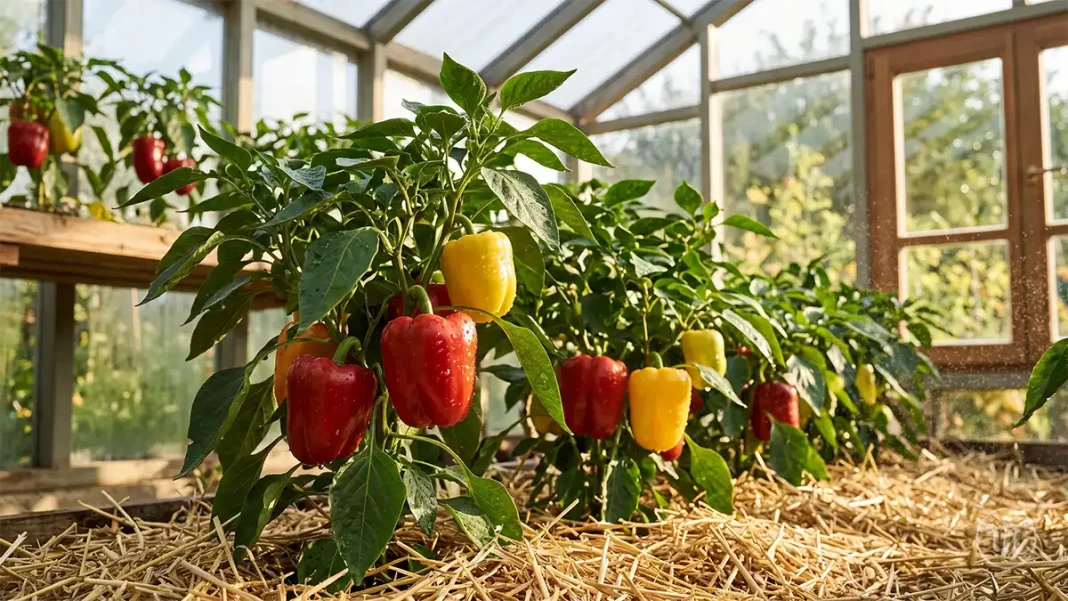
In their native, sun-drenched habitats across South America, bell peppers are actually perennials. Out there in the wild, a single plant can happily keep producing juicy fruit for three to five years straight. Of course, in our temperate northern climates, that kind of non-stop magic is usually reserved for high-tech, year-round greenhouses. However, stretching your pepper harvest way past its usual expiration date inside a standard greenhouse is entirely doable for any home gardener, reports MODISTA.
As summer winds down, bell peppers typically enter their absolute prime. While an outdoor plant might yield around five peppers on average, a protected indoor setup can easily crank out up to thirty fruits per plant! Greenhouse environments naturally cater to what this crop loves most: daytime temperatures around 25–28°C, cozy nights at 18–19°C, and relative humidity levels between 70–75%. But if you want to push your plants to aggressively set new fruit from July all the way through September, just maintaining a basic climate isn’t going to cut it. You need to deploy a few expert-level gardening strategies, starting right at the roots with proper hydration.
Mastering Hydration and Soil Care for Non-Stop Growth
Flawless soil moisture is the absolute foundation of a prolonged sweet pepper harvest. This crop completely panics if the soil dries out too much. The moment you notice the top layer of earth losing its moisture, it’s time to water. Aim for roughly 2–3 liters per plant. Make sure the water is well-settled and pleasantly warm—never cold straight from the tap. Once you’re done, give your greenhouse a thorough airing out to keep humid, stagnant air from lingering around your precious plants.
Pro Warning: Always water your peppers directly at the base of the stem! Overhead sprinkling is a total dealbreaker for this crop. If water hits the leaves and delicate blossoms, it washes the pollen right away, causing potential new peppers to just drop off before they even start. Installing a simple drip irrigation system is a total game-changer here.
The day after you water, grab a hand tool and gently loosen the soil around your plants. This breaks up any hard crust that locks out fresh oxygen from reaching the root zone. While you’re working the soil, try tossing in a handful of wood ash—it serves as a brilliant, all-natural source of phosphorus and potassium. Want to save yourself some labor? Lay down a rich mulch layer using peat, high-quality humus, or clean compost. Once that protective blanket is in place, you can skip the constant cultivation entirely.
Підписуйтесь, щоб не пропустити нічого цікавого! | Follow us so you don't miss anything interesting! | Subskrybuj, aby nie przegapić niczego ciekawego!
How to Shield Your Greenhouse Crops From Midsummer Heatwaves
Building a Living Shield for Natural Shade
When the midsummer sun gets aggressive, your crops need serious protection from overheating. Crafting the perfect dappled shade comes down to smart companion planting. You can easily establish a natural barricade along the southern edge of your garden beds, which is exactly where the harshest UV rays strike during peak hours. Look for tall companion plants that offer soft, filtered sunlight without blocking essential airflow:
- Sweet Corn — With its sturdy stalks and broad leaves, it acts as a flawless privacy screen against intense direct sunlight.
- Sunflowers — Not only do they create a beautiful shield against the heat, but they also bring tons of vital pollinators straight to your garden.
- Pole Beans or Peas — Trained up vertical trellises, these vines weave a lush, living wall of protection.
The trick is planting these taller neighbors early enough so they have plenty of height by the time the worst heat hits. Position this living shield about 40–50 cm away from your pepper crops to prevent overcrowding.
The Secret of Light-Reflective Mulch
If you missed the window to grow a living shade screen, you can still protect the root systems using a clever mulching strategy. But here’s the catch: your chosen material must be light in color!
Dark organic materials like fresh peat or rich, dark compost will actually absorb intense heat during peak summer, making the soil temperature spike dangerously. Instead, opt for clean straw, well-dried lawn clippings, or light wood shavings. Spread a generous 5–7 cm layer across the bed. This bright cushion acts like a mirror, reflecting away scorching sun rays, keeping the soil beautifully cool, and locking in precious moisture right where the roots need it most.
Strategic Nutrition for Peppers in Late Summer
By late August, greenhouse soil can start showing signs of depletion. Lacking essential nutrients, pepper plants slow down their growth and hesitate to push out new blossoms. To get things back on track, you’ll want to introduce a regular late-summer feeding schedule. During this phase, your plants are hungry for phosphorus, potassium, and a healthy dose of micronutrients like boron, zinc, and magnesium.
Pay close attention to calcium levels, too. A lack of calcium triggers blossom end rot on current fruits and stops any newly formed peppers from developing properly.
💡 Golden Rule of Late Summer: Alternate between clean mineral fertilizers and nourishing organic blends every 7–10 days. Always choose chlorine-free formulas, as chlorine builds up quickly in enclosed greenhouse soils and is incredibly slow to leach out.
It’s best to apply your liquid feeds in the evening—ideally after 5:00 or 6:00 PM—and always ensure the soil is already damp before you start feeding to protect sensitive roots.
For a quick boost, try a foliar spray (misting the leaves directly) using a 0.2% calcium nitrate solution or a specialized Calcium Chelate formula (50 ml per 10 liters of water). Foliage absorbs these nutrients almost instantly. You can also apply calcium nitrate the old-fashioned way at the roots by dissolving 20g into 10 liters of water. Modern biostimulants packed with amino acids and plant-based sugars also deliver fantastic results. Balanced commercial mixes like Agricola or Novofert Universal are readily available at your local garden center.
Crucial Tip: Never mix calcium nitrate and standard superphosphate together in the same watering can! The resulting chemical reaction locks up the nutrients, leaving them useless to your plants.
For a fantastic organic option, peppers absolutely love fermented weed teas or a diluted poultry manure tea (keep the ratio strictly at 1:15 or 1:20 to avoid root burn). To supercharge root health and help the plant draw more nutrients from the earth, integrate humic acids. Reliable plant tonics like Epin, Agriflex, or Maxicrop Cream also work beautifully to keep plants stress-free.
Just keep in mind that too much nitrogen late in the season is a bad idea—it forces the plant to push out excess green leaves, delaying fruit production and lowering its natural pest defense. For time-tested DIY remedies, you can confidently experiment with a fermented banana peel tea, crushed eggshells, or a simple yeast tonic (dissolve 10g of dry yeast in 10 liters of warm water).
How to Properly Shape and Prune Your Plants
Keeping a tidy plant canopy helps redirect internal energy directly into ripening your harvest. Every 3–5 days, check on your crops and prune away:
- Deformed or excess tiny fruit sets;
- Suckers growing inward that crowd out light and airflow;
- Stray flower buds popping up between minor side branches;
- Weak, non-producing shoots;
- Yellowing, old, or diseased leaves;
- Any side shoots or flowers sitting below the main first fork of the stem.
Try to tackle this task early in the morning on a dry, sunny day so the fresh cuts dry up and heal quickly. Routine pruning is your best line of defense against fungal infections and pest outbreaks.
As you get into late August, tweak your approach slightly: stop removing leaves under branches that have already been completely harvested, but do pinch off the growing tips of all main stems. This caps vertical growth and forces the plant to channel all its energy into sweetening up the peppers already on the vine.
If your plants produced tons of blossoms but very few actual peppers, they are likely too crowded and starving for light. Carefully thin out the foliage, but stick to the rule: take off no more than one or two leaves per plant at a time to prevent shock and moisture imbalances that cause fruit splitting.
Don’t forget to check your stakes and ties, either. Heavy peppers can easily weigh down branches. Even though pepper stems look sturdy and woody, they are incredibly brittle and can snap under a heavy load. Handle them with care and watch your step around the base of the plants.
Bulletproof Pest and Disease Prevention
Sharp temperature drops between scorching days and chilly late-summer nights can easily invite plant diseases. Since harsh chemical sprays are completely off-limits while you’re actively harvesting food, gentle bio-remedies are your best option.
To keep fungal issues at bay, look for natural treatments containing beneficial fungi like Trichoderma viride or reliable bio-fungicides like Fitosporin. If spider mites make an appearance, clear them out with Fitoverm. For dealing with thrips or pesky whiteflies, organic options like Biovert offer excellent protection.
When spraying, make sure to thoroughly coat both the tops and bottoms of the leaves, as well as the surrounding soil where pests and spores love to hide out for winter. To deter slugs, try sprinkling a barrier of dry mustard powder around the base of the stems. If aphids strike, a natural wash made from bitter wormwood works wonders. Stay on top of weeding, and pull up any heavily diseased plants immediately to protect the rest of your greenhouse.
Consistently introducing beneficial microbes like Bacillus subtilis into your soil works beautifully over time. They naturally suppress pathogens and improve the overall soil structure, keeping your plants resilient.
Harvest Tactics and Smart Variety Selection
To keep your plants constantly pushing out new fruit sets, you need to harvest regularly. It’s often best to pick them when they reach full size but are still in their green, technically mature stage rather than waiting for full color change. They’ll ripen up beautifully on a kitchen counter or in a cool pantry. Never yank fruit off the branch by hand—use sharp pruners or clean kitchen shears to cut the stem cleanly. This protects the plant from damage and helps your harvested peppers stay crisp and fresh much longer.
Beyond great daily care, your initial choice of pepper varieties plays a huge role. Tall, late-maturing varieties are perfect for greenhouse growing since they are genetically wired for a long, heavy harvest season. Even when September brings chilly nights to an unheated greenhouse, following these simple care steps ensures you’ll be picking crisp, homegrown treats right through early autumn.
My Opinion:
When I first started growing sweet peppers in my greenhouse, I made a classic beginner mistake—I piled a thick layer of dark peat mulch around my plants right in the middle of a July heatwave. I learned the hard way that roots under that dark blanket literally cook, causing the plants to drop every single blossom overnight. Now, I swear by clean straw or dried grass clippings to keep things cool. It’s the only way to safeguard the root zone, and it keeps me drowning in juicy peppers until late September.
Advice from MODISTA
- Always keep a large barrel of water inside your greenhouse—shocking your peppers with chilly tap or well water can stunt fruit production for weeks.
- Only handle pruning and leaf removal on warm, sunny days so the open wounds dry instantly and don’t invite grey mold issues.
- When applying calcium boosts in August, use foliar sprays—roots absorb nutrients much slower during late-season temperature shifts.
Have you ever tried swapping out chemical plant food for a natural yeast mix or a homemade banana peel tea? Save this practical guide to your bookmarks so you always have these calcium ratios and pruning steps handy when you need them!
ℹ️ REFERENCE
The bell pepper (Capsicum annuum) is a popular warm-season crop belonging to the Solanaceae family, originating from tropical regions of Central and South America. It earned its common European moniker thanks to early botanical work by Bulgarian breeders who significantly refined the large-fruited sweet varieties that eventually took over European cuisine. You can read all about its fascinating global history and botanical traits on the free online encyclopedia. 🌐