



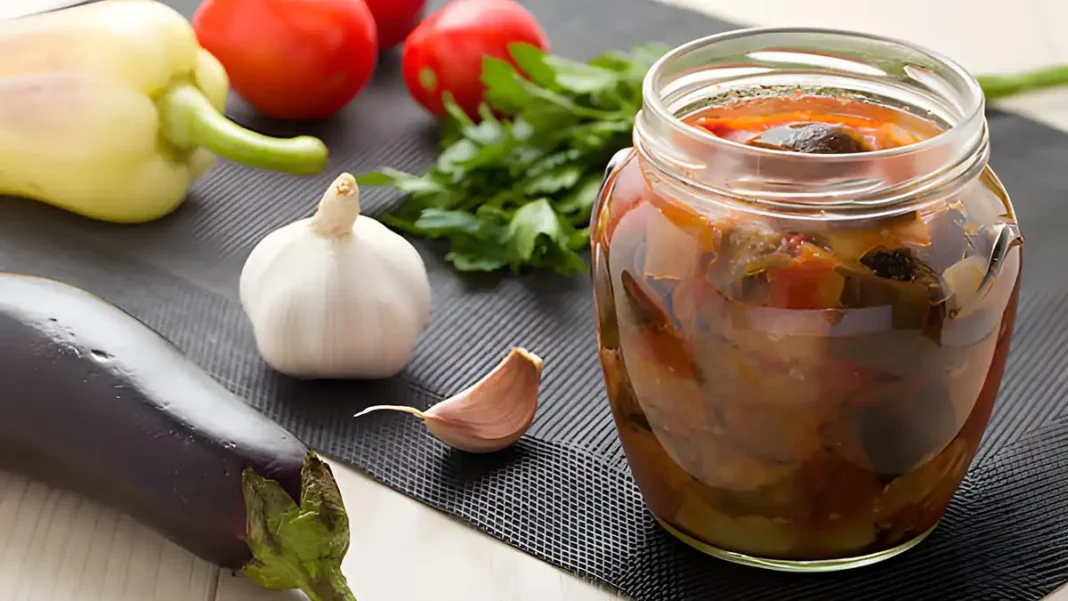
Like most Ukrainian hostesses, I preserve vegetables for the winter every year. And while pickled eggplants in jars are a classic, I always wanted something more vibrant, with a deep fermented flavor, like from a barrel. I tried dozens of recipes until I found this variation of fermented eggplants with a spicy vegetable stuffing.
I like this recipe because it gives incredible freedom for experimentation. It tastes great both as an appetizer for borscht, and as an addition to baked potatoes, and, most importantly, it is completely unlike ordinary preserves. The secret lies in the correct blanching and aging under pressure. I will tell you all the details so that yours turn out perfectly!
Ingredients that Will Make the Dish Unforgettable
For your preserved dish to be aromatic and firm, I advise you to take young and firm eggplants.
| Ingredient | Quantity |
| Young Eggplants | 1.5 kg |
| Fresh Carrots | 300 g |
| Sweet Pepper (preferably red) | 150 g |
| Red Hot Pepper | 1 pc. (adjust to taste) |
| Garlic | 40 g (about 6–8 cloves) |
| Fresh Herbs (parsley, dill) | If desired (I take 1 bunch) |
| Celery Stalks (for tying) | 10–12 pcs. |
For the Brine (Pouring):
- Water – 1 L
- Salt (coarse, non-iodized) – 2 tbsp.
- Bay leaf, allspice – to taste
Step-by-Step Preparation: My Proven Secrets
Step 1. Preparing the Eggplants for Fermentation
I always start with the eggplants — “blue ones,” as they like to call them in the South. I trim the stem and make a deep longitudinal cut — so that it does not cut the vegetable all the way through, but leaves it as a whole “boat.” This is the place where we will put the filling, so the cut should be good and deep.
Підписуйтесь, щоб не пропустити нічого цікавого! | Follow us so you don't miss anything interesting! | Subskrybuj, aby nie przegapić niczego ciekawego!
I send them to blanch: immerse them in boiling salted water for 5–7 minutes. I always check them with a fork: they should soften slightly, but remain firm.
When they are ready, I take them out and immediately put them under a press (a weight). This is a very important stage! I place them on a board, cover them with another, and put, for example, a pot of water on top. The press is needed to squeeze out excess moisture and bitterness. I leave them like this for 30–40 minutes.
Step 2. Spicy Vegetable Stuffing
While the eggplants are “resting,” I deal with the filling. This is the heart of our recipe! I grate the carrots on a coarse grater (some people like sticks, but I prefer it this way). I cut the sweet pepper into thin strips.
I finely chop the garlic and hot pepper (I always remove the seeds from it, because I don’t like it too spicy) or put them through a press. I also finely chop all the herbs. I combine all the vegetables in a large bowl. You do not need to salt the filling now; it will absorb salt from the brine.
- My secret: Sometimes I add a pinch of ground coriander to the filling — it gives an incredible Oriental aroma.
Step 3. Filling and “Wrapping”
When the eggplants have cooled and gotten rid of excess liquid, I fill them with the prepared stuffing. Do not skimp on the stuffing, but also do not “overstuff” so that the vegetable does not crack.
Next, I take the celery stalks (I also scald them with boiling water beforehand so that they become flexible) and carefully wrap each eggplant, as if tying it. This helps the stuffing not to fall out during fermentation and gives an additional aroma. If there is no celery, you can use ordinary culinary thread, but it tastes better with celery.
Step 4. Preparing the Brine and Fermentation
The brine must be cold! I dissolve 2 tablespoons of coarse salt in one liter of water. In my family, we always add bay leaf and a few allspice peas to the brine for aroma.
I place the stuffed eggplants in a wide container for fermentation (I use a large ceramic bowl) and pour the cold brine over them. On top, I cover them with gauze, place a plate, and put the press back on so that they are completely submerged in the liquid.
I leave them at room temperature for 5–7 days. The fermentation time depends on the temperature: the warmer it is, the faster. I usually start tasting on the fifth day. When they acquire a pleasant sour taste, I move them to a cold place (cellar or refrigerator). That’s it, now enjoy!
Tips and Variations
- On Spice: If you do not like spicy food, feel free to exclude or reduce the amount of red pepper.
- Cabbage Variation: Instead of some of the carrots, you can add finely shredded white cabbage — this will make the stuffing crunchier.
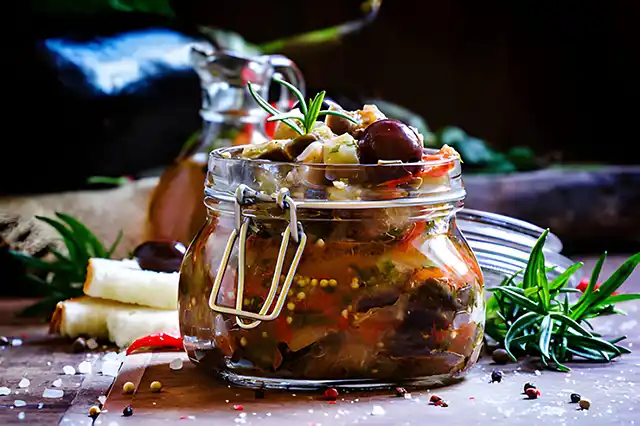
- Storage: Fermented eggplants can be stored in the refrigerator for up to two months. If you want to seal them for longer, after fermentation, boil the brine, pour it over the eggplants in sterile jars, and seal them. This will extend the shelf life.
I am convinced that this recipe will become a favourite in your family too, because it is not just an appetizer, but the real taste of home comfort.
A Brief History of the Dish
Fermenting vegetables is one of the oldest forms of preservation, especially popular in Eastern Europe and the Balkans. Although eggplants arrived in our lands relatively late, fermented and stuffed “blue ones” quickly became a traditional winter preserve, especially in the southern regions of Ukraine.
This dish has absorbed the best of Slavic fermentation traditions (using a press, natural fermentation) and Middle Eastern influences (the love of stuffing vegetables). It is believed that this recipe became popular because it allowed the eggplant to remain juicy, and the spicy stuffing made its taste rich and intense, unlike simple pickling.
| Characteristic | Value |
| Active Preparation Time | 45 min |
| Total Preparation Time (with fermentation) | 5–7 days |
| Calorie Content (estimated per 100 g) | 65–75 kcal |