



In this article, you’ll learn:
- Why meat temperature matters more than expensive spices for that perfect texture.
- How proper kneading transforms ground meat into a culinary masterpiece.
- The secret oven trick that keeps every gram of juice inside the sausage.
- Why homemade sausage tastes best the next day, not right away.
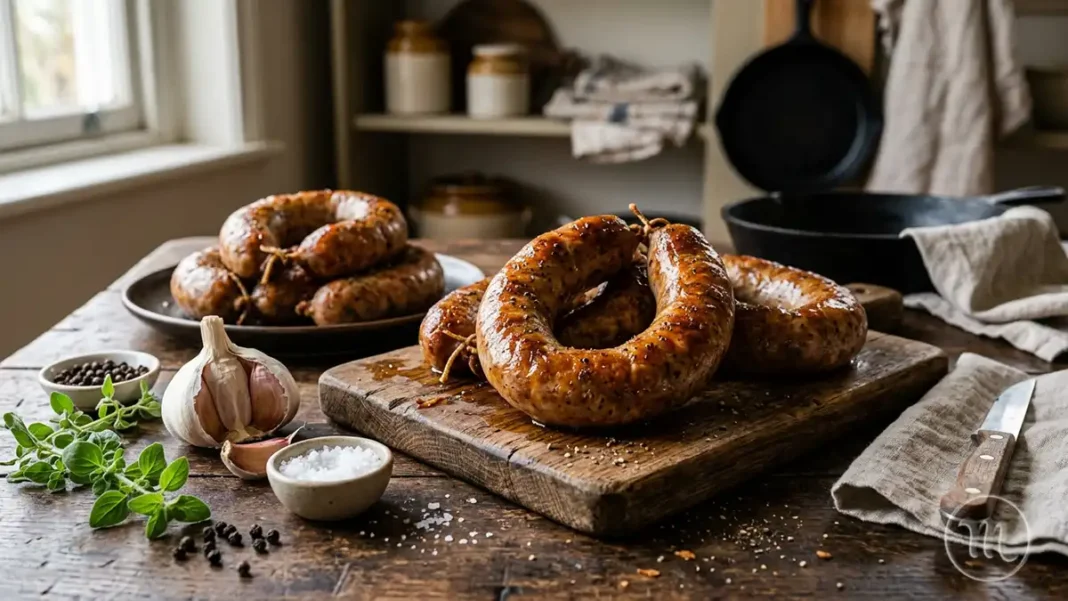
My dears, how many times have you bought sausage at the store only to think, “Well, that’s not quite it…”? Sounds familiar? It happened to me too. That’s exactly why I’ve been making my own sausage for a long time now. And you know what? It’s not nearly as hard as it seems! The aroma that fills the whole house while it’s baking, and that unbeatable, rich meaty flavor—you just can’t buy that. You can only create it with your own hands, a little love, and some tiny secrets.
Since I started sharing my recipes, you’ve asked so many questions about homemade sausage. Why does it turn out dry? Why does it fall apart? How do you get “that” childhood taste? So, I’ve gathered the essentials—eight key rules that really impact the result. This isn’t just a recipe; it’s my philosophy for making the perfect homemade sausage that always comes out juicy, firm, and incredibly tasty. Ready? Let’s get started!
The Little Secret Behind the Origin of This Meat Queen
For Ukrainians, homemade sausage isn’t just a dish; it’s a true symbol of holidays, family warmth, and prosperity. It was prepared for major celebrations like Christmas and Easter, for weddings and fairs, and every family had their own special recipe passed down through generations. The history of sausage-making dates back to Ancient Greece and Rome, but in Ukraine, the art flourished because pig farming was a cornerstone of the household. Every region had its unique twist: some added more garlic, others used paprika, and some couldn’t imagine sausage without juniper or caraway. It wasn’t just food; it was a way to preserve meat for a long time before refrigerators existed.
Nutritional Value
Energy value per 100g (homemade pork sausage): approximately 350-385 kcal (proteins — 11-17g, fats — 28-30g, carbohydrates — 0.5-3g).
Підписуйтесь, щоб не пропустити нічого цікавого! | Follow us so you don't miss anything interesting! | Subskrybuj, aby nie przegapić niczego ciekawego!
Ingredients
- Pork (shoulder or ham) — 1.5 kg
- Fresh lard (unsalted) — 300-500 g
- Garlic — 1-2 large heads
- Rock salt — 25-30 g (approx. 2 heaped tsp)
- Freshly ground black pepper — 1 tsp
- Ice water — 100-150 ml
- Natural pork casing (casings) — 2-3 meters
- Spices to taste: coriander, caraway, paprika, marjoram
Preparation Method
- Meat Preparation: This is the most crucial step! The meat and lard must be very cold, almost semi-frozen. This ensures the right structure and juiciness. Grind part of the meat (about 2/3) through a meat grinder with a coarse plate, and hand-dice the remaining meat and all the lard into small cubes (about 1 cm). This gives you a beautiful cross-section and that authentic “chopped” texture.
- Kneading the Filling: Add the minced garlic, salt, pepper, and other spices to the diced and ground meat. Start kneading thoroughly, gradually pouring in the ice water. You need to knead long and hard, for at least 10-15 minutes. The mixture should become sticky, viscous, and stretchy, almost as if “white threads” appear—this is a sign that the protein is working, and your sausage will hold its shape and stay juicy.
- Filling “Rest”: Cover the bowl of meat with plastic wrap and put it in the fridge for at least 5-6 hours, ideally overnight. During this time, the meat marinates, the flavors of the spices unfold, and the structure becomes perfect.
- Stuffing the Casing: Rinse the natural casings well inside and out. Slide it onto the special attachment of your meat grinder. Fill the casing with the meat mixture, but don’t pack it too tightly, or it might burst during baking. Form sausages of your desired size, tying the ends with twine.
- Pre-Baking Prep: Make sure to prick the raw sausages with a thin needle or toothpick every 3-5 cm to let out air and steam during cooking. Take the formed sausages out of the fridge and leave them at room temperature for 1.5-2 hours. This avoids a sharp temperature shock in the oven, which can make them dry.
- Proper Baking: Attention, here’s the secret! Put the baking tray with the sausage only into a COLD oven. Don’t preheat it! The sausage should heat up gradually. Set the temperature to 80-90°C (175-195°F) and cook for about 50-60 minutes. The internal temperature of the sausage should reach 70-72°C (158-162°F). If you overheat it, you’ll get a dry product because all the juices will leak out.
- The Final Touch: After the oven, the sausage needs to be cooled quickly. Some cooks dip it in cold water for a minute to stop the cooking process. But most importantly—let it “rest”. It’ll be tastiest the next day, once it’s completely cooled and settled in the fridge.
My Secrets for Perfect Flavor
I love experimenting with spices! Besides classic garlic and pepper, try adding some ground coriander for a spicy aroma or marjoram, which pairs beautifully with pork. If you want a slight smoky hint without a smoker, add a teaspoon of smoked paprika to the meat. As for serving, there’s nothing better than a slice of fresh homemade sausage with black bread and spicy mustard or horseradish. It’s pure bliss! And remember, this recipe is universal: you can make sausage with chicken or turkey the same way; just adjust the lard for juiciness.
As you can see, making homemade sausage isn’t hard. It just takes a little attention to detail and patience. But the result, my dears, is worth every minute spent in the kitchen. Enjoy your meal! ❤️
My Opinion:
For me, making homemade sausage is a kind of meditation. This process brings me back to my roots and to real, pure flavors. When you choose the meat yourself and grind the spices, you put a piece of your soul into the dish, and you can feel it in every single bite.
Advice from MODISTA:
- To check the filling for salt and spices before stuffing, form a small flat patty and fry it quickly in a pan. This way, you can adjust the seasoning.
- If you don’t have natural casings, you can form the sausages in food-grade plastic wrap (designed for boiling) or wrap them tightly in foil.
- Cooked baked sausage can be stored in the fridge for 5-7 days or frozen for later.
What are your favorite spices for homemade sausage? Maybe you have your own family secret ingredient? Share this article with a friend who has been dreaming of making the perfect sausage!
ℹ️ REFERENCE
Homemade sausage is a traditional meat product of Ukrainian cuisine, historically prepared at home, primarily from pork with added lard, garlic, and spices. It’s an essential part of the festive table, especially during Christmas and Easter. The preparation technique, which involves grinding the meat, lengthy kneading, and thermal processing (baking, boiling, or smoking), has been passed down for generations as part of cultural heritage. 🌐