



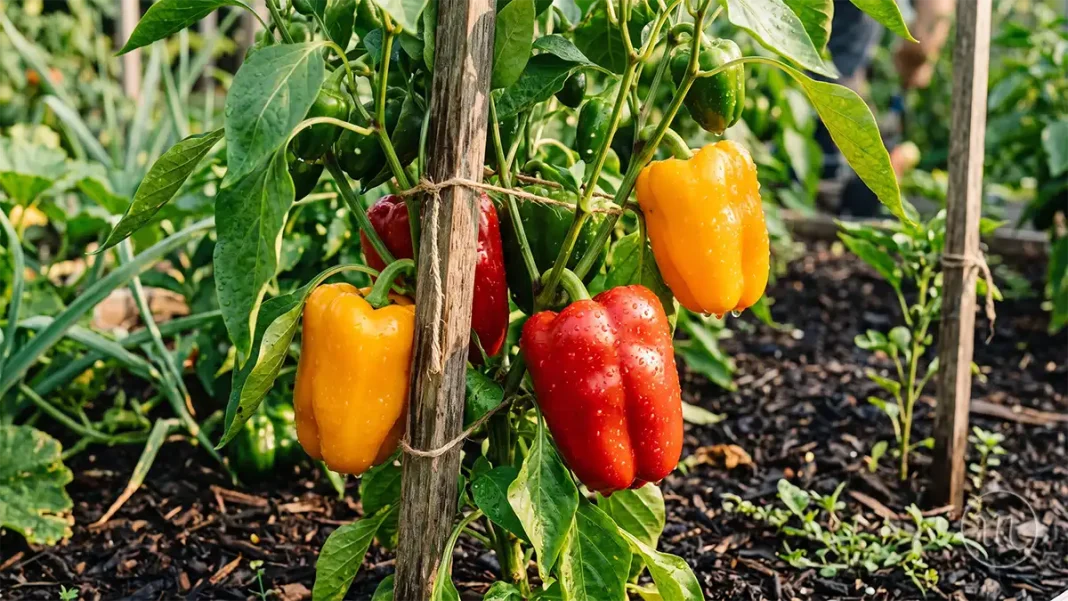
- • Smart watering strategy: how hot weather flips your schedule and why zero moisture stops growth in its tracks.
- • Next-level feeding: a powerful mix of minerals and organics that guarantees extra-thick, sweet pepper walls.
- • Save your branches: why securing your plants right now keeps heavy yields from snapping the stems.
- • Bulletproof disease defense: the essential prep work that shields nightshades from late-summer chills.
Read in another language:
Mid-summer is a total make-or-break moment for anyone dreaming of a flawless sweet pepper harvest. By July, those sturdy little garden bushes are usually loaded with their first tiny green sets, but it’s definitely not the time to kick back and put your garden on autopilot. A single misstep in your garden routine, a sudden drop in soil moisture, or a lack of nutrients can instantly freeze your pepper plant growth. Instead of heavy, juicy, and plump veggies, you might end up with tiny, warped, and bitter ones. It’s a real headache for home gardeners, reports MODISTA.
I know how disappointing it is to look forward to fresh summer salads only to get subpar results, which is why keeping up with this high-maintenance nightshade is so crucial. July care needs to be a full, well-rounded system. We’re talking proper hydration, smart plant feeding, heat protection with mulch, and keeping nasty infections away. Honestly, you only need to check off a few simple tasks around your garden beds to trigger rapid ripening and enjoy a massive harvest right through autumn. Trust me, it actually works!
Watering Hacks for the Summer Heat
July days frequently come with scorching temperatures and weeks without a single drop of rain. For sweet peppers, which rely on a shallow, fibrous root system, these conditions are a brutal test. The second that top layer of soil dries out, the plant panics and drops its blossoms and baby peppers. You’ve got to watch the ground like a hawk. Your garden plants shouldn’t feel even a tiny bit thirsty.
When the thermometer spikes, watering needs to become your daily ritual. The best time to soak your beds is early in the morning or late in the evening once the sun dips below the horizon. Don’t use freezing well water — it’ll shock the roots. Let it sit out in barrels to warm up to ambient temperature first. Drench the ground deeply, but keep it from getting waterlogged, which only leads to root rot.
Підписуйтесь, щоб не пропустити нічого цікавого! | Follow us so you don't miss anything interesting! | Subskrybuj, aby nie przegapić niczego ciekawego!
The Ultimate July Pepper Feeding Formula
As your sweet peppers grow and develop, they crave a highly balanced diet. The absolute MVP for crisp walls, juiciness, and natural sweetness is potassium. To kickstart this process, I always tell people to use potassium humate, which comes in both dry and liquid forms. It doesn’t just bump up the size of your sweet peppers; it also strengthens the roots, making it way easier for the plant to drink up other vital nutrients from the soil.
To keep the foliage lush and green at the same time, your sweet peppers need a modest hit of nitrogen. I’ve gotten amazing results from a homemade combined plant feeding mix that you can whip up right in your backyard:
- Fill a large 10-liter bucket about one-third of the way with fresh cow manure.
- Top it off completely with clean water and let it ferment in a warm spot for about 7 days.
- Once it’s done fermenting, take 1 liter of this concentrated tea and mix it thoroughly with your pre-diluted potassium humate (just follow the package instructions).
- Pour this rich cocktail straight over the damp soil at the base of each plant.
Doing this gives your pepper plant growth a massive boost. You can repeat this routine two weeks later to lock in the progress. On top of that, your sweet peppers will absolutely love a dusting of dry wood ash — which is packed with natural phosphorus and calcium — or any chlorine-free commercial potassium fertilizers.
Staking Stems and Smart Mulching
A huge wave of ripening veggies puts a ton of stress on the plant’s delicate frame. Sweet pepper branches are notorious for being fragile. Under the weight of heavy, moisture-packed peppers, they can snap in a second, ruining all your hard work. That’s why staking your stems to sturdy supports is a non-negotiable step in July for medium and tall varieties. Secure the branches with soft twine, making sure you don’t pinch or slice the stems.
While you’re tying things up, you also need to think about keeping those roots cool. Mulching between your rows keeps precious moisture locked in and stops the ground from baking and cracking. By mid-summer, reach for high-quality compost or aged manure rather than fresh lawn clippings. Well-rotted compost keeps the ground protected and acts as an extra slow-release plant feeding boost every time you water.
Late-Month Disease Prevention
As we near the end of the month, nighttime temperatures start to dip and heavy morning dew sets in. These sudden weather shifts create the perfect breeding ground for fungal and bacterial nasties, like late blight and leaf spot. Your garden plants are suddenly highly vulnerable to pathogens.
To avoid losing your hard-earned harvest right at the finish line, you’ll want to apply some reliable preventative shield treatments by late July. Stick to modern bio-fungicides; they’re eco-friendly, completely safe, and mean you don’t have to wait weeks to eat your fresh sweet peppers. Spray on a calm, dry evening, ensuring you coat both sides of every leaf. Timely protection guarantees your bushes stay healthy and productive until the final harvest frost.
How to Feed Peppers in July 2026?
My Opinion:
When I first tried using potassium humate along with a weekly manure tea in my garden beds, I was absolutely blown away. In my experience, the pepper walls get incredibly thick, and the fruits pick up a noticeably sweet flavor in just a couple of weeks. My top tip: don’t skip tying up those stems, because the sheer weight of the crop will literally pull the whole bush to the ground!
Advice from MODISTA
- • Always water your sweet peppers right at the base with sun-warmed water; overhead watering during intense July heat can easily cause nasty foliage sun scald.
- • Use fully aged compost for mulching instead of fresh grass clippings, which tend to rot near the stem base and attract tons of hungry slugs.
- • Apply your bio-fungicide sprays late in the evening so the beneficial microbes don’t get instantly destroyed by strong midday UV rays.
What are your go-to secrets for growing massive, crunchy sweet peppers? Make sure to bookmark this guide so you have these July garden tips handy all season long!
MODISTA Daily MODISTA Daily MODISTA Daily
ℹ️ REFERENCE
The sweet pepper (Capsicum annuum) belongs to the nightshade family and stands out as one of the most heat-loving vegetable crops in global agriculture. These garden plants thrive best in temperatures between 20°C and 25°C, meaning any extreme weather shifts require quick adjustments to your routine. You can dive deeper into the plant biology and historical origins of this favorite crop on the pages of the Free Encyclopedia. 🌐