



In this article, you’ll learn:
- Secrets to choosing the perfect spot for beds where vegetables grow “like crazy.”
- Which garden type to choose: classic rows or modern raised structures.
- The basic toolkit that’ll last you for years.
- The art of plant “neighboring”: who to plant with whom to protect against pests.
Growing up in the countryside, I was convinced that a hectare or two for vegetables was the norm for every family. It wasn’t until my husband and I bought our first home that I faced reality: I had to create a garden from scratch in a zone with a completely different climate. I had to quickly curb my appetite for industrial scales of corn and beans, adapting my expectations to the size of a typical suburban backyard, reports MODISTA.
I’ve learned from experience: if you plan the space correctly, prepare the soil, and choose your crops wisely, you can enjoy the true miracle of growing vegetables and gather generous harvests even on a small plot. I’ve put together a step-by-step guide for you to help beginners avoid my mistakes and actually enjoy gardening.
Assessing Your Space
Any real estate agent will tell you it’s all about location. Before I “dive” into the dirt, my top tip is to walk around your house and observe how the sun hits different areas throughout the day. Most vegetables need six to eight hours of direct sunlight to produce fruit.
Every garden needs good drainage and a nearby water source. Trust me, hauling buckets of water every day isn’t fun. Soil quality matters too, but even the poorest dirt can be improved with organics. While the backyard is the traditional spot, veggies fit beautifully into front yard designs or can grow in containers. Think about what your family actually wants to eat and how much time you’re really ready to give to your beds.
Підписуйтесь, щоб не пропустити нічого цікавого! | Follow us so you don't miss anything interesting! | Subskrybuj, aby nie przegapić niczego ciekawego!
Designing Your Garden
If you’ve got enough space, a regular garden with straight rows in the ground is the easiest way to go. Preparation involves removing grass, tilling the soil until it’s loose, and adding necessary amendments after testing. For this format, tomatoes, lettuce, onions, peppers, and greens are ideal.
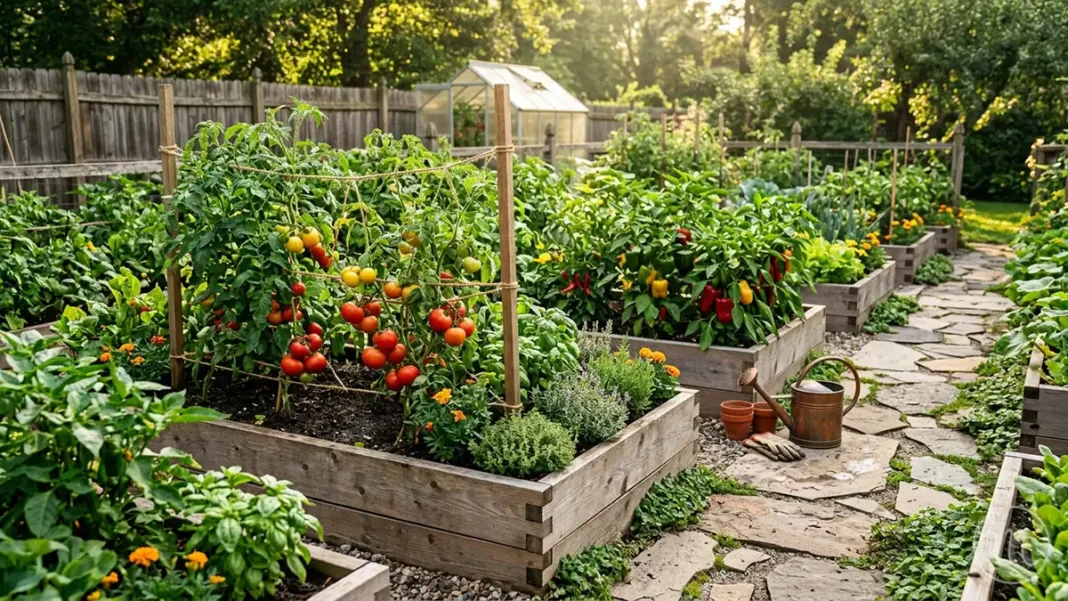
However, if your soil leaves much to be desired or if bending low is hard for you, I sincerely recommend looking into raised beds. You can buy frames or build them yourself from wood, metal, or plastic. You fill them with perfect nutrient-rich soil, and there are way fewer weeds.
Getting Your Supplies Ready
You won’t need a bunch of expensive equipment, but quality tools are an investment in your peace of mind. Buy the best you can afford because with proper care, they’ll last decades. My basic set includes:
- A garden spade for digging.
- A hoe for fighting weeds.
- A rake for leveling the soil.
- A trowel for planting seedlings.
- Watering tools: a hose with a nozzle or a classic watering can.
- Garden shears (pruners) for trimming.
- Gloves to protect your hands.
To start, you’ll need seeds or seedlings. I’ve noticed that local gardening groups are a goldmine where people happily share seeds. I also recommend setting up a rain barrel—it’s a free resource for watering. Don’t forget compost: kitchen scraps and shredded leaves will eventually turn into “black gold” for your garden.
Preparing the Ground for Planting
If you’ve chosen in-ground beds, look for a level spot away from large trees that cast shade or have sprawling root systems. First, mark the boundaries of your future garden with stakes and clear away all grass and debris.
You can strip grass with a sharp spade by cutting it into small segments. If the area is large, it’s easier to rent a sod cutter. You can also cover the grass with cardboard or black plastic for a few weeks so it dies off naturally. After clearing, dig the earth and be sure to check its pH with a kit from a garden center. Add fertilizer or compost so the soil structure becomes perfect for root growth.
Building Raised Beds
These structures can take any shape. I’ve tested different options and realized the optimal width is up to 120 cm so you can easily reach the middle from both sides. Depth should be at least 30 cm, and for root crops—around 50 cm.
It’s worth laying landscaping fabric at the bottom to block weeds. If the bed is longer than 1.8 meters, reinforce the walls so the weight of wet soil doesn’t make them bulge. Fill the boxes with a mix of garden soil, peat, and compost.
Installing Garden Structures
Vertical gardening is a lifesaver for small plots. Trellises, obelisks, or simple wooden poles allow you to grow climbing vegetables upward, freeing up space on the ground.
Special tomato cages will help keep fruits from rotting and pests away by holding branches off the ground. Place these supports near the edges of beds or along paths so you can reach the harvest without trampling the ground around the plants.
Choosing Plants and Companion Planting
Before buying seeds, analyze what your family actually eats. Corn takes up a lot of space, so for starters, it’s better to focus on bush beans, cucumbers, peppers, and zucchini.
Understanding plant compatibility is key. Some neighbors can stunt each other’s growth or attract shared diseases. For example, I never plant corn or cabbage near tomatoes, and I keep eggplants away from potatoes. Here are my favorite tried-and-true combinations:
- Squash and zucchini: get along well with beans, corn, and radishes.
- Tomatoes: pair perfectly with basil (this even improves the flavor!), carrots, and cucumbers.
- Peppers: love being neighbors with onions and okra.
- Potatoes: are “friends” with beans and spinach.
- Legumes: great neighbors for strawberries and carrots.
The Planting and Care Process
Seeds are usually cheaper and offer a wider variety of sorts. But if you’re a bit late on the timing, it’s better to buy ready-made seedlings. If you’ve grown seedlings at home, make sure to “harden” them off—take them outside for a few hours every day before the final transplant into the soil.
Choose disease-resistant varieties (look for markings about wilt resistance on packaging). Remember crop rotation: change the planting location of crops every year so pests don’t build up in the soil.
Watering is the key to success. The ground should be moist, but not a swamp. Pour water at the root, not on the leaves, to avoid triggering fungal diseases. As for feeding—I do it every 3-4 weeks during active growth, but don’t overdo it! Too much nitrogen will give you a ton of pretty leaves but not a single tomato.
Maintaining Order in the Beds
Regular weeding and removing sick leaves are the secrets to a healthy garden. Use mulch (straw or dried grass) between rows: it holds moisture and gives weeds no chance.
Check plants often for insects. If you notice slugs, check the beds at night—that’s the best time to fight them. Try to step into the garden every day for at least 5 minutes. Gardening isn’t just work; it’s a way to relax and connect with nature.
MY OPINION:
I’m convinced that having your own garden is the best way to de-stress after a work week. Trust me, no store-bought vegetable compares in taste to that tomato you grew yourself and picked while it was still warm from the sun. Start small, and you won’t even notice how gardening becomes your favorite hobby.
Advice from MODISTA
- Always mark your beds with tags showing the variety names so you know exactly what you liked best.
- Harvest in the morning when vegetables are at their juiciest and crunchiest.
- Start a “gardener’s diary” to track planting dates and weather patterns—it’s priceless experience for next season.
Have you already tried growing something on your windowsill or at the cottage? Share this article with a friend who dreams of their own eco-garden but is afraid to start!
Join our community where comments are open just for you!
ℹ️ REFERENCE
Southern Living is an authoritative American publication that has shared expert advice on lifestyle, gardening, and cooking for decades, adapted to the real-world conditions of home management. 🌐