



- • Why dry skin instantly absorbs fragrance molecules: how the lack of a lipid barrier cuts short the life of even the most expensive perfumes.
- • The secret weapon for locking in scent longevity: how the rich base of a budget-friendly staple holds olfactory notes on your pulse points.
- • The ultimate taboo on rubbing your wrists: why this classic gesture destroys top notes and distorts the evolution of the perfume pyramid.
- • The correct technique for scenting hair: how to create a weightless, airy trail without the risk of drying out delicate strands with alcohol.
Read in another language:
You spritz on an exquisite fragrance before heading out the door, but just a few hours later, your luxurious scent trail has completely vanished. Sounds familiar? Countless women blame the quality of the product itself or the formula of their eau de parfum. In reality, the culprit lies elsewhere—ranging from the moisture levels of your skin to everyday mistakes during application, reports MODISTA.
We often drop serious cash on elite bottles, praying for their magical longevity, while ignoring the basic physics and chemistry of how aromatic molecules interact with our skin. Fortunately, there’s a genius, budget-friendly beauty hack that industry insiders swear by to make any perfume smell stronger and last twice as long.
Why Perfumes Fade So Fast and How to Check Your Skin’s Moisture
When you’re trying to figure out why your favorite blend is fading at lightning speed, look at your skin first. Fragrances cling poorly to a dry canvas because it lacks the natural oils needed to trap volatile compounds. A rich lipid layer acts like a natural magnet for scents, whereas dehydrated skin simply drinks up the liquid, leaving behind only a faint memory of the original bouquet.
Beyond that, how long a scent lasts depends directly on the fragrance type and concentration. Zesty citruses and light florals (like colognes and eau de toilette) evaporate within 2 to 4 hours due to their tiny, highly volatile molecular structure. On the flip side, heavy oriental, musky, or woody notes (think richer eau de parfum and pure perfume) are naturally built to stay. Don’t forget environmental factors either: blazing heat makes fragrance evaporate off the skin much faster, turning it into a concentrated cloud that disappears in minutes. And, of course, poor application techniques mean it will fade way sooner than promised.
Підписуйтесь, щоб не пропустити нічого цікавого! | Follow us so you don't miss anything interesting! | Subskrybuj, aby nie przegapić niczego ciekawego!
Pro-Level Application Secrets for Maximum Scent Power
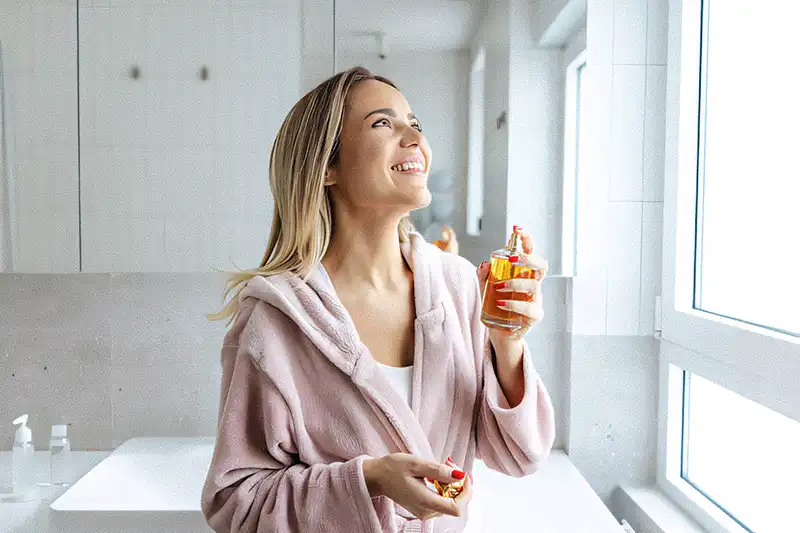
To skip the disappointment and get the absolute most out of your favorite bottles, you need to overhaul your application strategy. Prepping your skin is step number one. Scents lock onto well-moisturized skin best, since dry patches just absorb and release the scent too quickly. For the ultimate payoff, apply your perfume immediately after stepping out of the shower while your skin is still warm and your pores are wide open. Pair it with an unscented body lotion or cream so artificial fragrances don’t clash with or distort your main perfume composition.
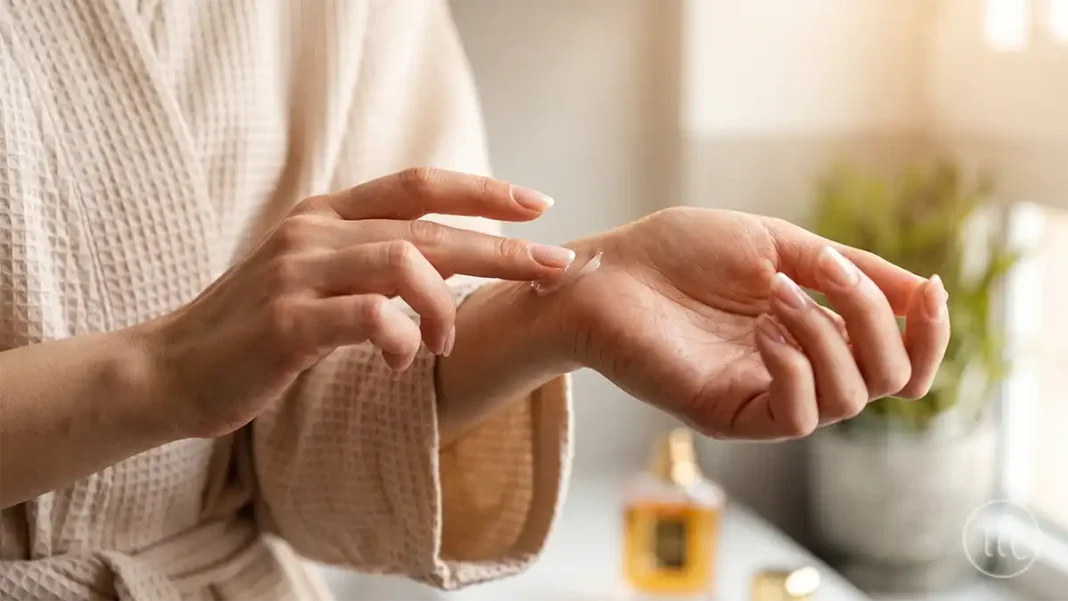
Now, let’s talk about the ultimate beauty hack that has taken over social media. Ordinary petroleum jelly is a total secret weapon for longevity that everyone owns. Its dense, moisture-locking texture creates a thin, invisible barrier on the skin that seals in fragrance molecules, keeping them from evaporating prematurely. The method is incredibly simple: dab a little petroleum jelly onto your pulse points (wrists, neck, behind the ears) right before you spritz, and get ready to be amazed. It actually works.
Also, remember this golden rule: never rub your wrists together! It’s a classic mistake. Friction raises the skin’s temperature, which literally breaks down the delicate molecules, kills the top notes, and instantly reduces the longevity of the blend. Instead, spray your fragrance a hand’s width away from your body and let it dry naturally into the skin.
Focus on the right zones because scent always thrives on warmth. You want to target areas where blood vessels run closest to the surface. The hottest spots include the inner elbows, wrists, behind the ears, temples, and even the back of your knees, which creates a gorgeous, ascending scent trail as you move.
Finally, scenting your hair is an old-school secret for a dreamy aura. Hair is naturally porous and holds onto fragrance brilliantly, but the direct alcohol content in traditional formulas can leave your strands parched. To keep it safe and chic, spray your perfume directly onto your hairbrush before running it through your locks, or mist the air above your head and let the microscopic droplets float down gently. Boom! Now your luxurious scent trail will follow you all day long.
My Opinion:
I tested this petroleum jelly trick with some of my most fleeting, temperamental eau de toilettes, and honestly, I was skeptical at first. But my experience proved that the rich base really does lock down the scent: the fragrance lingered until evening, whereas it usually vanishes within three hours. For me, this simple trick is a total lifesaver for saving your favorite perfumes on hot summer days.
Advice from MODISTA
- Always apply petroleum jelly in an ultra-thin layer so you don’t leave a sticky residue that could stain delicate fabrics.
- If you don’t have petroleum jelly on hand, swap it out for a basic, unscented clear lip balm.
- Prioritize buying an eau de parfum over an eau de toilette if maximum longevity and a strong scent trail are your top priorities.
Have you ever tried locking in your perfume with rich textures, or do you prefer spraying it on your clothes? Share this helpful tip on Telegram with a friend who needs a little olfactory magic today!
MODISTA Daily MODISTA Daily MODISTA Daily
ℹ️ REFERENCE
Perfumery, the art of creating harmonious scents, boasts a rich history stretching back thousands of years to ancient Egypt and Mesopotamia. The modern standards for fragrance longevity and classification based on aromatic oil concentrations (Parfum, Eau de Parfum, Eau de Toilette) were perfected by French master perfumers during the nineteenth century. To dive deeper into the classic rules of creating and wearing olfactory compositions, visit the dedicated Wikipedia page. 🌐