



- • A complete list of garden and orchard crops that find wood ash absolutely toxic.
- • Why an excess of potassium and calcium can trigger leaf drop and bitter fruit.
- • Deadly combinations: popular fertilizers you should never mix with ash.
- • Exact dosages for dry application and brewing a perfectly safe liquid solution.
Read in another language:
Wood ash is a simple, budget-friendly feeding option that almost every gardener keeps on hand. Many consider it an absolutely safe, all-purpose remedy that can be tossed under any bush without a second thought. However, that mindset is a massive mistake that could easily cost you your harvest.
Not all crops appreciate it—some will actually suffer from an ash application. Before you grab that bucket of ash, you need to clearly understand the chemical processes that take place in the soil afterward. Let’s break down which plants are terrified of ash, when you should completely avoid it, and how to use this fertilizer properly around your garden.
The Chemical Profile of Ash: Why It Is Not a One-Size-Fits-All Solution
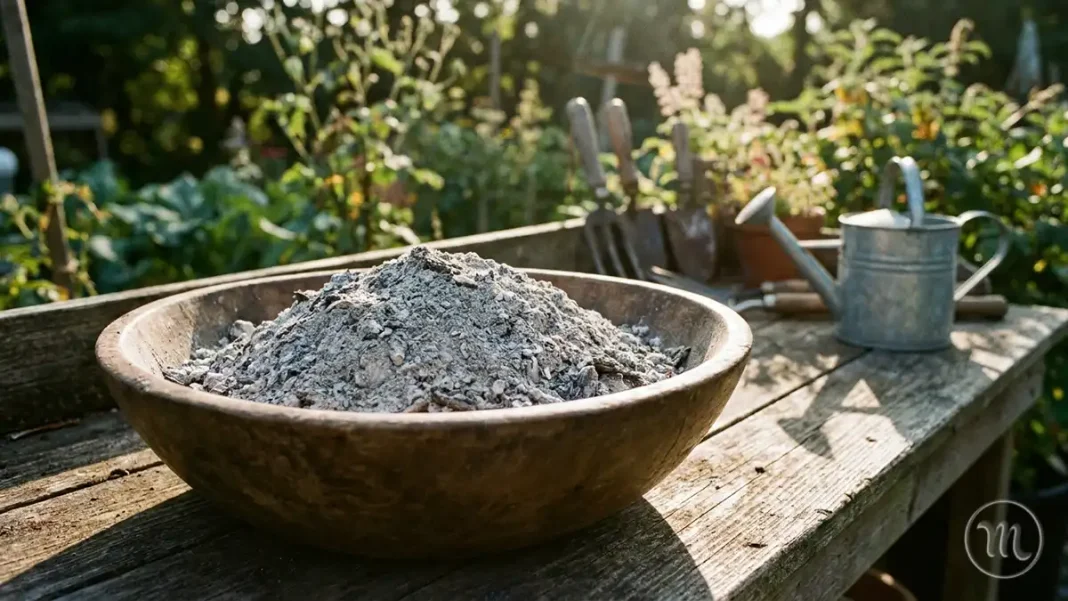
Wood ash is one of the most accessible soil amendments out there. Created by burning wood or plant debris, it packs a massive complex of minerals. It holds plenty of vital elements that plants crave:
- Phosphorus — Drives root development, flowering, and the formation of fruits and seeds. Without it, you cannot get sturdy seedlings or a heavy yield.
- Potassium — Boosts plant immunity, shields against diseases, and prevents foliage burn. It helps crops survive dry spells and chilly nights.
- Calcium — Strengthens plant tissues, helps fight off diseases, and deacidifies the soil. This last trait is key—ash acts as a potent alkalizing agent.
- Magnesium — Essential for photosynthesis; if leaves turn pale and start curling, they are starving for magnesium. It plays a direct role in chlorophyll production.
The main takeaway with wood ash is that it drastically lowers soil acidity. While that is ideal for sour, acidic soils, it becomes an absolute disaster for areas where the pH level is already leaning toward alkaline.
Підписуйтесь, щоб не пропустити нічого цікавого! | Follow us so you don't miss anything interesting! | Subskrybuj, aby nie przegapić niczego ciekawego!
The Specific Plants and Veggies That Absolutely Hate Ash
Ash is definitely not a universal fit. Plants that thrive in acidic soil will only suffer from it. When acidity levels drop, these crops lose their ability to absorb nutrients from the earth, develop chlorosis, wither, and eventually die. This list firmly includes:
- Evergreens — Juniper, fir, and thuja. They prefer slightly acidic or highly acidic substrates, and ash will cause their needles to turn yellow and drop.
- Flowers — Hydrangeas, rhododendrons, azaleas, lavender, camellias, primroses, heather, and lilies of the valley. For instance, a lush hydrangea exposed to excess alkali can permanently lose its gorgeous blue color, turning a washed-out pink, or stop blooming altogether.
- Veggies and Berries — Radishes, watermelons, blueberries, and sorrel. Blueberries are strict acidophiles, meaning they only grow in acidic peat. Tossing even a single handful of ash under their roots can completely halt a bush’s growth.
Sounds alarming? It should serve as a warning for anyone trying to cultivate a healthy, thriving garden with their own hands.
The Ultimate Dealbreakers When Using Wood Ash
There are a few more critical factors to consider before feeding your plants with ash. Even if your crops are relatively tolerant of pH shifts, certain situations mean applying this component will do pure harm.
If your soil is already rich in potassium, adding ash will cause fruits to taste bitter and prompt plants to drop their leaves. You will get the exact opposite of what you want—instead of sweet tomatoes or crunchy cucumbers, you will be left with unedible veggies. Similarly, do not add ash to soil that is already high in calcium; doing so threatens to kill off young shoots and leave white spots all over the foliage. The plant essentially suffocates from a salt overload.
Keep chemical compatibility top of mind. Ash does not mix with urea or manure—applying them together can destroy your plants. When ash interacts with nitrogen-heavy fertilizers (like the nitrogen found in manure or urea), a violent reaction occurs, causing the nitrogen to simply evaporate into thin air as ammonia. As a result, your plants suffer severe chemical root burns while simultaneously enduring acute nitrogen starvation. Phosphorus fertilizers should also be kept far away from ash applications, because in an alkaline environment, phosphorus locks up into an insoluble form, leaving the root system completely unable to absorb it.
The Precise Dosages for Safe Feeding
Otherwise, when handled correctly, wood ash is a fantastic, cheap amendment. It helps enrich the soil with trace elements, improves structure, and defends the garden against many pests—if you use it wisely.
The main thing is to stick to the rules and never exceed the recommended proportions:
- In its dry form, use no more than one cup of ash per square meter of garden space. The ash must be scattered evenly across the surface and mixed thoroughly into the soil via tilling or loosening.
- To brew a liquid solution, mix 150 to 250 grams of dry ash into 10 liters of water. Stir the mixture well, let it steep for a few hours, and then pour it directly at the base of the plants. Make sure to shake or stir the bucket right before watering to lift the nutrient-rich sediment from the bottom.
By following these straightforward, logical steps, you can save your backyard garden from fatal mistakes and keep your green spaces incredibly healthy.
MY OPINION:
In our eagerness to give our gardens the absolute best, we often forget about delicacy. Even the most valuable source of strength can turn into poison if we overlook the unique traits of a living thing. There are no one-size-fits-all fixes. Knowing when to hit the brakes and listen to individual needs—that is where true, thoughtful care begins.
Advice from MODISTA
- Always separate your ash applications from organic or nitrogen fertilizers by waiting at least two to three weeks between routines.
- Only use pure wood ash that is free from burnt painted wood, plastics, or everyday household trash.
- Never scatter ash on windy days, and always protect your eyes and lungs when handling this fine, dry material.
Did you know that regular wood ash could compromise your gorgeous hydrangeas or radish beds? Bookmark these handy gardening tips right now so you do not make any frustrating mistakes when fertilizer season rolls around!
ℹ️ REFERENCE
Wood ash has traditionally been utilized in agriculture as a natural potassium, phosphorus, and liming amendment. Thanks to its rich calcium carbonate content, it effectively curbs soil acidity, a process thoroughly detailed in agrochemistry and plant science resources. To dive deeper into the chemical attributes and the explicit impact of ash on diverse plant species, check out the dedicated pages on Wikipedia. 🌐