



- • The pruning blunder: Why a single mistake with your shears in spring can completely ruin your summer display.
- • Lighting and climate nuances: How to find the perfect sweet spot between scorching sun and deep shade for massive blooms.
- • Popular varieties analyzed: A breakdown of bigleaf, smooth, panicle, and oakleaf types.
- • A practical care guide: Key rules for watering, feeding, and picking the right soil for maximum results.
Read in another language:
Gorgeous, lush, and incredibly vibrant hydrangea bushes are the ultimate dream for any gardener. You look at your neighbor’s yard, and it’s a breathtaking sea of blue, pink, or snowy white blooms catching everyone’s eye. But what do you do when your own leafy friends only show off thick green foliage without a single hint of a bud? This refusal to bloom can easily leave you frustrated, making you think you just don’t have that magical green thumb after all.
The truth is, the problem usually comes down to simple, everyday factors, and solving this mystery is much easier than it seems. The timing and abundance of your blooms depend entirely on the specific plant variety, proper care, and environmental conditions. To master the quirks of this picky plant, we need to take a closer look at its basic needs. Below, we break down the most common growing mistakes and share proven ways to get your bushes bursting with spectacular blooms.
The Main Reasons Your Garden Hydrangeas Aren’t Delivering Those Expected Blooms
If you’re one of those frustrated gardeners checking your plants every morning hoping for a splash of color, don’t panic just yet. When these ornamental shrubs refuse to form flower heads, the issue almost always stems from one or more common, destructive factors.
Bad Timing with the Pruning Shears
If you head out with your shears at the wrong time of year, there’s a huge chance you’re cutting off future flowers. Certain varieties set their buds on old wood—meaning last year’s growth. Doing a heavy spring cleanup on these bushes means completely destroying your summer show. Meanwhile, types that bloom on new growth can experience serious delays if you prune them too late, right before active growth kicks into high gear.
Підписуйтесь, щоб не пропустити нічого цікавого! | Follow us so you don't miss anything interesting! | Subskrybuj, aby nie przegapić niczego ciekawego!
Lack of Sunlight and Poor Placement
Sunlight is crucial when it comes to producing flower buds. If your shrub is stuck in deep, constant shade, you’ll end up with weak, leggy stems and barely any blooms. It’s essential to know exactly what your specific variety needs. For instance, panicle hydrangeas absolutely love full sun, while oakleaf types can still put on a stunning show even in shaded corners of your yard.
A bad planting spot can ruin the plant entirely. Poorly drained, highly alkaline, or constantly soggy soil, proximity to hot asphalt, or planting beneath massive trees with aggressive root systems that steal all the moisture and nutrients—all of this will stop your bush right in its tracks.
Sneaky Spring Frosts
Late-season weather surprises in the spring can instantly destroy delicate, developing buds. Just as the shrubs are waking up and pushing out fresh green leaves, a sudden drop in temperature or a harsh night frost can cause irreversible damage. It’s best to wait until consistent warmth settles in and the threat of frost is completely gone before carefully trimming away any damaged or frozen wood.
The Timing Factor and Climate Zones
It’s very possible your favorite shrub just hasn’t reached its peak moment yet. While oakleaf varieties bloom quite early, panicle types are late bloomers that don’t start opening up until mid-summer. Give your plant a little time and always make sure you’re buying varieties that match your specific hardiness zone.
How to Get Your Hydrangeas to Bloom Heavily: A Guide to Each Variety
To fix your blooming issues once and for all, you need to identify exactly which type is growing in your garden. Here’s a detailed look at the four most popular categories.
Bigleaf (French) Hydrangeas
These stunning plants (Hydrangea macrophylla) actually originate from Japan, earning the nickname “French” because so many gorgeous cultivated varieties were bred in France. With their incredible, fluffy, globe-shaped flower heads in shades of blue, purple, pink, or pure white, they’ve stolen hearts all over the world.
| Breeding Type | Bloom Period | Growth & Bud Characteristics |
|---|---|---|
| Old-school varieties (e.g., ‘Nikko Blue’) | 6–8 weeks (Late spring to mid-summer) | Bloom exclusively on old wood from the previous season |
| Modern reblooming types (The Endless Summer line) | Continuous from spring through fall | Bloom on both old wood and new growth from the current season |
They do best when they get bright morning sun followed by light, protective afternoon shade when the heat peaks. In complete shade, the bush will refuse to make buds altogether. This type is incredibly thirsty. Moisture evaporates rapidly through those massive leaves, so during dry summer stretches, you might need to water them almost every other day. Reblooming varieties will stop pushing out new buds if they are allowed to completely dry out even once.
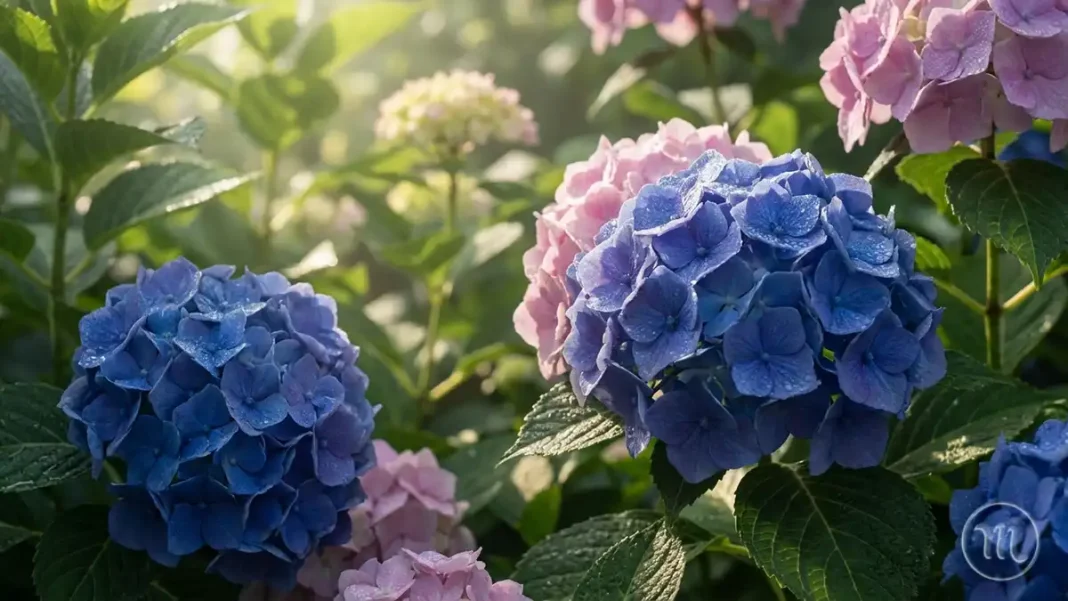
They need rich, fertile, well-draining soil packed with organic matter. Soil acidity directly controls their color: acidic soil (pH below 7) brings out deep blues and rich purples, while alkaline soil (pH above 7) delivers soft pinks or bold reds. White varieties stay snowy white no matter what. Be very gentle when pruning old-school types—only remove dead wood in the spring, and hold off on trimming live stems until right after they finish blooming in the summer.
Smooth Hydrangeas
This species (Hydrangea arborescens) is much less demanding, exceptionally cold-hardy, and incredibly easy to care for. The undisputed favorite remains the legendary ‘Annabelle’ with its giant white mopheads. Exciting new pink varieties like ‘Bella Anna’ and ‘Invincibelle Spirit’ are also becoming wildly popular.
They start blooming around the same time as bigleaf types, lasting from June through September. Petal color has absolutely nothing to do with soil pH. While they can handle a bit more sun, the standard “morning light + afternoon shade” rule is still your best bet.
Smooth hydrangeas love moisture, but they don’t demand the extreme water volumes that French varieties do. Your main goal is to provide loose, nutrient-rich soil and avoid planting them under huge trees. Because buds form on fresh summer growth, you can prune them in winter or early spring. Cutting them back hard and low results in mega-sized flower heads, though you might need to use stakes to keep the stems from flopping under their own weight.
Panicle Hydrangeas
An incredibly tough, low-maintenance, and resilient plant (Hydrangea paniculata) that is absolutely perfect for beginners. It effortlessly handles intense heat, dry spells, direct sunlight, and freezing winter temperatures. The popular tree-like ‘Grandiflora’ (often called ‘Pee Gee’) can tower up to 20 feet. The modern, more compact ‘Limelight’ hits a manageable 5 to 8 feet, showing off cone-shaped blooms that shift beautifully from pistachio green to a soft blush pink. There are even dwarf options like ‘Bobo’ that top out at just 3 feet.
Panicle beauties keep the show going from mid-summer straight into late autumn. Getting at least four hours of direct sunlight daily is non-negotiable for them. They’re quite drought-tolerant once established, though they need regular watering during their first year in the ground. Watch out for overwatering, as stagnant water leads to root rot. Since flowers form on current-season stems, feel free to prune them confidently every year in late winter or early spring.
Oakleaf Hydrangeas
This unique shrub (Hydrangea quercifolia) stands out completely from the rest of the family. It loves woodland settings with dappled shade, is the very first variety to bloom in late spring, and features gorgeous, oak-like leaves that turn brilliant shades of crimson, orange, and burgundy in the fall. On newer varieties, fresh white flowers open right on top of older, aging pink ones, creating a stunning two-toned look.
Dappled light or gentle shade is where this plant feels happiest. Once its root system is fully established, it handles dry spells beautifully. Only water when the top two inches of soil feel completely dry. It thrives in light, acidic soil loaded with humus, and a thick layer of pine needle or bark mulch is a must to keep the roots nice and cool. Because buds develop on old wood, this shrub rarely needs the shears, aside from a quick cosmetic cleanup in early summer.
Expert Hacks to Keep Your Blooms Healthy and Gorgeous All Season Long
To make sure your bushes don’t just bloom but stay gorgeous all season long, keep these clever tricks in mind:
- Dealing with floppy branches: When stems are loaded with massive, heavy flower heads, they naturally bend toward the ground, especially after a heavy downpour. Make sure your plant gets plenty of morning sun to build strong stems, or use garden stakes and circular supports to keep them upright.
- Winter interest in the garden: Many varieties change colors as they fade, adding a lovely, rustic vibe to your autumn garden. If you want to dry the flowers for winter bouquets, stop cutting off faded heads around July or August.
- Deadheading single blooms: Carefully removing spent flowers that have lost their charm encourages the plant to redirect its energy into pushing out fresh, new buds.
MY OPINION:
A hydrangea isn’t just a shrub; it’s a reflection of our patience. When it acts up, gardeners blame their shears, but the fix is really about understanding its nature. Blooms happen when we respect the plant’s natural life cycles. Let it be what it wants to be, and it’ll reward you beautifully.
Advice from MODISTA
- Always check the plant tag carefully before buying, paying close attention to whether it blooms on old or new wood and its final mature size.
- Be sure to mulch the base of your plants with a thick layer of organic material (like compost, bark, or peat moss) to keep the roots cool and lock in vital moisture.
- If you want to turn your bigleaf variety a brilliant blue, start treating the soil early with specialized aluminum sulfate acidifiers.
Are you already growing these show-stopping beauties in your garden? Share this guide with a fellow gardener who is struggling to get their bushes to bloom, or save this post so you have these pruning rules handy before the season starts!
MODISTA Daily MODISTA Daily MODISTA Daily
ℹ️ REFERENCE
The North American publication Southern Living is an authoritative resource for landscaping, ornamental gardening, and creating beautiful outdoor spaces, offering trusted expert advice for gardeners of all skill levels. You can check out their original recommendations on the official media platform 🌐.