



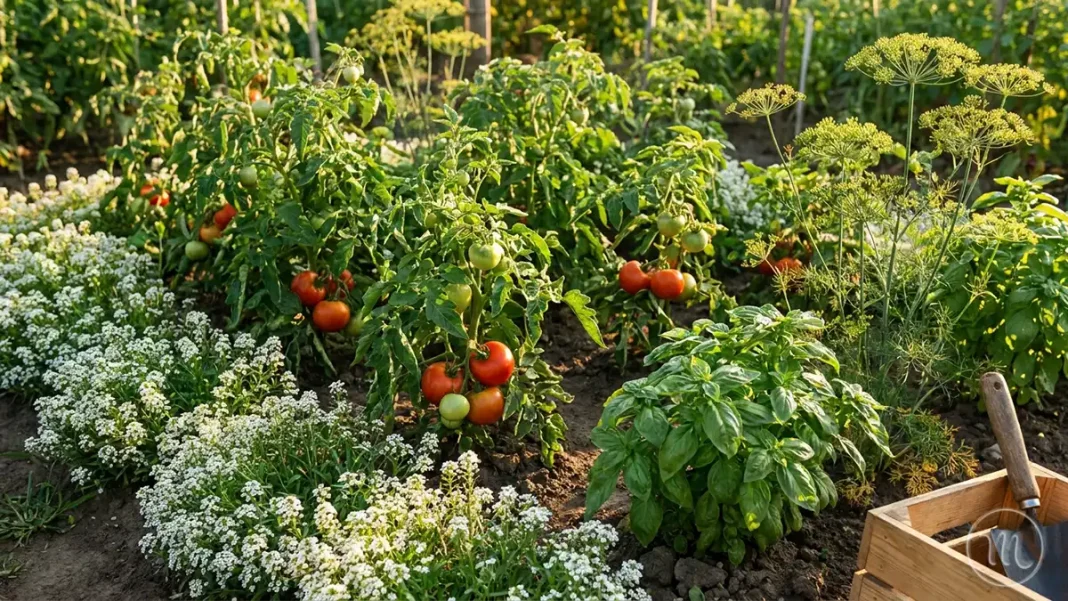
- • Highly effective trap crops that distract dangerous pests away from your vulnerable young plants.
- • Natural aromatic defenders capable of completely masking the scent of your prized garden staples.
- • Blooms that recruit winged hunters to eliminate aphids and whiteflies naturally.
- • Living mulch options to enrich your soil with essential nitrogen while aggressively crowding out weeds.
Read in another language:
Growing a heavy, healthy harvest of juicy, sun-ripened homegrown crops is a true art form that demands real effort. These summer favorites are notoriously vulnerable to sneaky pests, sensitive to devastating diseases, and constantly hungry for balanced nutrients. But what if you could put your garden on autopilot? One of the simplest yet most incredibly effective secrets to boosting your backyard success is pairing your main crops with the perfect companion plants, reports MODISTA.
Strategic companion planting works wonders in your garden beds. While certain varieties act as a living shield, throwing pests off the scent with intense aromas, others attract beneficial predatory insects to fight your battles for you, and some actively upgrade your soil structure. Let’s dive into exactly which green sidekicks will become your plants’ ultimate best friends this season.
The Secrets of Strategic Garden Companion Planting
The Ultimate Trap Crops to Shield Vulnerable Seedlings
Think of trap crops as your garden’s personal security detail. They take the hit for your main plants, drawing hungry bugs away from tender seedlings. Once the uninvited guests swarm this sacrificial green target, you can easily treat the area or remove the host plant entirely along with the entire pest invasion.
- Radishes. I highly recommend sowing these fast-growing root veggies directly around your young starters. The main goal? Distracting flea beetles, which love to chew tiny, devastating holes into tender leaves and stress out fragile root systems right after transplanting. While these beetles happily ruin peppers and eggplants, crunchy radishes are their absolute favorite snack. Plant radish seeds a few weeks before your main crops go into the ground, and pests will instantly lock onto them instead.
- Cowpeas. Also known as black-eyed peas, these multi-tasking legumes bring massive benefits to your soil. Operating as a dense, living ground cover, they choke out stubborn weeds while pumping valuable nitrogen deep into the earth. There is one quick catch: they can slightly slow down the germination of neighboring seeds, so make sure to plant them only next to established, well-rooted starters. As a trap crop, they are flawless at pulling stink bugs away from your ripening harvest. Just plant a small patch nearby and check it regularly to hand-pick the intruders.
Aromatic Protectors: Masking Pests with Intense Scents
The best pest-repelling plants carry a rich, intense fragrance of their own. They create an invisible aromatic barrier around your garden beds, completely confusing bugs so they can’t even smell your prized veggies.
Підписуйтесь, щоб не пропустити нічого цікавого! | Follow us so you don't miss anything interesting! | Subskrybuj, aby nie przegapić niczego ciekawego!
- Thyme. The rich, earthy essential oils packed into this herb’s tiny leaves do a fantastic job of repelling nasty intruders, including armyworms. Plus, thyme doubles as a durable, long-lasting living mulch that prevents weeds, locks moisture into the soil, and keeps roots cool during scorching midsummer heatwaves. Since it’s a hardy perennial, you can easily divide and move patches every couple of years whenever you rotate your garden plots.
- Hairy Vetch. This hardworking cover crop is usually sown in the fall to protect bare soil from harsh winter erosion. In the spring, it wakes up fast, crowding out early weeds and loading the dirt with fresh nutrients. Cut it down right as it starts blooming and let it lay flat across your garden beds. This natural mulch layer is excellent at stopping early blight and septoria leaf spot. Just plant your young starters right through this organic blanket.
- Basil. This sweet, fragrant herb completely masks the natural scent of your crops, driving flying pests crazy. Sounds familiar? This trick is incredibly crucial if you are battling thrips—those tiny, destructive bugs that scrape away at leaves and spread dangerous spotted wilt virus, which causes your developing fruit to drop prematurely. Go ahead and interplant plenty of fresh basil between your rows. It is a proven way to deter aphids, spider mites, and whiteflies, while stopping armyworms from laying eggs.
Blooms That Recruit Your Garden’s Secret Defense Force
Bright, nectar-rich flowers do more than just invite hardworking bees for pollination—they recruit beneficial predatory insects that eat garden pests for breakfast. For instance, microscopic parasitic wasps lay their eggs right inside destructive caterpillars, stopping them in their tracks. Delicate lacewings, agile hoverflies, and classic ladybugs are also elite hunters, using sweet floral nectar as a high-energy fuel source between pest patrols.
- Dill. Not only does this herb deliver fresh flavor for your kitchen creations, but it also welcomes an army of helpful insects. Its large, umbrella-like flower heads are a magnet for predatory wasps, lacewings, and hoverflies that feast on aphids, whiteflies, and pest eggs. Bonus: dill is also the favorite host plant for stunning swallowtail butterfly caterpillars!
- Sweet Alyssum. This is an incredibly powerful source of sweet nectar for lacewings, ladybugs, and hoverflies. It’s a low-maintenance, low-growing annual that fits perfectly tucked beneath tall garden stakes or trailing along bed borders. Studies prove that keeping sweet alyssum nearby helps keep aphid populations completely under control.
- Cilantro (Coriander). When this herb bolts, its delicate white flower clusters become an open buffet for tiny predatory insects. They help keep colorado potato beetles and hornworms in check. My top tip: sow cilantro in successive waves throughout spring and late summer. That way, you get a constant kitchen supply and a non-stop blooming defense barrier in the yard.
- Oregano. The flowers on this hardy herb are slightly larger than alyssum or cilantro, meaning they attract bigger beneficials, including wild bees and hoverflies. Hoverfly larvae are voracious eaters, devouring aphids, whiteflies, and small caterpillars. Oregano makes a wonderful, dense border edge or aromatic ground cover.
Living Mulch & Cover Crops That Feed the Earth
Certain companion plants focus entirely on protecting the soil itself. They stop erosion, lock in vital moisture around root zones, and actively share essential nutrients with neighboring crops.
- White Clover. This low-growing perennial grass makes an ideal living mulch beneath taller plants. As a member of the legume family, it pulls pure nitrogen from the air and converts it into a usable food source for surrounding veggies. It keeps the soil structure soft, crowds out aggressive weeds, and its flowers bring in pollinators from all over the neighborhood.
- Winter Rye. This classic cover crop is traditionally planted in autumn to save your soil from freezing winds and heavy winter runoff. Early in the spring, it shoots up quickly before being cut down ahead of seed production. Leave the green stalks right on the surface or till them in as premium organic matter. The decomposing rye releases natural compounds that block weed seeds from sprouting, without bothering your deep-rooted transplants at all. Just plant right through the mulch layer!
- Crimson Clover. A cool-season annual legume that is excellent at building up soil nitrogen. It’s often used as a protective winter blanket or a beautiful green carpet between garden rows. Its bright red blooms attract minute pirate bugs, which actively hunt down thrips, spider mites, and aphids. The golden rule here is to cut it back before it goes to seed so it doesn’t spread. Just chop and drop it a few times a summer to feed your main crops. It actually works!
My Opinion:
Nature’s design is brilliant: in a balanced garden plot, plants create the ultimate synergy. Pairing your heavy hitters with intentional herbs and blossoms isn’t just basic gardening—it’s a beautiful philosophy of harmonious living. Crafting a vibrant, self-sustaining ecosystem where natural balance rules is a true joy, and that extra care always comes back to you in the harvest.
Advice from MODISTA
- Mix and match multiple companion types in a single bed: try tucking fragrant basil directly between your main crops while running a border of white clover or sweet alyssum along the edges.
- Always chop down your cover crops and legumes before they form mature seeds, ensuring they don’t end up competing with your main harvest for water and sunlight.
- Utilize hardy aromatic perennials like thyme or oregano as moveable living mulch, transplanting divisions each season to match your crop rotation schedule.
Which green companions have worked best in your backyard setup? Share this guide with your favorite gardening group on Telegram so they can optimize their garden beds this summer!
Join our community where comments are open just for you!
ℹ️ REFERENCE
Companion planting (including allelopathy) is a sustainable agricultural practice based on how different plants benefit or affect one another by releasing biochemicals, phytonicides, and sharing soil nutrients. You can explore more about the scientific mechanics behind plant interactions in agriculture on the free encyclopedia 🌐.