



In this article, you’ll learn:
- Why red acts like a neon “restaurant open” sign for hummingbirds.
- Which other shades and conditions keep birds coming back to your yard.
- Secrets to setting up your space: from misters to spiderwebs.
- The best flowers perfectly suited for a hummingbird’s long beak.
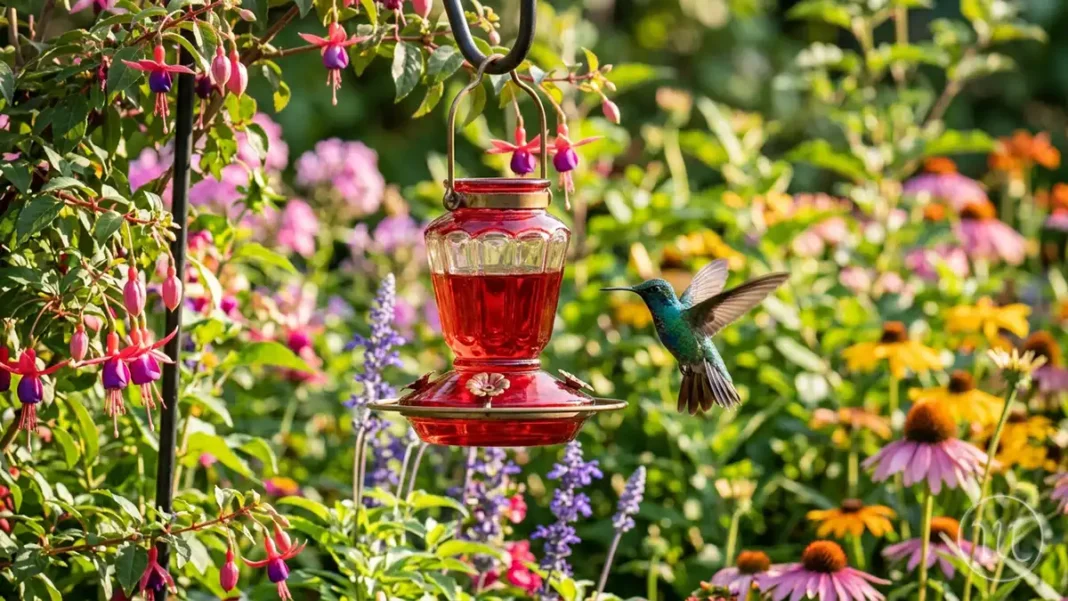
Hummingbirds might be tiny, but they definitely know how to make an entrance in your garden. If you’ve ever noticed how these birds dash toward a bright red feeder, you’ve probably wondered if color truly plays such a decisive role. It turns out it’s not just a guess, but a scientifically proven fact that helps these creatures survive, reports MODISTA.
Even the famous Ree Drummond features red feeders in her Walmart collection. As Ree herself says: “Once one hummingbird shows up, you’ll have to fill this thing probably two or three times a week.” This shows that choosing the right garden decor and gear can be a total game-changer for the number of feathered guests you’ll host.
Do Hummingbirds Really Adore Red?
The short answer is yes. Hummingbirds are attracted to red, as well as other vibrant shades like orange, pink, and yellow. These little fluttering beings have exceptional color vision that goes way beyond what humans can see with the naked eye. Their eyes are incredibly sensitive to a wide spectrum of colors, especially red and yellow tones that often pop against natural backgrounds. That’s why red feeders and flowers are so often linked to attracting them. However, remember this: never dye your hummingbird nectar, as dyes are harmful to the birds.
While red doesn’t “magically” pull them in by itself, it acts as a visual cue that something sweet might be nearby. What’s even more interesting is that hummingbirds don’t rely on color alone. Being incredibly smart and adaptive, they eventually learn to associate specific colors, like red, with reliable food sources—whether it’s nectar-filled feeders or bright garden blooms. This means if your feeder consistently provides a meal, it becomes a trusted pit stop for your flying friends.
Підписуйтесь, щоб не пропустити нічого цікавого! | Follow us so you don't miss anything interesting! | Subskrybuj, aby nie przegapić niczego ciekawego!
What Else Draws Hummingbirds to Your Garden
If you want to turn your backyard into a real hummingbird hotspot, focus on more than just color. Keep your feeder clean and regularly top it off with fresh nectar. Surround the area with flowering plants rich in natural sugars. Another key factor is placement. Hummingbirds gravitate toward open spots that are easy to spot and where they can safely hover while feeding.
It’s also worth leaving sticks and small twigs on bushes and trees untouched—this gives the birds convenient places to rest. Adding a few feeders can also help, as it reduces competition. A mister (water sprayer) is another great addition since hummingbirds especially love flying through fine water mist for a quick bath.
If you can, leave spiderwebs alone. Birds use spider silk to build their nests and eat insects caught in the web. Planting flowers that attract small insects and avoiding pesticides will also help, as these birds rely on tiny bugs as a protein source.
Do Hummingbirds Like Red Flowers?
Along with nectar-rich flowers in bright shades, hummingbirds usually adore tubular blooms. Their shape is a perfect fit for these birds’ long beaks. This means plants like bee balm (monarda), trumpet vine or honeysuckle, salvia, columbine, and special “hummingbird sage” are excellent choices.
For the best results, plant a mix of annuals, perennials, and flowering shrubs that bloom at different times throughout the season. That way, the birds always have something fresh to enjoy. So hang up that red feeder, follow these tips, and you won’t just attract hummingbirds once—you’ll keep them coming back all season long.
MY OPINION:
I’ve always felt that watching hummingbirds is the ultimate meditation. The main takeaway here is that the color red only opens the door, but your commitment to cleanliness and plant variety is what makes the birds stay for the long haul.
Advice from MODISTA
- Make sure to wash the feeder every 3-5 days to avoid mold growth, which is deadly for birds.
- Don’t use store-bought nectar with red dye—it’s better to make a simple sugar syrup yourself.
- Set up several feeders spaced apart so territorial hummingbirds don’t fight over food.
Have you spotted these little scouts in your garden yet this year? Share this article with friends who are also dreaming of their own “bird paradise”!
ℹ️ REFERENCE
This material is based on research by experts from The Pioneer Woman, run by the famous American blogger and author Ree Drummond. She specializes in country living, gardening, and home comfort. 🌐