



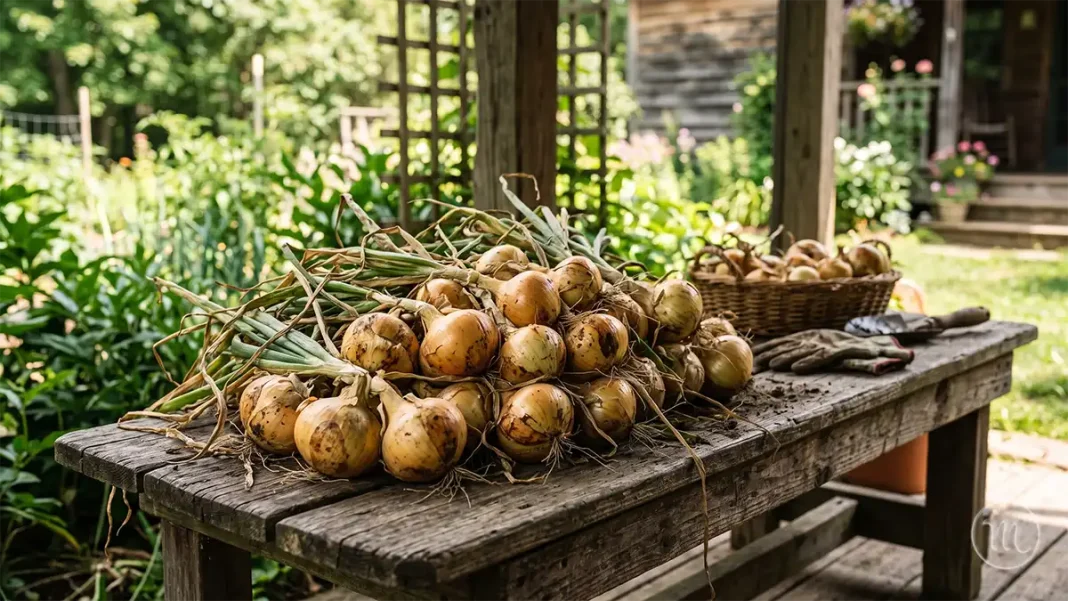
- • Main Visual Indicator: When the tops fall over and flop onto the ground, it’s not a disease—it’s the plant’s clear signal of full maturity.
- • Drying Foliage: Yellowing tips and a papery, dry neck show that nutrients have fully transferred into the bulb.
- • 14-Day Water Ban: Stop all watering completely two weeks before digging, or the base will simply rot in storage.
- • Shaded Curing: Never leave harvested onions under scorching sunlight or toss them out in the rain.
Read in another language:
Learning how to boil corn on the cob so it turns out insanely juicy is a fantastic summer skill, but before tossing any cobs into the pot, every gardener faces a much more urgent task out in the beds. I’m talking about the onion harvest. If you miss the ideal window by even a week, your entire year’s supply will turn into a slimy, foul-smelling mess right inside your cellar. I personally lost nearly three full sacks of prime bulbs due to this exact mistake because I kept waiting for “perfect dry weather” while the soil underneath was already rotting them out.
Gardening is basically one huge ongoing experiment filled with messy slip-ups. Sounds simple enough, right? A bulb sits in the dirt, grows, and minds its own business. But then July or August hits, and panic sets in. Should I dig them up now or let them sit longer? What if it rains? What if the sun scorches them? Well, here’s the deal. There’s no single magic calendar date because our climate keeps jumping from one extreme to another, so you’ve got to rely strictly on the plant itself.
Fallen Tops and Dry Necks: How to Spot Onion Ripeness Without Fail
To spot onion maturity immediately, check if 70-80% of the green tops have fallen over naturally; this visual cue confirms nutrient flow has stopped and bulbs are ready.
The very first thing I inspect in my garden bed is the state of the green tops. Once the bulb fully forms and reaches maximum size, fluid movement inside the stem comes to a halt. It loses its firmness, softens near the base, and just flops flat on the ground. Boom! That’s your exact moment right there.
Підписуйтесь, щоб не пропустити нічого цікавого! | Follow us so you don't miss anything interesting! | Subskrybuj, aby nie przegapić niczego ciekawego!
When about 70-80% of the foliage lies flat across the bed, that’s a direct green light to grab your garden fork or spade. Of course, there are exceptions. Say you get hit with cold, heavy rains for weeks on end. All that excess moisture might trick the plant into holding its green “tail” high, even while the bulb inside is already cracking open. That’s a dangerous trap. In that case, waiting for the tops to flop is totally useless—you’ve got to step in and save your crop.
The second dead-giveaway marker is color and texture. The green leaves start yellowing noticeably from the tips down, drying out gradually, while the outer skin on the bulb develops that signature bronze, golden, or deep purple hue depending on your variety. The neck—the spot where the stem emerges from the soil—feels thin and papery to the touch. Pinch it with your fingers; if it feels hollow inside, your onion is ready to dig.
Watering Schedules and Rain Traps: What to Do 2 Weeks Before Harvest
To prevent rot during storage, completely stop watering your onion crop at least 14 days before harvest so the bulbs can form thick protective outer skins.
Now, here’s where most home gardeners make a huge mistake: watering. They see hot weather outside and keep soaking the soil right up until the day they dig things up. The result? Juicy bulbs that are completely incapable of long-term storage.
Lock this golden rule into memory: turn off the hose entirely at least two weeks before your planned harvest date. Zero drops from the watering can or hose! Keeping the soil bone-dry encourages the bulb to quickly develop a tight, protective paper skin.
So, what should you do if heavy downpours are headed your way? Honestly, that’s a total nightmare for any gardener. Wet soil triggers onions to sprout fresh roots or rot from the bottom plate up. If you’re working with a smaller garden bed, I strongly recommend setting up a temporary shield. Stretch clear plastic or garden fabric over hoops to keep excess rain off the ground, but keep the ends wide open for ventilation.
If relentless rain sets in and your harvest timeline is ticking down, pull everything without second thoughts. Don’t wait for a swamp to form! It’s much better to harvest onions out of wet dirt, gently shake off the mud clumps, and haul them under cover straight away.
Flawless Curing: Why Sunlight and Trimming Can Ruin Your Harvest
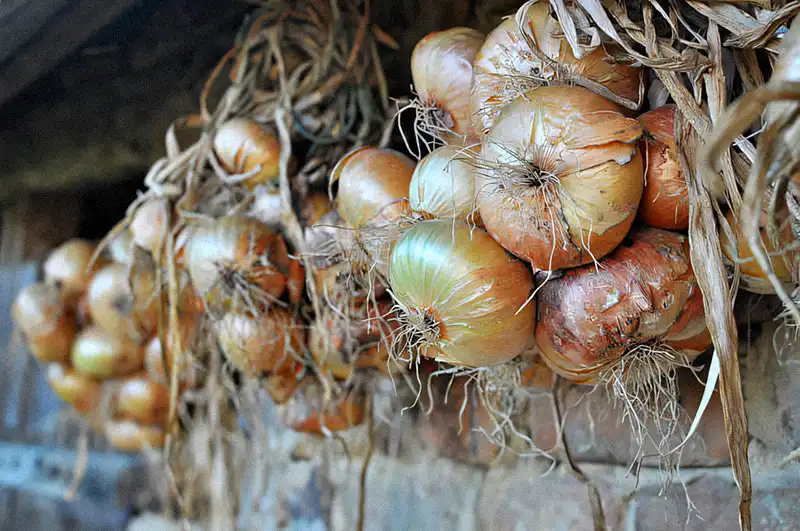
To cure onions safely without bacterial rot, dry them whole with stems attached under a ventilated roof for 2-3 weeks rather than under direct sun.
Alright, you’ve lifted your onions from the dirt. What’s next? Out of habit, tons of people spread them out flat right on the soil under the blazing July sun thinking it’ll warm them up. Don’t ever do that!
Under intense, direct sunlight, the bulb doesn’t cure—it literally bakes. The outer layers cook in the heat, the internal juices start boiling, and within a week, your hard-earned harvest turns into mush. Another common mess-up is instant trimming. People pull the bulb, immediately snip the green stem down to the root with shears, and throw it in a box. That’s an open highway for bacterial rot to enter!
Curing needs to be completely natural and gradual:
- Right after harvesting, move your entire crop under a covered porch, covered deck, well-ventilated shed, or airy attic.
- Spread the onions out in a single layer on dry wooden slats, burlap, or wire mesh screen.
- Leave the foliage and roots totally intact! All remaining energy from the greens needs to slowly transfer down into the bulb as it dries. This builds up strong natural disease defense.
- Peel away only that initial dirty outer layer of skin coated in soil. A fresh, clean, healthy wrapper will form underneath.
Once the neck dries out completely into a thin, paper-like straw, you can trim it back, leaving a 1.5 to 2-inch tail (or braid them together into traditional onion ropes). Only after this step should you pack the crop away for long-term storage in a cool, dry basement or pantry.
By sticking to this simple summer gardening guide, your stored onions will stay firm and flavorful straight through until spring. Wishing you an incredible harvest and smooth sailing in the garden! Also, keep in mind that checking a lunar planting calendar can help you seamlessly plan out the rest of your garden tasks without missing a beat.
MY OPINION:
When I dug up my own garden onions after a week of non-stop rain, I ended up paying for it by losing half my crop—the inner necks just couldn’t dry out properly and rotted from within. My experience proved that it’s way better to pull onions a bit early and let them cure fully in a breezy shade with all their tops attached, rather than holding out for “perfect dryness” outdoors only to throw soft, ruined bulbs in the trash later.
Advice from MODISTA
- Check forecasts in advance: Keep a close eye on two-week weather predictions; if heavy rains are heading your way, harvest dry onions slightly early instead of waiting for 100% of the foliage to drop.
- Never yank with force: If your soil is hard, don’t pull onions aggressively by the green tops, or you’ll snap the neck off the bulb. Gently loosen the dirt around the garden bed using a pitchfork.
- Ensure air circulation: Constant airflow matters way more than heat when curing indoors. In stagnant, humid air, even harvested bulbs will quickly develop mold.
How do you usually tell when it’s time to harvest onions in your garden? Do you use traditional braiding techniques or just trim the tops right away and toss them in crates? Share your favorite hacks and experiences with us over on our Telegram channel!
ℹ️ REFERENCE
The bulb onion (Allium cepa) is a biennial plant belonging to the Amaryllidaceae family and stands as one of the oldest cultivated vegetable crops, domesticated over 5,000 years ago. The crucial condition for long-term winter storage is guiding the plant into deep physiological dormancy, which occurs exclusively through complete drying of the neck and the formation of multiple dry outer protective scales. Learn more about biological features and onion varieties on Wikipedia 🌐.